

On This Day in Pop: July 29, 1954
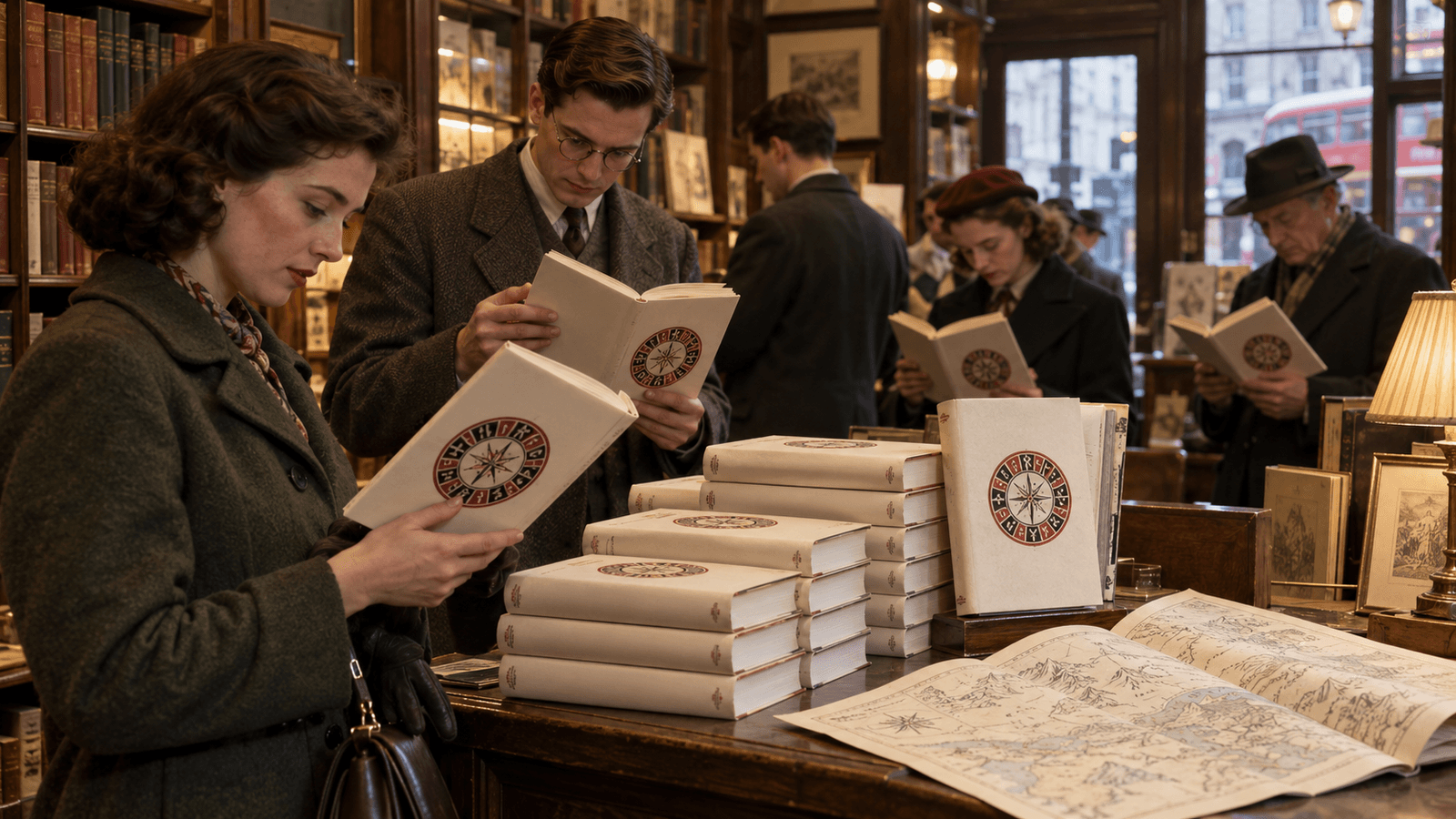
On July 29, 1954, George Allen & Unwin published The Fellowship of the Ring in Britain. J. R. R. Tolkien had spent years expanding a requested sequel to The Hobbit into a work connected with the mythology he had developed across much of his life. Because paper and production costs made a single enormous volume risky, the publisher divided The Lord of the Rings into three parts. Fellowship introduced readers to the Shire, the One Ring’s history and a company drawn from different peoples who set out against the growing power of Sauron. Maps, languages, poems and deep references suggested a world extending far beyond the immediate quest.
The publication mattered because the novel treated fantasy not as a loose fairy tale but as a fully layered secondary world with history, geography and moral consequence. Tolkien drew on philology, medieval literature, war experience and Catholic belief while rejecting simple one-to-one allegory. The book’s pace could be patient, even antiquarian, then suddenly tense. That mixture invited readers to inhabit Middle-earth rather than merely observe a sequence of wonders. Early reviews were divided between admiration and skepticism, but the first volume created enough demand to carry readers toward The Two Towers and The Return of the King.
Paperback editions in the 1960s expanded the audience dramatically, and The Lord of the Rings became foundational to modern fantasy publishing, games, music, fan communities and screen adaptation. Peter Jackson’s films brought the story to another global generation, while scholars continued to study the languages and manuscripts behind it. Influence also generated imitation, sometimes reducing Tolkien’s moral and linguistic complexity to a checklist of creatures and quests. July 29 marks the moment one part of a deeply private mythology entered public circulation. The modest first impression could not predict the industry that followed, but it already contained the central invitation: leave a familiar home, enter a world with its own memory and discover that courage is often carried by the least imposing people.
Remembering the fellowship of the ring is published in britain on July 29 is valuable because anniversaries turn a familiar cultural object back into a specific decision, release or broadcast. The surrounding technology, business and audience conditions explain why the moment could happen then, while its later uses show that meaning never stops changing. Seen at that scale, the date is not trivia. It is a checkpoint between creation and memory: a place to separate what occurred from the legend accumulated around it and to ask why the work still attracts attention. That perspective also restores the labor of collaborators, distributors and audiences whose choices helped a single event travel beyond its first setting. Cultural history becomes clearer when the remembered icon is reconnected to the systems and people that made it visible.
George Allen & Unwin published The Fellowship of the Ring on July 29, 1954.
The remembered moment placed Fellowship Is Published inside the technology, audience habits and creative choices of 1954. Those conditions explain why it could happen then and why contemporary reactions differed from later memory.
Publishing costs led The Lord of the Rings to appear in three volumes rather than one.
Its immediate importance came from the way audiences, distributors and other creators responded. The event gained force beyond its first release or appearance as people repeated, debated and reinterpreted it.
Tolkien's layered world-building became a foundation for modern fantasy across books, games and film.
Over time, the event became a reference point for later work in popular culture. Its legacy includes both the achievement itself and the changing arguments about what should be celebrated, questioned or rediscovered.
Explore more of "On This Day ..."
Discover more events from the same date across news, politics, technology, sports, and other fields. Each link highlights significant moments that shaped history on different fronts.