

On This Day in Pop: July 28, 1978
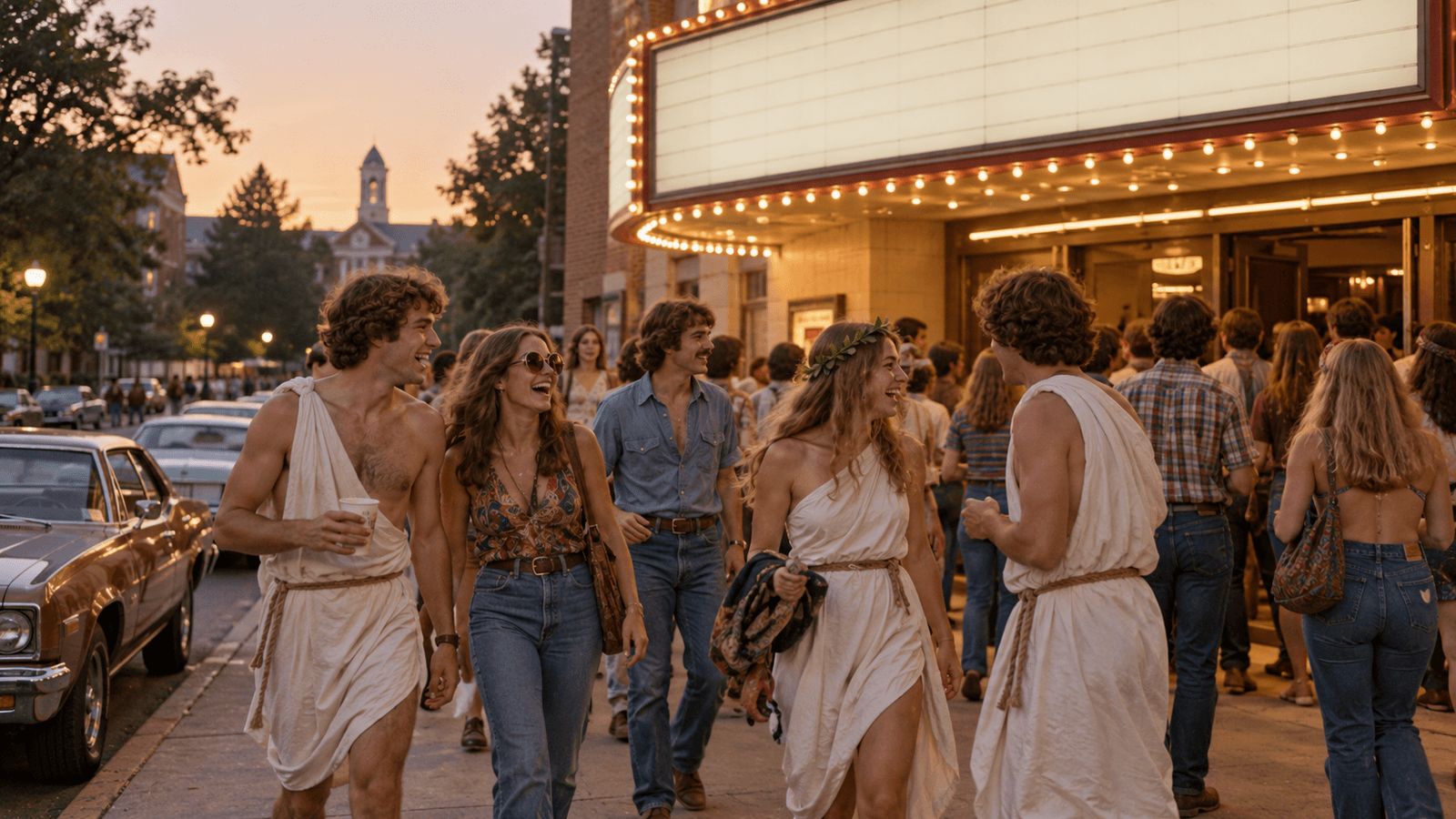
On July 28, 1978, National Lampoon’s Animal House opened in American theaters. John Landis directed the story of Delta Tau Chi, a disreputable fraternity battling the dean and the polished rival house at fictional Faber College in 1962. The screenplay by Harold Ramis, Douglas Kenney and Chris Miller drew from college memories and National Lampoon’s appetite for provocation. John Belushi’s Bluto supplied explosive physical comedy, while Tim Matheson, Peter Riegert, Karen Allen and a large ensemble gave the chaos social shape. Shot mainly around the University of Oregon, the film used period music, crowded interiors and escalating set pieces to turn institutional conflict into a parade of bad behavior.
The opening mattered because the film’s low budget and enormous success changed studio comedy. It treated authority as absurd, made mess and appetite heroic, and moved from pledge-week humiliation to a parade that destroys the respectable town surrounding the college. The soundtrack revived Shout as a party standard, and lines and gestures became instantly repeatable. Yet the movie’s legacy is not uncomplicated. Its sexual politics, racial jokes and treatment of women reflect limits that later campus comedies often copied without examination. Acknowledging those problems is part of understanding how influential humor can normalize behavior as well as challenge institutions.
Animal House became one of the most profitable films of its era and triggered a wave of raunchy ensemble comedies set in colleges, summer camps and other rule-bound spaces. It also helped move National Lampoon from print satire into film production and confirmed Belushi as a major screen presence. Imitators reproduced togas and gross-out incidents, but fewer matched the original’s period setting or its conflict between outsiders and entrenched privilege. July 28 marks the day disreputable undergraduates became a commercial force. The film’s energy still explains its appeal, while its blind spots show why influence deserves scrutiny as well as celebration.
Remembering national lampoon’s animal house opens in u.s. theaters on July 28 is valuable because anniversaries turn a familiar cultural object back into a specific decision, release or broadcast. The surrounding technology, business and audience conditions explain why the moment could happen then, while its later uses show that meaning never stops changing. Seen at that scale, the date is not trivia. It is a checkpoint between creation and memory: a place to separate what occurred from the legend accumulated around it and to ask why the work still attracts attention. That perspective also restores the labor of collaborators, distributors and audiences whose choices helped a single event travel beyond its first setting. Cultural history becomes clearer when the remembered icon is reconnected to the systems and people that made it visible.
National Lampoon's Animal House opened on July 28, 1978.
The remembered moment placed Animal House Opens inside the technology, audience habits and creative choices of 1978. Those conditions explain why it could happen then and why contemporary reactions differed from later memory.
The low-budget campus comedy became an enormous commercial success and a template for later ensemble films.
Its immediate importance came from the way audiences, distributors and other creators responded. The event gained force beyond its first release or appearance as people repeated, debated and reinterpreted it.
Its anarchic humor remains influential while its sexual and racial politics invite continuing criticism.
Over time, the event became a reference point for later work in popular culture. Its legacy includes both the achievement itself and the changing arguments about what should be celebrated, questioned or rediscovered.
Explore more of "On This Day ..."
Discover more events from the same date across news, politics, technology, sports, and other fields. Each link highlights significant moments that shaped history on different fronts.