

On This Day in Pop: August 8, 1969
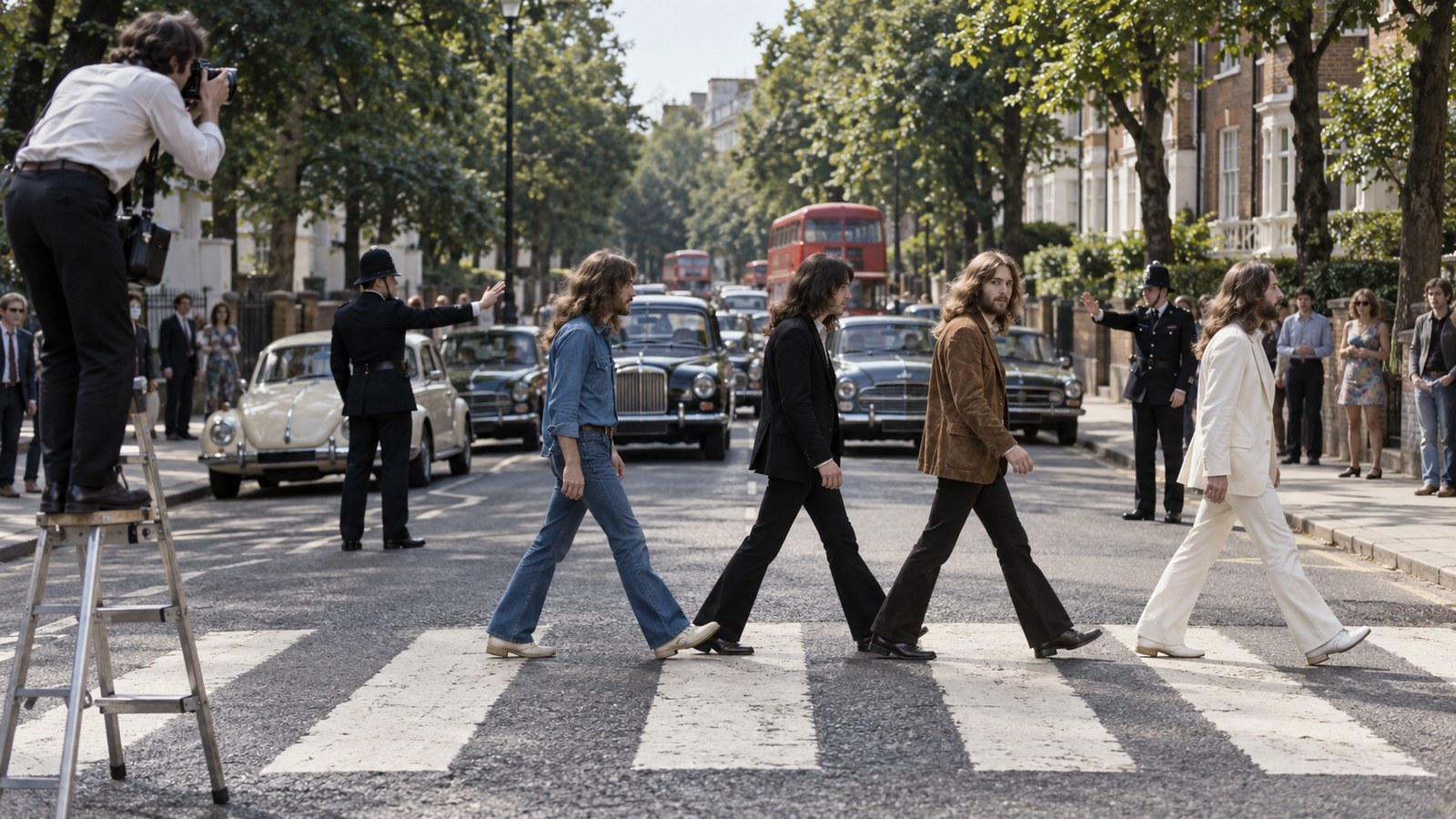
On August 8, 1969, the Beatles photographed the Abbey Road cover. Photographer Iain Macmillan stood on a stepladder in the middle of the London street while police briefly stopped traffic. John Lennon, Ringo Starr, Paul McCartney and George Harrison crossed the zebra crossing several times as Macmillan exposed six color frames in roughly ten minutes. The band chose a simple location outside the EMI studios where it had made most of its records. One frame—with the four men evenly spaced, McCartney barefoot and holding a cigarette—became the cover without a printed group name or album title on the front. The date is a useful point of entry because it captures the event before later reputation made its consequences appear inevitable. Contemporary audiences encountered a new release, performance or public loss in real time, with incomplete information and expectations shaped by the media and institutions of the period.
The image worked because it was ordinary and carefully balanced at the same time. Passing cars, painted stripes, summer clothing and an anonymous observer on the pavement turned a routine street into a scene that invited stories, imitation and conspiracy theories. Popular culture is created through more than the famous person at the center: producers, technicians, exhibitors, broadcasters, audiences and physical venues all affect what survives. Looking closely at those conditions prevents an anniversary from becoming a list of familiar names and restores the choices, limitations and competing interests that surrounded the moment.
Abbey Road was released weeks later and became one of the group’s best-known albums. The crossing drew increasing numbers of visitors, eventually receiving heritage protection; a live camera now records the daily parade of fans attempting their own version while traffic continues around them. That later history matters because influence is not a straight line. Works are rediscovered, technologies change, communities attach new meanings and commercial owners repackage the past. The most durable pop events remain open to argument, allowing admiration for creative achievement to exist beside criticism of exclusion, labor, power or representation.
August 8 celebrates a photograph rather than a recording session, yet the picture changed how a place could belong to popular culture. Ten minutes of controlled interruption produced an image that still sends people into the street more than half a century later. Anniversaries can flatten history into celebration, but they can also reopen it. Returning to this August date means separating what participants knew then from what later audiences added, and noticing how recordings, photographs, broadcasts and personal memories keep the event active. That distance between the immediate moment and its long afterlife is what makes this episode worth revisiting as part of popular culture.
Iain Macmillan took six photographs at the crossing on August 8, 1969.
On August 8, 1969, the Beatles photographed the Abbey Road cover. Photographer Iain Macmillan stood on a stepladder in the middle of the London street while police briefly stopped traffic.
Police briefly held traffic while the four Beatles walked back and forth.
The image worked because it was ordinary and carefully balanced at the same time. Passing cars, painted stripes, summer clothing and an anonymous observer on the pavement turned a routine street into a scene that invited stories, imitation and conspiracy theories.
The selected frame became a wordless album cover and transformed the crossing into a pilgrimage site.
Abbey Road was released weeks later and became one of the group's best-known albums. The crossing drew increasing numbers of visitors, eventually receiving heritage protection; a live camera now records the daily parade of fans attempting their own version while traffic continues around them.
Explore more of "On This Day ..."
Discover more events from the same date across news, politics, technology, sports, and other fields. Each link highlights significant moments that shaped history on different fronts.