

On This Day in Pop: August 9, 1995
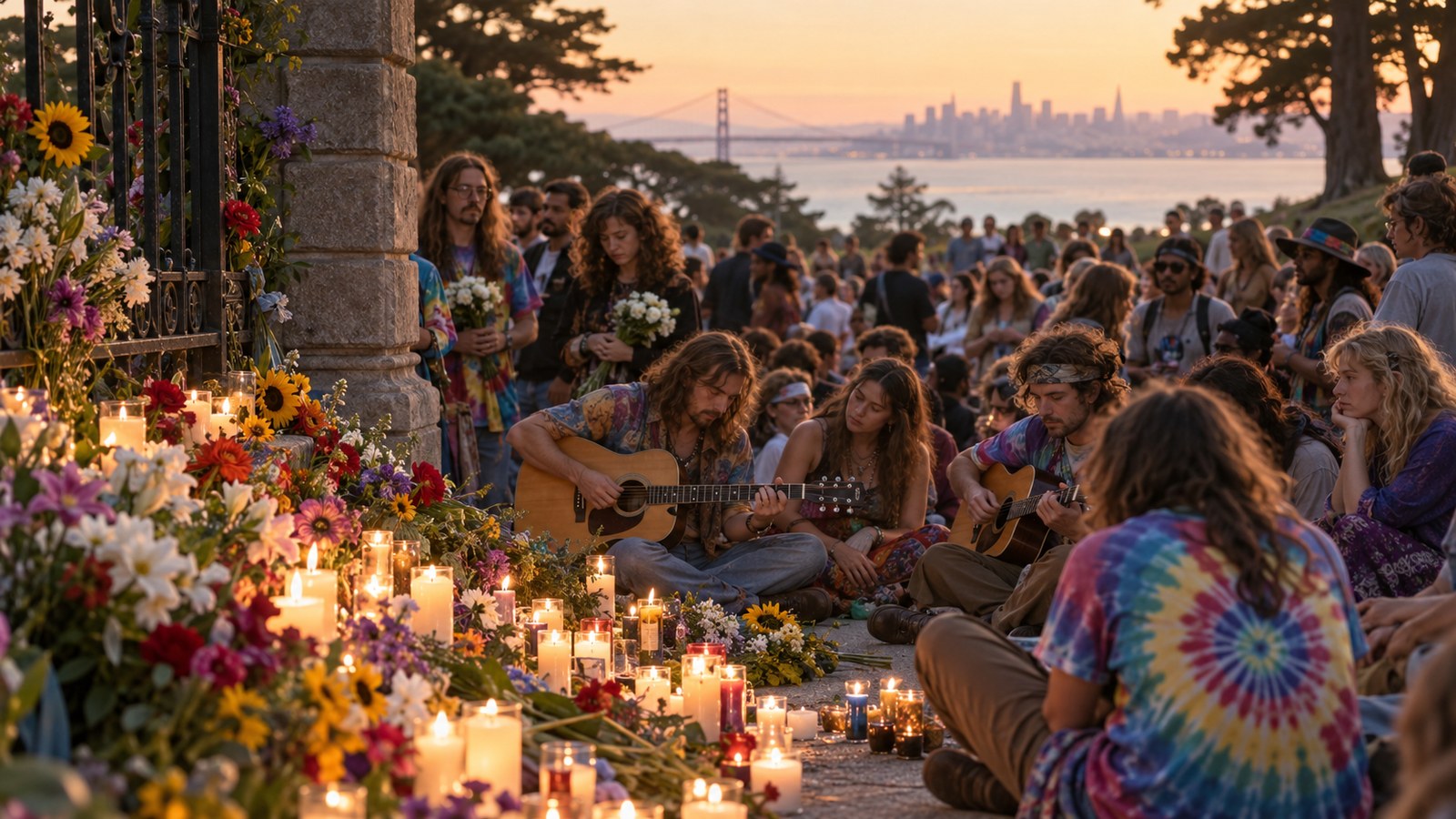
On August 9, 1995, Jerry Garcia died at age fifty-three. The guitarist, singer and principal public figure of the Grateful Dead died at a treatment center in Marin County, California. News traveled rapidly through radio, television and fan networks, bringing mourners to familiar gathering places including San Francisco’s Haight-Ashbury district and Golden Gate Park. Garcia had spent three decades at the center of a band built around improvisation, communal touring culture and a repertoire that blended rock, folk, blues, country and experimental sound. His health had been strained by diabetes, addiction and the relentless scale of later stadium tours. The date is a useful point of entry because it captures the event before later reputation made its consequences appear inevitable. Contemporary audiences encountered a new release, performance or public loss in real time, with incomplete information and expectations shaped by the media and institutions of the period.
The death was personal for listeners who had treated concerts as recurring social reunions rather than isolated shows. It also forced the surviving musicians and business organization to confront whether a community identified with one band could continue after its most recognizable creative presence was gone. Popular culture is created through more than the famous person at the center: producers, technicians, exhibitors, broadcasters, audiences and physical venues all affect what survives. Looking closely at those conditions prevents an anniversary from becoming a list of familiar names and restores the choices, limitations and competing interests that surrounded the moment.
The Grateful Dead ended as a touring unit later in 1995, though members formed new groups and eventually revisited the catalog in several combinations. Garcia’s recordings, visual iconography and fan-tape culture remained active, while debates continued about commercial memorials and the preservation of an anti-establishment legacy. That later history matters because influence is not a straight line. Works are rediscovered, technologies change, communities attach new meanings and commercial owners repackage the past. The most durable pop events remain open to argument, allowing admiration for creative achievement to exist beside criticism of exclusion, labor, power or representation.
August 9 is best remembered through the people who gathered, played music and told stories rather than through the private circumstances of his death. The response demonstrated that the Dead’s cultural achievement was not only a body of songs but a durable network of listeners. Anniversaries can flatten history into celebration, but they can also reopen it. Returning to this August date means separating what participants knew then from what later audiences added, and noticing how recordings, photographs, broadcasts and personal memories keep the event active. That distance between the immediate moment and its long afterlife is what makes this episode worth revisiting as part of popular culture.
Jerry Garcia died on August 9, 1995, at age fifty-three.
On August 9, 1995, Jerry Garcia died at age fifty-three. The guitarist, singer and principal public figure of the Grateful Dead died at a treatment center in Marin County, California.
He was the Grateful Dead's lead guitarist, a singer and a central songwriter throughout its thirty-year career.
The death was personal for listeners who had treated concerts as recurring social reunions rather than isolated shows. It also forced the surviving musicians and business organization to confront whether a community identified with one band could continue after its most recognizable creative presence was gone.
The band ended its touring identity after his death, but its music and community continued through later groups and archives.
The Grateful Dead ended as a touring unit later in 1995, though members formed new groups and eventually revisited the catalog in several combinations. Garcia's recordings, visual iconography and fan-tape culture remained active, while debates continued about commercial memorials and the preservation of an anti-establishment legacy.
Explore more of "On This Day ..."
Discover more events from the same date across news, politics, technology, sports, and other fields. Each link highlights significant moments that shaped history on different fronts.