

On This Day in Pop: August 18, 1962
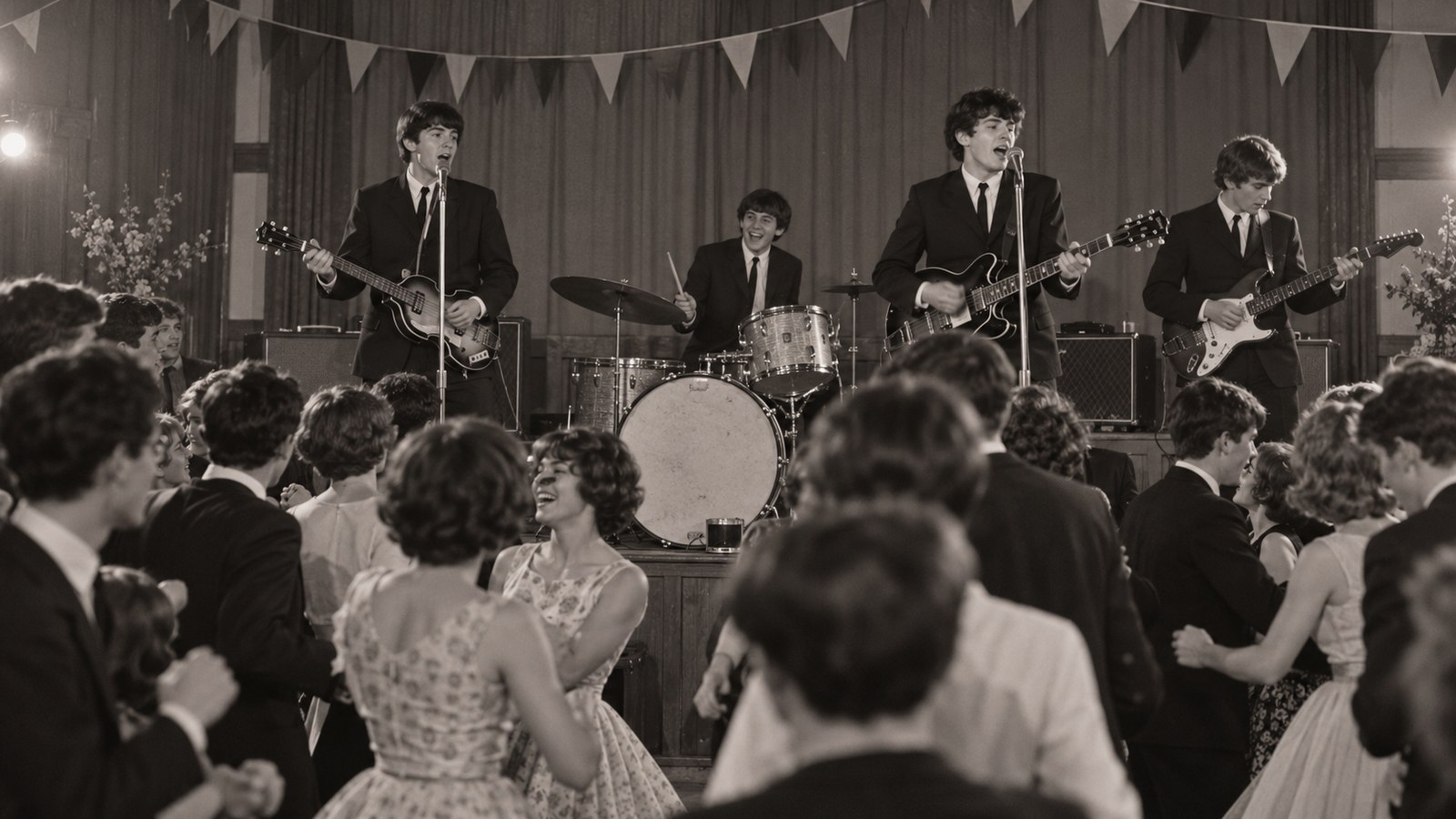
On August 18, 1962, Ringo Starr played his first official show as a Beatle. John Lennon, Paul McCartney, George Harrison and their new drummer performed at a horticultural society dance in Hulme Hall, Port Sunlight. Starr had recently left Rory Storm and the Hurricanes after manager Brian Epstein and the other Beatles decided to replace Pete Best. The musicians already knew one another from Liverpool and Hamburg, and Starr had occasionally sat in with the group. Making him a permanent member nevertheless changed a public lineup just as the Beatles were preparing for their first EMI single. The date is a useful point of entry because it captures the event before later reputation made its consequences appear inevitable. Contemporary audiences encountered a new release, performance or public loss in real time, with incomplete information and expectations shaped by the media and institutions of the period.
A drummer shapes more than tempo. Starr’s steady backbeat, left-handed fills on a right-handed kit and instinct for serving the song gave the group a distinctive rhythmic identity, while his dry humor helped complete the four-way personality presented to audiences. Popular culture is created through more than the famous person at the center: producers, technicians, exhibitors, broadcasters, audiences and physical venues all affect what survives. Looking closely at those conditions prevents an anniversary from becoming a list of familiar names and restores the choices, limitations and competing interests that surrounded the moment.
The transition upset loyal Best supporters and produced tense early appearances, but the classic lineup soon entered public memory as if it had always existed. Within weeks the band recorded ‘Love Me Do,’ beginning the release schedule that would transform all four members’ lives. That later history matters because influence is not a straight line. Works are rediscovered, technologies change, communities attach new meanings and commercial owners repackage the past. The most durable pop events remain open to argument, allowing admiration for creative achievement to exist beside criticism of exclusion, labor, power or representation.
August 18 preserves the working reality behind an apparently inevitable lineup. Famous groups are assembled through difficult personnel choices, prior friendships and small local engagements long before history freezes them into an iconic photograph. Anniversaries can flatten history into celebration, but they can also reopen it. Returning to this August date means separating what participants knew then from what later audiences added, and noticing how recordings, photographs, broadcasts and personal memories keep the event active. That distance between the immediate moment and its long afterlife is what makes this episode worth revisiting as part of popular culture.
Ringo Starr's first official Beatles show took place on August 18, 1962.
On August 18, 1962, Ringo Starr played his first official show as a Beatle. John Lennon, Paul McCartney, George Harrison and their new drummer performed at a horticultural society dance in Hulme Hall, Port Sunlight.
The performance was at Hulme Hall in Port Sunlight.
A drummer shapes more than tempo. Starr's steady backbeat, left-handed fills on a right-handed kit and instinct for serving the song gave the group a distinctive rhythmic identity, while his dry humor helped complete the four-way personality presented to audiences.
His arrival completed the Lennon–McCartney–Harrison–Starr lineup before the band's first single.
The transition upset loyal Best supporters and produced tense early appearances, but the classic lineup soon entered public memory as if it had always existed. Within weeks the band recorded 'Love Me Do,' beginning the release schedule that would transform all four members' lives.
Explore more of "On This Day ..."
Discover more events from the same date across news, politics, technology, sports, and other fields. Each link highlights significant moments that shaped history on different fronts.