

On This Day in Pop: August 25, 1939
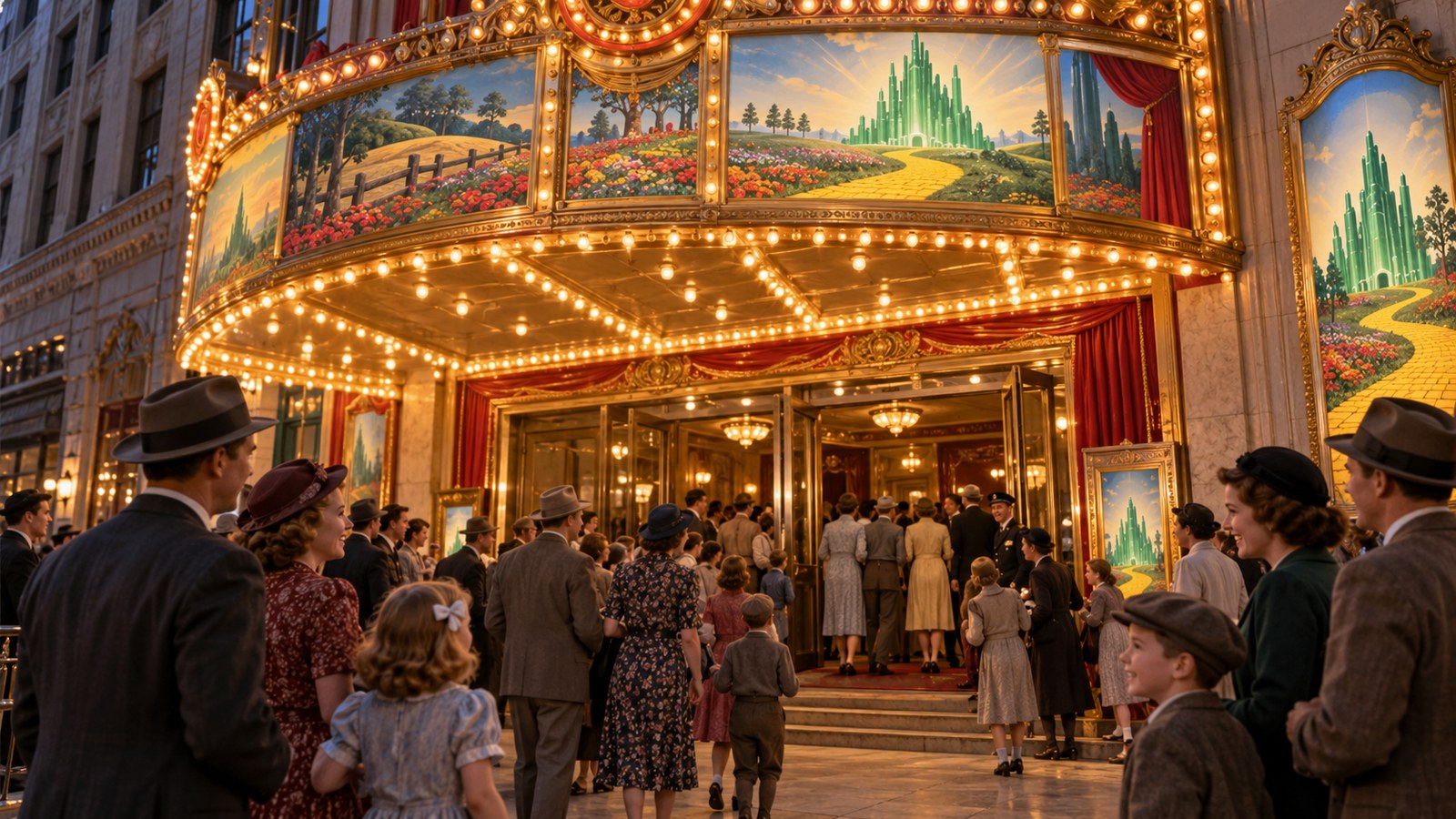
On August 25, 1939, The Wizard of Oz opened nationwide in American theaters. After previews and regional engagements, MGM’s Technicolor musical reached a broad national audience. Judy Garland played Dorothy, whose journey from sepia-toned Kansas into a saturated fantasy world joined songs, elaborate sets and characters adapted from L. Frank Baum’s books. The production involved multiple directors, extensive makeup, demanding costumes and technical effects that carried real physical risks. Harold Arlen and E. Y. Harburg’s songs supplied emotional structure, with ‘Over the Rainbow’ expressing the longing beneath the spectacle. The date is a useful point of entry because it captures the event before later reputation made its consequences appear inevitable. Contemporary audiences encountered a new release, performance or public loss in real time, with incomplete information and expectations shaped by the media and institutions of the period.
The expensive film earned respectable business but did not initially return the enormous profit later fame might imply. Its future depended on reissues and, especially, television broadcasts that turned a theatrical musical into a recurring family ritual. Popular culture is created through more than the famous person at the center: producers, technicians, exhibitors, broadcasters, audiences and physical venues all affect what survives. Looking closely at those conditions prevents an anniversary from becoming a list of familiar names and restores the choices, limitations and competing interests that surrounded the moment.
Color television made the transition from Kansas to Oz newly striking for home audiences, and quotations, songs and designs entered shared cultural memory. Restorations also brought greater attention to hazardous working conditions and the pressures placed on Garland. That later history matters because influence is not a straight line. Works are rediscovered, technologies change, communities attach new meanings and commercial owners repackage the past. The most durable pop events remain open to argument, allowing admiration for creative achievement to exist beside criticism of exclusion, labor, power or representation.
August 25 marks the nationwide opening of a film whose true mass audience arrived over decades. Its endurance shows how distribution technology can transform a well-made release into a common language, while historical scrutiny changes how that beloved object is understood. Anniversaries can flatten history into celebration, but they can also reopen it. Returning to this August date means separating what participants knew then from what later audiences added, and noticing how recordings, photographs, broadcasts and personal memories keep the event active. That distance between the immediate moment and its long afterlife is what makes this episode worth revisiting as part of popular culture.
The Wizard of Oz opened nationwide on August 25, 1939.
On August 25, 1939, The Wizard of Oz opened nationwide in American theaters. After previews and regional engagements, MGM's Technicolor musical reached a broad national audience.
MGM used Technicolor, elaborate sets and original songs to adapt L. Frank Baum's fantasy.
The expensive film earned respectable business but did not initially return the enormous profit later fame might imply. Its future depended on reissues and, especially, television broadcasts that turned a theatrical musical into a recurring family ritual.
Reissues and annual television broadcasts were crucial to its later status as a family classic.
Color television made the transition from Kansas to Oz newly striking for home audiences, and quotations, songs and designs entered shared cultural memory. Restorations also brought greater attention to hazardous working conditions and the pressures placed on Garland.
Explore more of "On This Day ..."
Discover more events from the same date across news, politics, technology, sports, and other fields. Each link highlights significant moments that shaped history on different fronts.