

On This Day in Pop: September 4, 1972
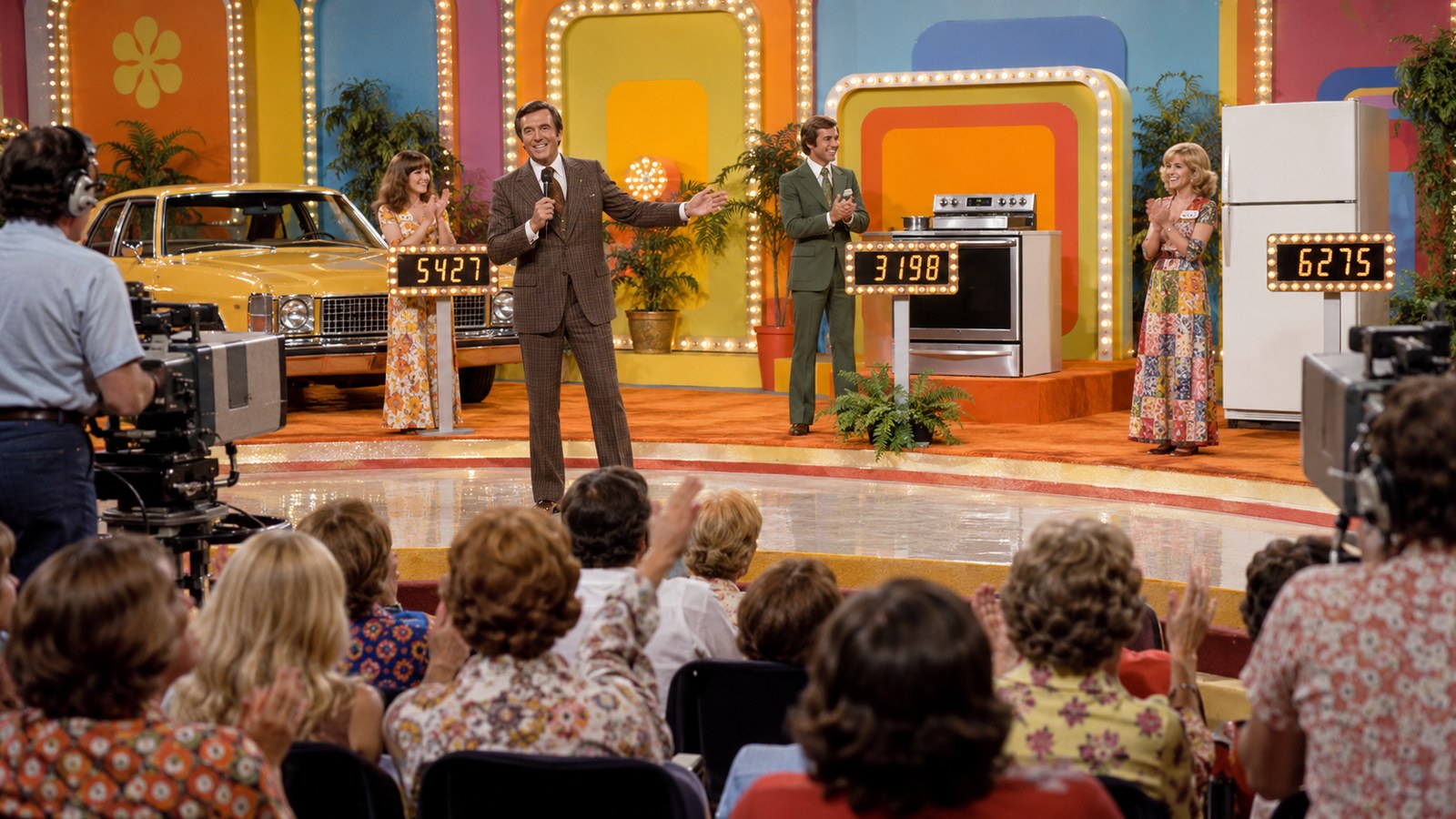
On September 4, 1972, the current version of The Price Is Right premiered on CBS. Bob Barker welcomed contestants chosen from the studio audience to estimate the prices of consumer goods, play brightly designed games and compete for showcases. The daytime program revived a title previously hosted by Bill Cullen but gave it a faster, audience-centered format. Producer Mark Goodson’s team built suspense from ordinary retail knowledge. Announcer Johnny Olson called contestants to ‘come on down,’ turning the trip from audience seat to stage into a repeatable burst of celebration before any formal game began. The date captures the event before later reputation made its consequences look inevitable, when audiences encountered a new release, performance, institution or public loss with only the expectations available at the time.
The show made shopping literacy into public performance at a moment when national brands, appliances and leisure products carried strong ideas about prosperity. Its prices date every episode, accidentally creating a long visual record of changing household expectations and inflation. Popular culture is never made by a famous name alone. Writers, producers, technicians, broadcasters, retailers, venues and audiences shape what becomes visible and what survives. Looking at those conditions turns an anniversary from a list entry into a record of choices, limits and competing interests.
The hour-long format, signature games and Showcase Showdown became durable television institutions. Drew Carey succeeded Barker in 2007, and the series continued adapting production while preserving a structure recognizable across generations. That afterlife matters because influence does not move in a straight line. Reruns, reissues, new technology, criticism and community memory can change the meaning of a work long after its first appearance. Durable pop history therefore holds creative achievement beside questions of labor, access, power and representation.
September 4 celebrates continuity built from careful repetition. The program survives because its rules are simple enough to join immediately, while chance, personality and the unpredictable arithmetic of real prices keep each episode from feeling identical. Returning to this September date means separating what participants knew then from what later audiences added. Recordings, photographs, broadcasts and recollections keep the moment active, but they also select and reshape it. That distinction protects against hindsight: a chart position, premiere, publication, concert or memorial may become a neat milestone later, but the people present still faced uncertainty. Reading the moment in both directions—through its original conditions and its accumulated meanings—keeps celebration from replacing history. The distance between the immediate event and its continuing interpretation is what makes this episode worth revisiting.
The CBS revival premiered on September 4, 1972.
On September 4, 1972, the current version of The Price Is Right premiered on CBS. Bob Barker welcomed contestants chosen from the studio audience to estimate the prices of consumer goods, play brightly designed games and compete for showcases.
Bob Barker hosted the program until 2007.
The show made shopping literacy into public performance at a moment when national brands, appliances and leisure products carried strong ideas about prosperity. Its prices date every episode, accidentally creating a long visual record of changing household expectations and inflation.
Its contestant call and pricing games made the studio audience central to the format.
The hour-long format, signature games and Showcase Showdown became durable television institutions. Drew Carey succeeded Barker in 2007, and the series continued adapting production while preserving a structure recognizable across generations.
Explore more of "On This Day ..."
Discover more events from the same date across news, politics, technology, sports, and other fields. Each link highlights significant moments that shaped history on different fronts.