

On This Day in Pop: September 3, 1982
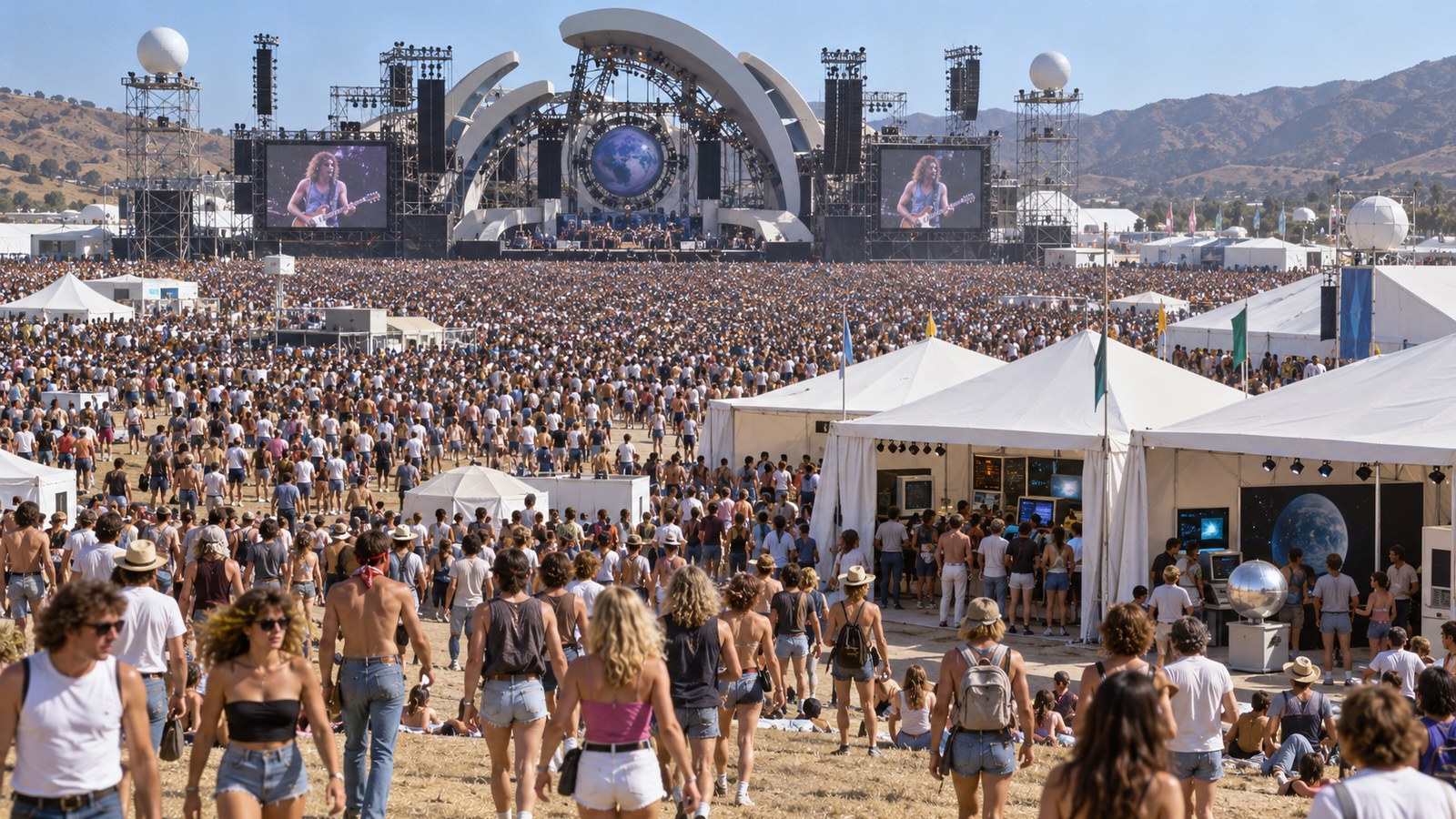
On September 3, 1982, Steve Wozniak’s first US Festival began near San Bernardino, California. Tens of thousands entered Glen Helen Regional Park in extreme heat for a three-day event joining a large rock concert to a technology exposition. Opening-day performers included the Police, Talking Heads, the B-52s, Oingo Boingo, the English Beat, the Ramones and Gang of Four. Apple co-founder Steve Wozniak financed the project after stepping back from the company following a plane crash. He imagined music and emerging personal technology as parts of the same optimistic culture, with air-conditioned exhibition tents beside a state-of-the-art outdoor stage. The date captures the event before later reputation made its consequences look inevitable, when audiences encountered a new release, performance, institution or public loss with only the expectations available at the time.
The event tried to build community at a scale that tested roads, security, water and medical planning. Its polished production distinguished it from improvised 1960s festivals, yet the enormous cost showed that technical ambition could not guarantee a sustainable business. Popular culture is never made by a famous name alone. Writers, producers, technicians, broadcasters, retailers, venues and audiences shape what becomes visible and what survives. Looking at those conditions turns an anniversary from a list entry into a record of choices, limits and competing interests.
A second, larger US Festival followed in 1983 with days organized by genre. Despite memorable performances, the two events lost millions of dollars, and their reputation survived largely through recordings, home video and accounts of Wozniak’s idealism. That afterlife matters because influence does not move in a straight line. Reruns, reissues, new technology, criticism and community memory can change the meaning of a work long after its first appearance. Durable pop history therefore holds creative achievement beside questions of labor, access, power and representation.
The opening remains a revealing bridge between rock-festival mythology and Silicon Valley’s growing cultural confidence. It proposed that computers could belong inside a mass celebration of creativity years before digital life became ordinary. Returning to this September date means separating what participants knew then from what later audiences added. Recordings, photographs, broadcasts and recollections keep the moment active, but they also select and reshape it. That distinction protects against hindsight: a chart position, premiere, publication, concert or memorial may become a neat milestone later, but the people present still faced uncertainty. Reading the moment in both directions—through its original conditions and its accumulated meanings—keeps celebration from replacing history. The distance between the immediate event and its continuing interpretation is what makes this episode worth revisiting.
The first US Festival began on September 3, 1982.
On September 3, 1982, Steve Wozniak's first US Festival began near San Bernardino, California. Tens of thousands entered Glen Helen Regional Park in extreme heat for a three-day event joining a large rock concert to a technology exposition.
It combined a multiday concert with a public technology exposition.
The event tried to build community at a scale that tested roads, security, water and medical planning. Its polished production distinguished it from improvised 1960s festivals, yet the enormous cost showed that technical ambition could not guarantee a sustainable business.
Steve Wozniak financed the event during a leave from Apple.
A second, larger US Festival followed in 1983 with days organized by genre. Despite memorable performances, the two events lost millions of dollars, and their reputation survived largely through recordings, home video and accounts of Wozniak's idealism.
Explore more of "On This Day ..."
Discover more events from the same date across news, politics, technology, sports, and other fields. Each link highlights significant moments that shaped history on different fronts.