

On This Day in Pop: September 6, 1997
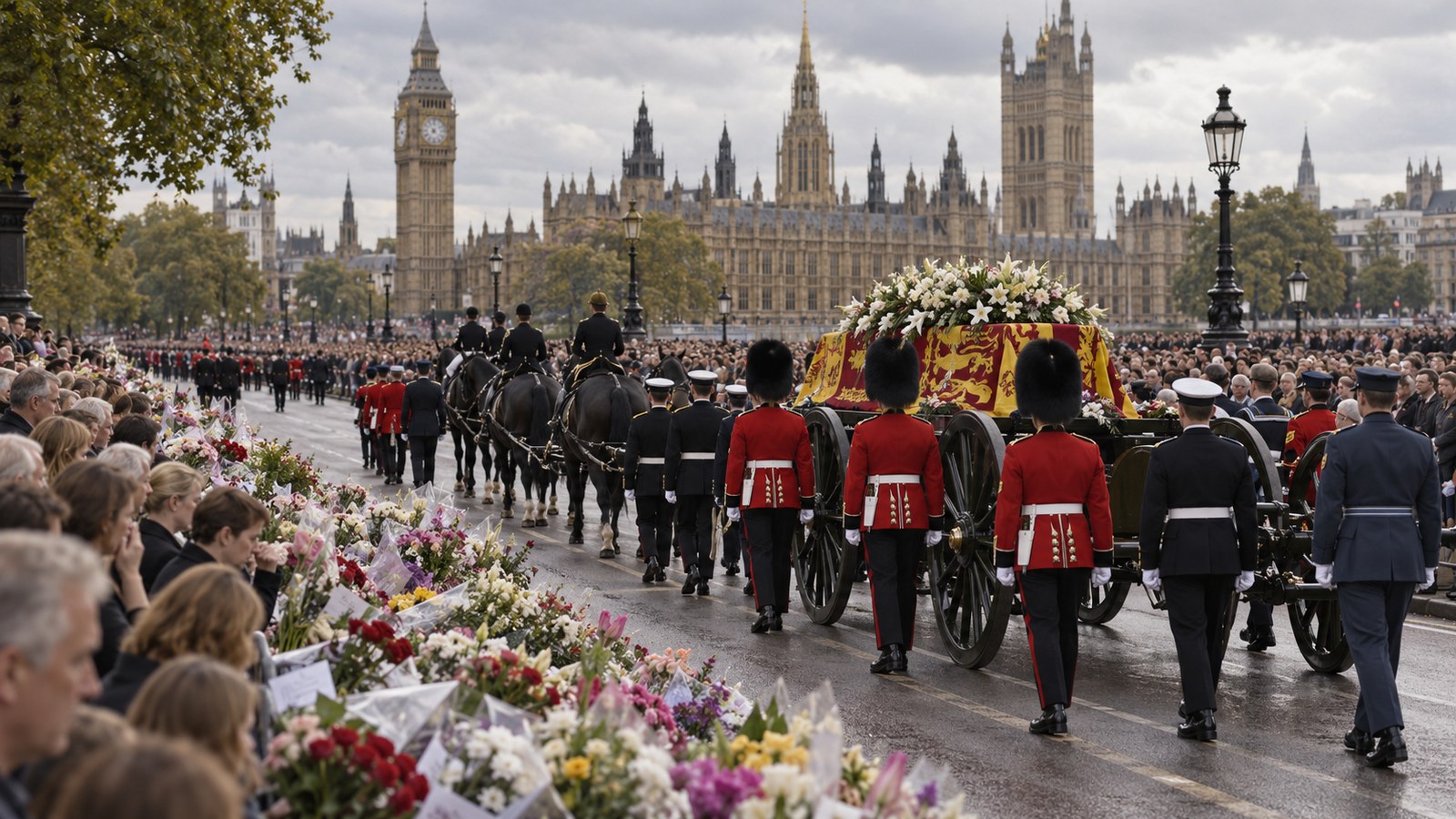
On September 6, 1997, the funeral of Diana, Princess of Wales, was held at Westminster Abbey. A funeral procession moved through London as enormous crowds stood in silence and a worldwide television audience watched the service. Diana’s brother Charles Spencer delivered a pointed eulogy, and Elton John performed a rewritten version of ‘Candle in the Wind.’ The ceremony followed a week of intense public grief after Diana died in a Paris car crash. Mountains of flowers accumulated outside royal residences, while newspapers and broadcasters confronted criticism about paparazzi culture and the monarchy faced demands for a more visible response. The date captures the event before later reputation made its consequences look inevitable, when audiences encountered a new release, performance, institution or public loss with only the expectations available at the time.
The funeral became a global media ritual in which private bereavement, national identity and celebrity culture overlapped. The presence of Diana’s young sons made the distance between public symbolism and family loss especially stark. Popular culture is never made by a famous name alone. Writers, producers, technicians, broadcasters, retailers, venues and audiences shape what becomes visible and what survives. Looking at those conditions turns an anniversary from a list entry into a record of choices, limits and competing interests.
The recording of ‘Candle in the Wind 1997’ became an extraordinary charity single, and the funeral’s images shaped later discussion of royal communication, press intrusion and collective mourning. Views of Diana’s life and legacy continued to change through documentaries, biographies and dramatizations. That afterlife matters because influence does not move in a straight line. Reruns, reissues, new technology, criticism and community memory can change the meaning of a work long after its first appearance. Durable pop history therefore holds creative achievement beside questions of labor, access, power and representation.
September 6 is best remembered with restraint. The event mattered not because grief became spectacle, but because millions used shared ceremony to process a sudden death while institutions around Diana were forced to reckon with the human cost of relentless attention. Returning to this September date means separating what participants knew then from what later audiences added. Recordings, photographs, broadcasts and recollections keep the moment active, but they also select and reshape it. That distinction protects against hindsight: a chart position, premiere, publication, concert or memorial may become a neat milestone later, but the people present still faced uncertainty. Reading the moment in both directions—through its original conditions and its accumulated meanings—keeps celebration from replacing history. The distance between the immediate event and its continuing interpretation is what makes this episode worth revisiting.
Diana's funeral took place on September 6, 1997.
On September 6, 1997, the funeral of Diana, Princess of Wales, was held at Westminster Abbey. A funeral procession moved through London as enormous crowds stood in silence and a worldwide television audience watched the service.
The service was held at Westminster Abbey after a public procession through London.
The funeral became a global media ritual in which private bereavement, national identity and celebrity culture overlapped. The presence of Diana's young sons made the distance between public symbolism and family loss especially stark.
Elton John performed a specially rewritten 'Candle in the Wind.'
The recording of 'Candle in the Wind 1997' became an extraordinary charity single, and the funeral's images shaped later discussion of royal communication, press intrusion and collective mourning. Views of Diana's life and legacy continued to change through documentaries, biographies and dramatizations.
Explore more of "On This Day ..."
Discover more events from the same date across news, politics, technology, sports, and other fields. Each link highlights significant moments that shaped history on different fronts.