

On This Day in Pop: September 7, 1968
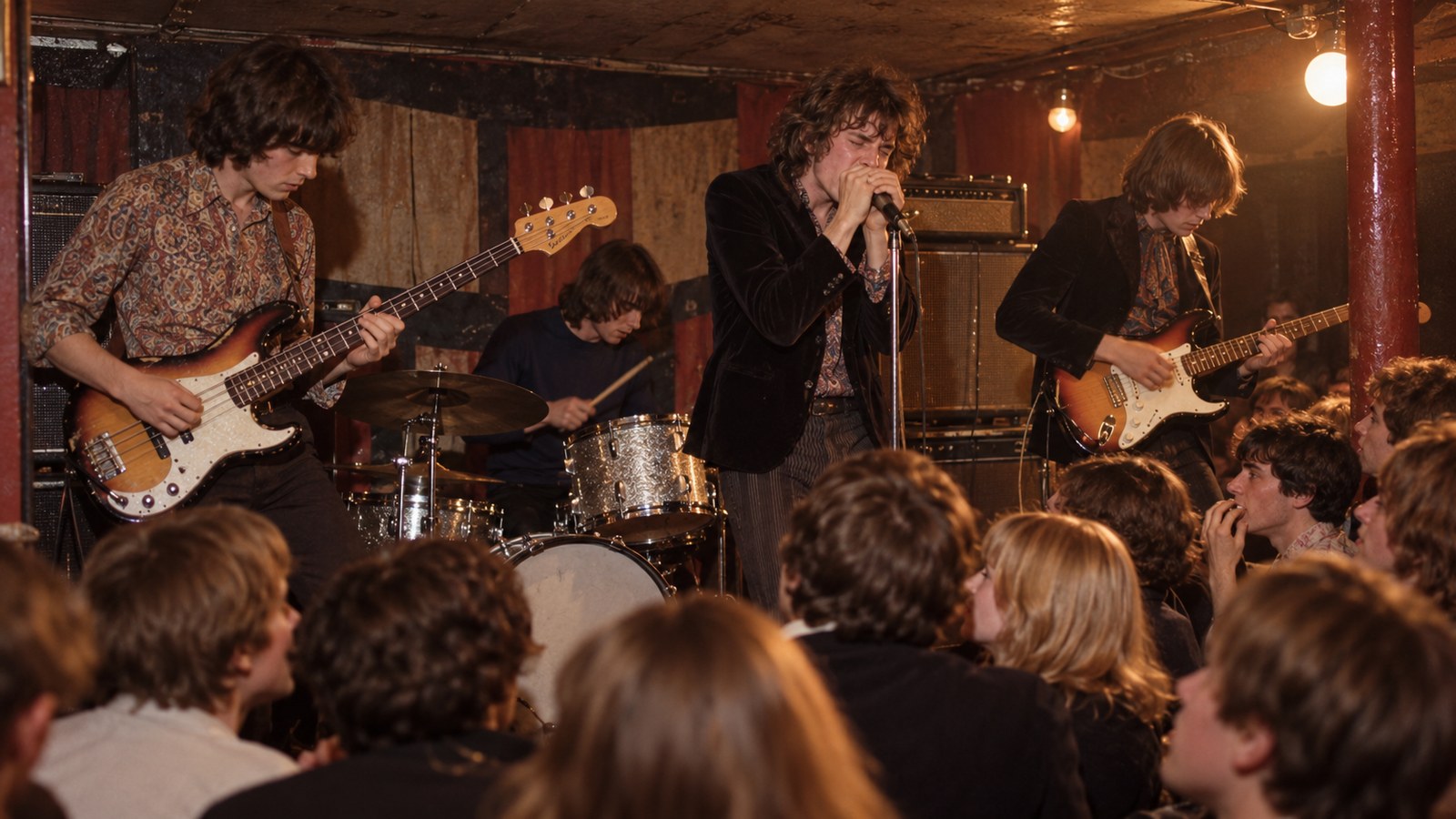
On September 7, 1968, the group that became Led Zeppelin played its first concert in Gladsaxe, Denmark. Billed as the New Yardbirds, Jimmy Page, Robert Plant, John Paul Jones and John Bonham performed at the Gladsaxe Teen Club near Copenhagen. The set mixed Yardbirds material, blues standards and new arrangements as four musicians tested a chemistry formed only weeks earlier. Page had remaining Yardbirds concert obligations and assembled a new lineup after that band dissolved. Rehearsals in London revealed unusual weight and flexibility, but the Scandinavian dates provided the first public measure of whether the combination could hold a room. The date captures the event before later reputation made its consequences look inevitable, when audiences encountered a new release, performance, institution or public loss with only the expectations available at the time.
First concerts are usually heard without the mythology later attached to them. The young audience encountered an unfamiliar act working through volume, dynamics and extended improvisation rather than a finished institution called Led Zeppelin. Popular culture is never made by a famous name alone. Writers, producers, technicians, broadcasters, retailers, venues and audiences shape what becomes visible and what survives. Looking at those conditions turns an anniversary from a list entry into a record of choices, limits and competing interests.
The musicians recorded their debut album soon after returning to Britain and adopted the Led Zeppelin name later that year. Relentless touring and a powerful album campaign established them internationally, reshaping expectations for hard rock performance and production. That afterlife matters because influence does not move in a straight line. Reruns, reissues, new technology, criticism and community memory can change the meaning of a work long after its first appearance. Durable pop history therefore holds creative achievement beside questions of labor, access, power and representation.
The Gladsaxe date preserves the fragile beginning behind a monumental reputation. It shows that even a band celebrated for immediate impact had to discover its identity in front of a modest local audience one song at a time. Returning to this September date means separating what participants knew then from what later audiences added. Recordings, photographs, broadcasts and recollections keep the moment active, but they also select and reshape it. That distinction protects against hindsight: a chart position, premiere, publication, concert or memorial may become a neat milestone later, but the people present still faced uncertainty. Reading the moment in both directions—through its original conditions and its accumulated meanings—keeps celebration from replacing history. The distance between the immediate event and its continuing interpretation is what makes this episode worth revisiting.
The concert took place on September 7, 1968, in Gladsaxe, Denmark.
On September 7, 1968, the group that became Led Zeppelin played its first concert in Gladsaxe, Denmark. Billed as the New Yardbirds, Jimmy Page, Robert Plant, John Paul Jones and John Bonham performed at the Gladsaxe Teen Club near Copenhagen.
The quartet was still billed as the New Yardbirds.
First concerts are usually heard without the mythology later attached to them. The young audience encountered an unfamiliar act working through volume, dynamics and extended improvisation rather than a finished institution called Led Zeppelin.
The four members recorded Led Zeppelin's debut album soon afterward.
The musicians recorded their debut album soon after returning to Britain and adopted the Led Zeppelin name later that year. Relentless touring and a powerful album campaign established them internationally, reshaping expectations for hard rock performance and production.
Explore more of "On This Day ..."
Discover more events from the same date across news, politics, technology, sports, and other fields. Each link highlights significant moments that shaped history on different fronts.