

On This Day in Pop: September 9, 1956
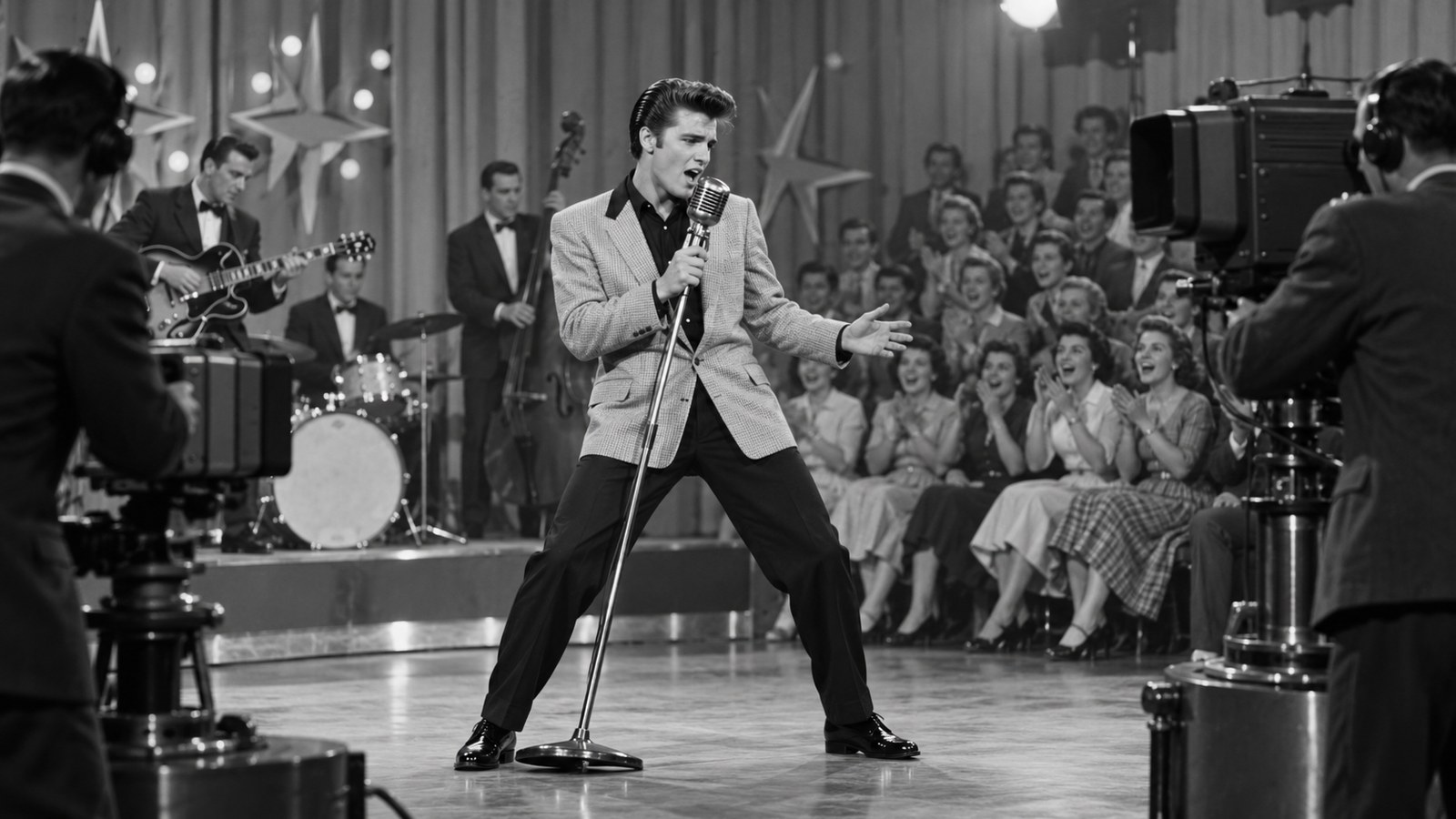
On September 9, 1956, Elvis Presley made his first appearance on The Ed Sullivan Show. Presley performed from CBS Television City in Los Angeles while Charles Laughton guest-hosted the New York program for an injured Ed Sullivan. Singing ‘Don’t Be Cruel,’ ‘Love Me Tender,’ ‘Ready Teddy’ and ‘Hound Dog,’ he reached an estimated audience of roughly sixty million. Sullivan had initially resisted booking the young singer, whose hip movement and vocal style alarmed guardians of respectable television. Strong ratings for Presley’s appearances on competing programs changed the calculation, turning controversy into an opportunity for a national event. The date captures the event before later reputation made its consequences look inevitable, when audiences encountered a new release, performance, institution or public loss with only the expectations available at the time.
The broadcast brought regional musical currents and a new form of male sexuality into family living rooms at enormous scale. It also placed a white performer shaped by Black rhythm and blues inside an industry that often separated audiences and rewarded borrowing unequally. Popular culture is never made by a famous name alone. Writers, producers, technicians, broadcasters, retailers, venues and audiences shape what becomes visible and what survives. Looking at those conditions turns an anniversary from a list entry into a record of choices, limits and competing interests.
Presley returned twice, with the final appearance famously framed more tightly by cameras. The Sullivan bookings accelerated record sales and celebrity while demonstrating television’s power to convert moral panic into mass promotion. That afterlife matters because influence does not move in a straight line. Reruns, reissues, new technology, criticism and community memory can change the meaning of a work long after its first appearance. Durable pop history therefore holds creative achievement beside questions of labor, access, power and representation.
The anniversary captures a negotiation between youth culture and network authority. Elvis did not overturn television in one night, but the size of the audience made it impossible to treat rock and roll as a passing local disturbance. Returning to this September date means separating what participants knew then from what later audiences added. Recordings, photographs, broadcasts and recollections keep the moment active, but they also select and reshape it. That distinction protects against hindsight: a chart position, premiere, publication, concert or memorial may become a neat milestone later, but the people present still faced uncertainty. Reading the moment in both directions—through its original conditions and its accumulated meanings—keeps celebration from replacing history. The distance between the immediate event and its continuing interpretation is what makes this episode worth revisiting.
Elvis first appeared on The Ed Sullivan Show on September 9, 1956.
On September 9, 1956, Elvis Presley made his first appearance on The Ed Sullivan Show. Presley performed from CBS Television City in Los Angeles while Charles Laughton guest-hosted the New York program for an injured Ed Sullivan.
Charles Laughton hosted while Sullivan recovered from an automobile accident.
The broadcast brought regional musical currents and a new form of male sexuality into family living rooms at enormous scale. It also placed a white performer shaped by Black rhythm and blues inside an industry that often separated audiences and rewarded borrowing unequally.
The broadcast reached an audience commonly estimated near sixty million.
Presley returned twice, with the final appearance famously framed more tightly by cameras. The Sullivan bookings accelerated record sales and celebrity while demonstrating television's power to convert moral panic into mass promotion.
Explore more of "On This Day ..."
Discover more events from the same date across news, politics, technology, sports, and other fields. Each link highlights significant moments that shaped history on different fronts.