

On This Day in Pop: September 8, 1966
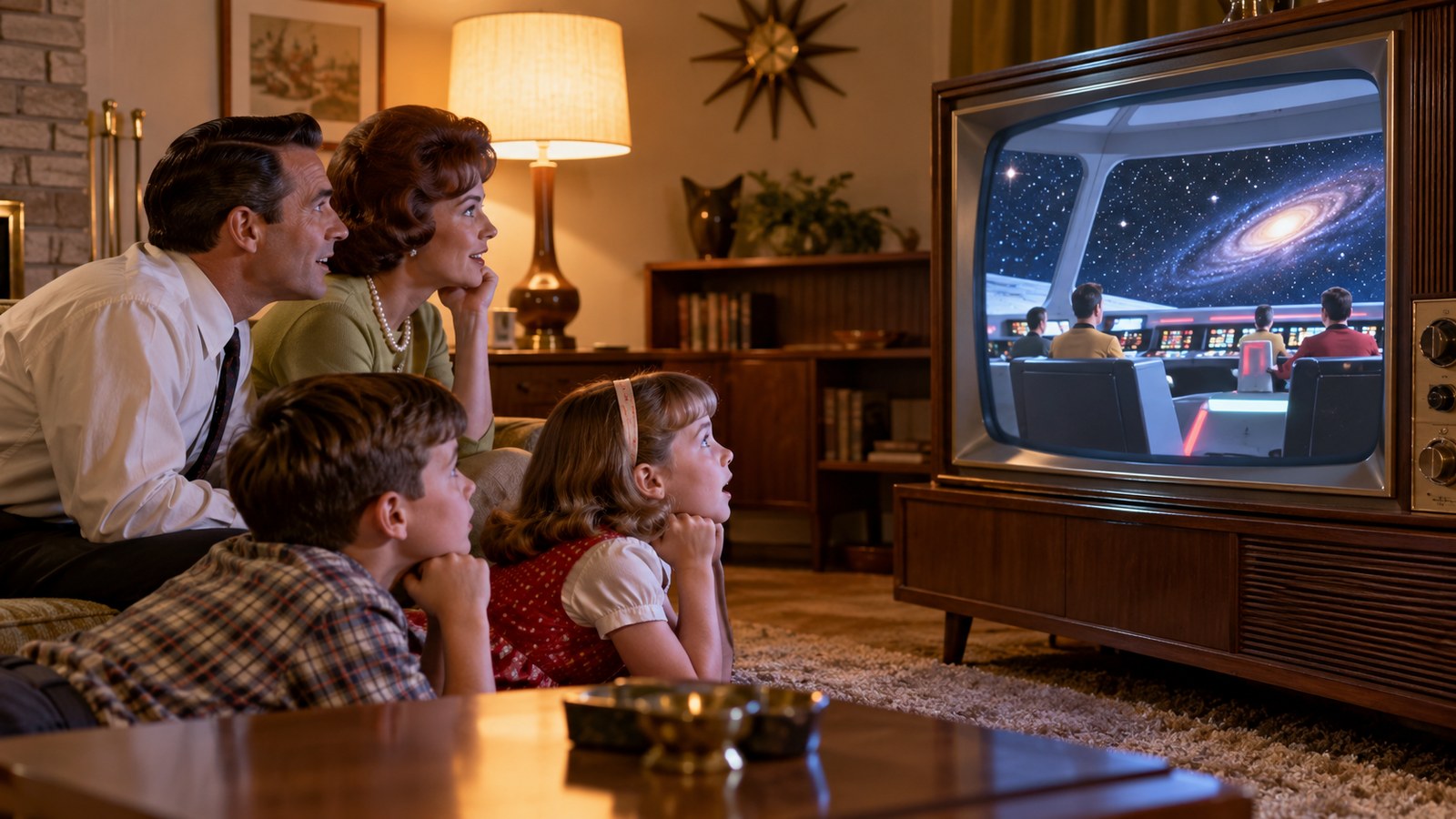
On September 8, 1966, Star Trek made its American network debut on NBC. NBC broadcast ‘The Man Trap,’ introducing viewers to the starship Enterprise, Captain James T. Kirk and a multiracial crew exploring the twenty-third century. The episode was not the first produced, but the network chose its suspenseful creature story to launch the series. Gene Roddenberry presented science fiction as a vehicle for adventure and social allegory. Desilu’s production combined colorful sets, miniatures and optical effects on a demanding television schedule, while the bridge crew suggested a future in which international cooperation had survived present conflict. The date captures the event before later reputation made its consequences look inevitable, when audiences encountered a new release, performance, institution or public loss with only the expectations available at the time.
The optimistic premise arrived during the Cold War, civil-rights struggle and rapid space exploration. Its ideals were imperfectly realized, yet the series offered a reusable setting for arguments about prejudice, authority, technology and what responsible exploration might require. Popular culture is never made by a famous name alone. Writers, producers, technicians, broadcasters, retailers, venues and audiences shape what becomes visible and what survives. Looking at those conditions turns an anniversary from a list entry into a record of choices, limits and competing interests.
Ratings never made the original run secure, and NBC canceled it after three seasons. Syndication, fan organizing and conventions transformed that short run into a durable community, followed by films, new series and decades of technical and cultural influence. That afterlife matters because influence does not move in a straight line. Reruns, reissues, new technology, criticism and community memory can change the meaning of a work long after its first appearance. Durable pop history therefore holds creative achievement beside questions of labor, access, power and representation.
September 8 marks a modest broadcast that became a shared imaginative infrastructure. Star Trek endured because its future was open enough for later creators and audiences to revise, criticize and inhabit rather than simply admire from a distance. Returning to this September date means separating what participants knew then from what later audiences added. Recordings, photographs, broadcasts and recollections keep the moment active, but they also select and reshape it. That distinction protects against hindsight: a chart position, premiere, publication, concert or memorial may become a neat milestone later, but the people present still faced uncertainty. Reading the moment in both directions—through its original conditions and its accumulated meanings—keeps celebration from replacing history. The distance between the immediate event and its continuing interpretation is what makes this episode worth revisiting.
Star Trek premiered on NBC on September 8, 1966.
On September 8, 1966, Star Trek made its American network debut on NBC. NBC broadcast 'The Man Trap,' introducing viewers to the starship Enterprise, Captain James T.
'The Man Trap' was the first episode broadcast, though not the first produced.
The optimistic premise arrived during the Cold War, civil-rights struggle and rapid space exploration. Its ideals were imperfectly realized, yet the series offered a reusable setting for arguments about prejudice, authority, technology and what responsible exploration might require.
Syndication and organized fandom helped turn a three-season series into a major franchise.
Ratings never made the original run secure, and NBC canceled it after three seasons. Syndication, fan organizing and conventions transformed that short run into a durable community, followed by films, new series and decades of technical and cultural influence.
Explore more of "On This Day ..."
Discover more events from the same date across news, politics, technology, sports, and other fields. Each link highlights significant moments that shaped history on different fronts.