

On This Day in Pop: September 11, 1967
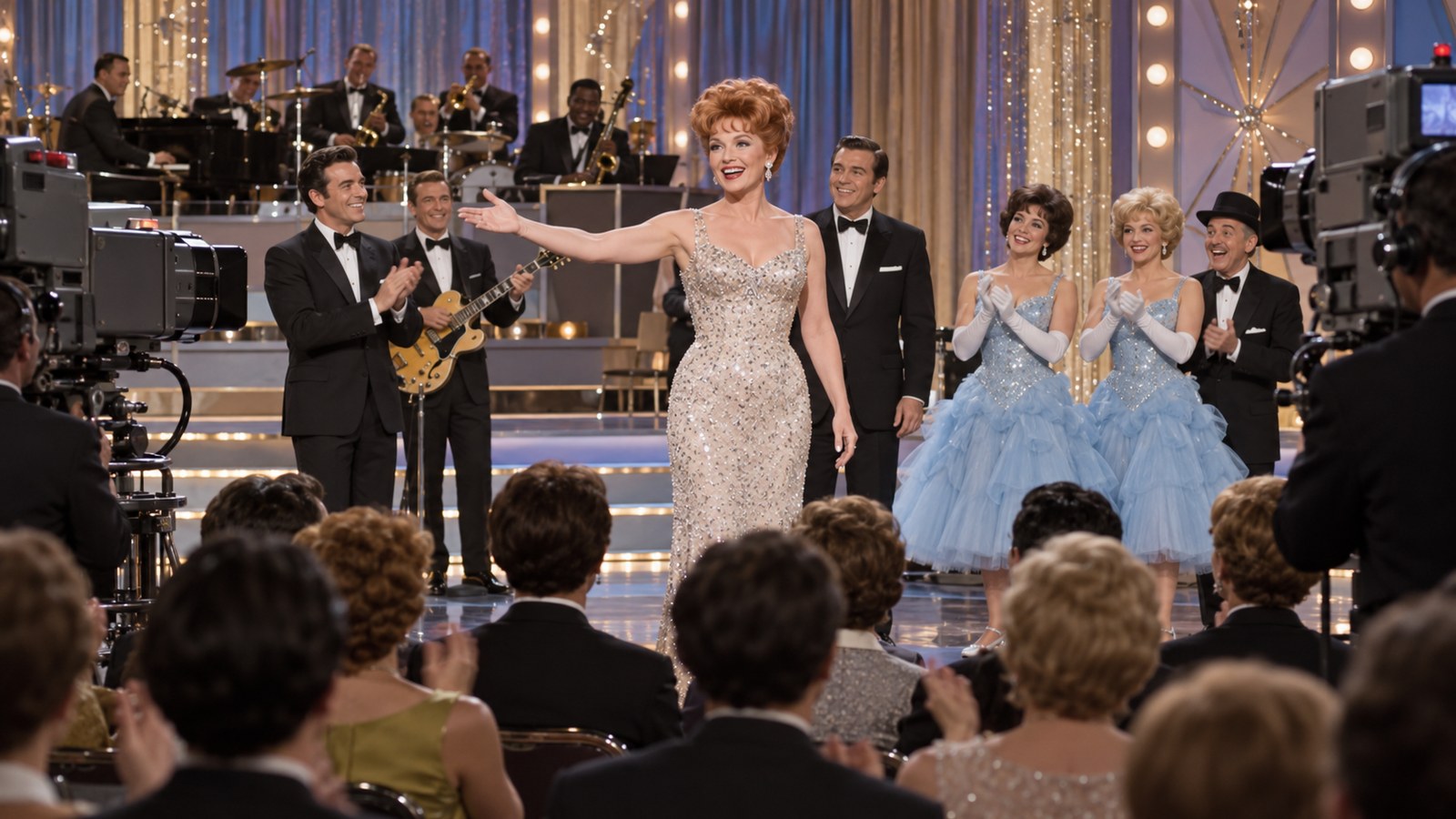
On September 11, 1967, The Carol Burnett Show premiered on CBS. Burnett opened an hour of comedy sketches, music and direct conversation with the studio audience. Harvey Korman, Vicki Lawrence and Lyle Waggoner joined her regular company, with Jim Nabors appearing as the first guest. CBS had offered Burnett a contract provision that allowed her to demand a variety series, despite executives who preferred a sitcom. She used that leverage to preserve a form built from vaudeville, Broadway, movie parody and live-performance discipline. The date captures the event before later reputation made its consequences look inevitable, when audiences encountered a new release, performance, institution or public loss with only the expectations available at the time.
A woman leading an expensive prime-time comedy hour challenged network assumptions about who could anchor variety television. The show’s design also treated costume, dance, orchestra, writers and ensemble timing as visible parts of the star’s authority. Popular culture is never made by a famous name alone. Writers, producers, technicians, broadcasters, retailers, venues and audiences shape what becomes visible and what survives. Looking at those conditions turns an anniversary from a list entry into a record of choices, limits and competing interests.
The program ran eleven seasons, earned numerous Emmy Awards and produced characters and sketches that thrived in syndication. Tim Conway’s guest appearances became a regular role, and the unscripted audience questions reinforced Burnett’s unusually direct bond with viewers. That afterlife matters because influence does not move in a straight line. Reruns, reissues, new technology, criticism and community memory can change the meaning of a work long after its first appearance. Durable pop history therefore holds creative achievement beside questions of labor, access, power and representation.
The premiere began a body of work remembered not only for laughter but for generosity toward collaborators. Burnett could command the stage while making room for other performers to break, surprise her and become central to the joke. Returning to this September date means separating what participants knew then from what later audiences added. Recordings, photographs, broadcasts and recollections keep the moment active, but they also select and reshape it. That distinction protects against hindsight: a chart position, premiere, publication, concert or memorial may become a neat milestone later, but the people present still faced uncertainty. Reading the moment in both directions—through its original conditions and its accumulated meanings—keeps celebration from replacing history. The distance between the immediate event and its continuing interpretation is what makes this episode worth revisiting.
The Carol Burnett Show premiered on September 11, 1967.
On September 11, 1967, The Carol Burnett Show premiered on CBS. Burnett opened an hour of comedy sketches, music and direct conversation with the studio audience.
Its original regulars included Harvey Korman, Vicki Lawrence and Lyle Waggoner.
A woman leading an expensive prime-time comedy hour challenged network assumptions about who could anchor variety television. The show's design also treated costume, dance, orchestra, writers and ensemble timing as visible parts of the star's authority.
The CBS variety series ran for eleven seasons.
The program ran eleven seasons, earned numerous Emmy Awards and produced characters and sketches that thrived in syndication. Tim Conway's guest appearances became a regular role, and the unscripted audience questions reinforced Burnett's unusually direct bond with viewers.
Explore more of "On This Day ..."
Discover more events from the same date across news, politics, technology, sports, and other fields. Each link highlights significant moments that shaped history on different fronts.