

On This Day in Pop: October 23, 2001
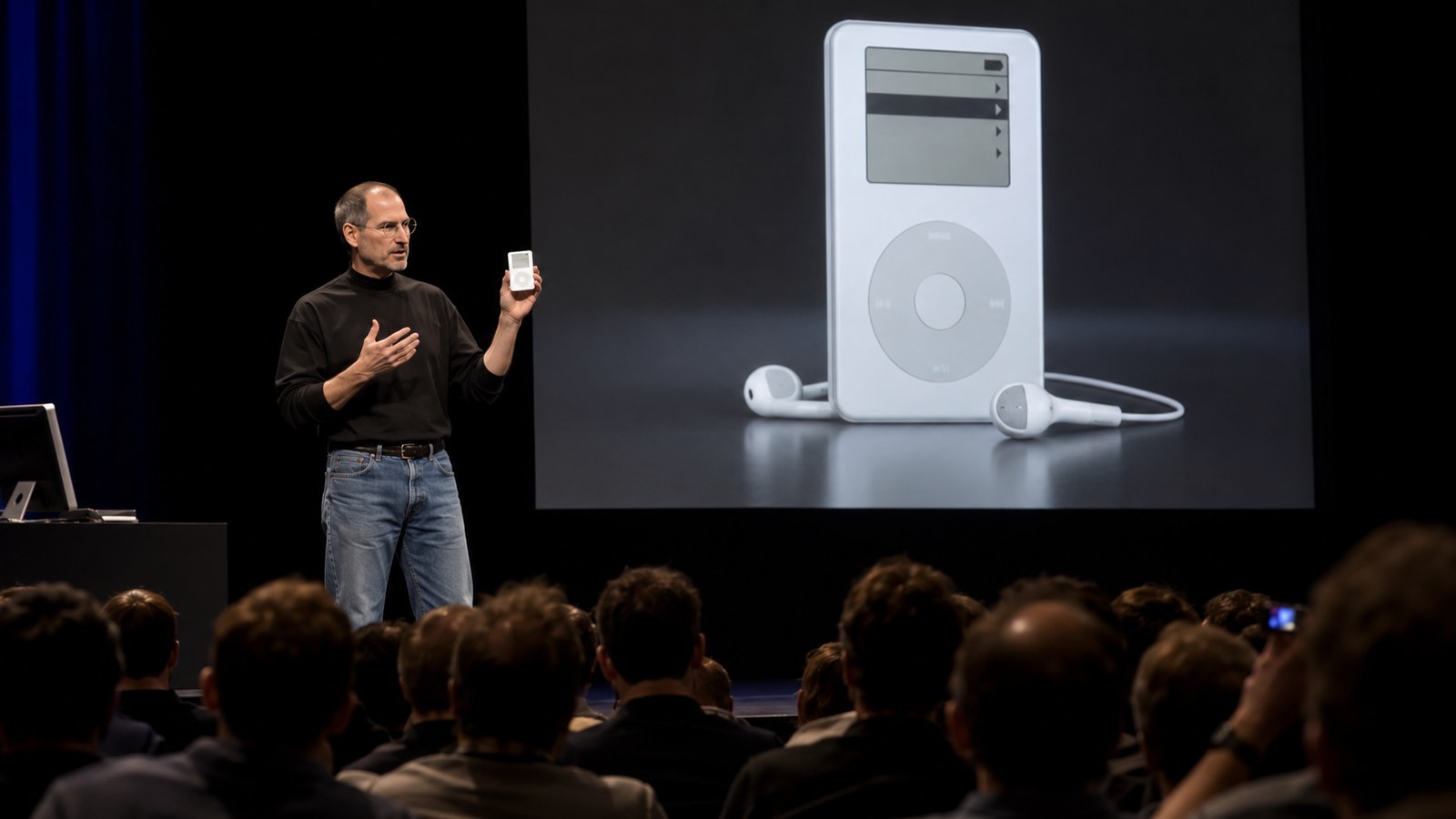
On October 23, 2001, Apple introduced the original iPod in Cupertino, California. Steve Jobs presented a small white-and-stainless-steel music player with a scroll wheel, five-gigabyte hard drive and space for about one thousand songs. FireWire and automatic synchronization with iTunes promised to move a music library quickly from Mac to pocket. Portable MP3 players already existed, but capacity, transfer speed and software management remained fragmented. Apple’s approach treated the device, desktop application and purchasing experience as parts of one system. The date captures the event before later reputation made its consequences look inevitable, when audiences encountered a new release, performance or institution with only the expectations available at the time.
The launch shifted attention from individual discs and albums toward a personal library carried everywhere. It also strengthened a path that would reshape retail music, listening habits and Apple’s identity as a consumer-electronics company. Popular culture is never made by a famous name alone. Writers, performers, producers, technicians, broadcasters, retailers, venues and audiences shape what becomes visible and what survives. Their collaboration also determines which experiments reach the public and which disappear before they can build momentum. Looking at those conditions turns an anniversary from a list entry into a record of choices, limits and competing interests.
New models added Windows support, the click wheel, smaller forms, color and video. The iTunes Store and later smartphones reduced dependence on physical recordings and ultimately made the standalone player less necessary. That afterlife matters because influence does not move in a straight line. Reruns, reissues, new technology, criticism and community memory can change the meaning of a work long after its first appearance. Durable pop history therefore holds creative achievement beside questions of labor, access, power and representation.
The introduction is remembered because the product made existing digital possibilities feel coherent. Its influence reached beyond hardware into the ordinary expectation that music should be searchable, portable and immediately synchronized. Returning to this October date means separating what participants knew then from what later audiences added. Recordings, photographs, broadcasts and recollections keep the moment active, but they also select and reshape it. That distinction protects against hindsight: a chart position, premiere, publication, concert or opening may become a neat milestone later, but the people present still faced uncertainty. Reading the moment in both directions—through its original conditions and its accumulated meanings—keeps celebration from replacing history. The distance between the immediate event and its continuing interpretation is what makes this episode worth revisiting.
Apple introduced iPod on October 23, 2001.
On October 23, 2001, Apple introduced the original iPod in Cupertino, California. Steve Jobs presented a small white-and-stainless-steel music player with a scroll wheel, five-gigabyte hard drive and space for about one thousand songs.
The first model stored about one thousand songs on a five-gigabyte drive.
The launch shifted attention from individual discs and albums toward a personal library carried everywhere. It also strengthened a path that would reshape retail music, listening habits and Apple's identity as a consumer-electronics company.
It synchronized with iTunes over FireWire.
New models added Windows support, the click wheel, smaller forms, color and video. The iTunes Store and later smartphones reduced dependence on physical recordings and ultimately made the standalone player less necessary.
Explore more of "On This Day ..."
Discover more events from the same date across news, politics, technology, sports, and other fields. Each link highlights significant moments that shaped history on different fronts.