

On This Day in Pop: October 24, 1962
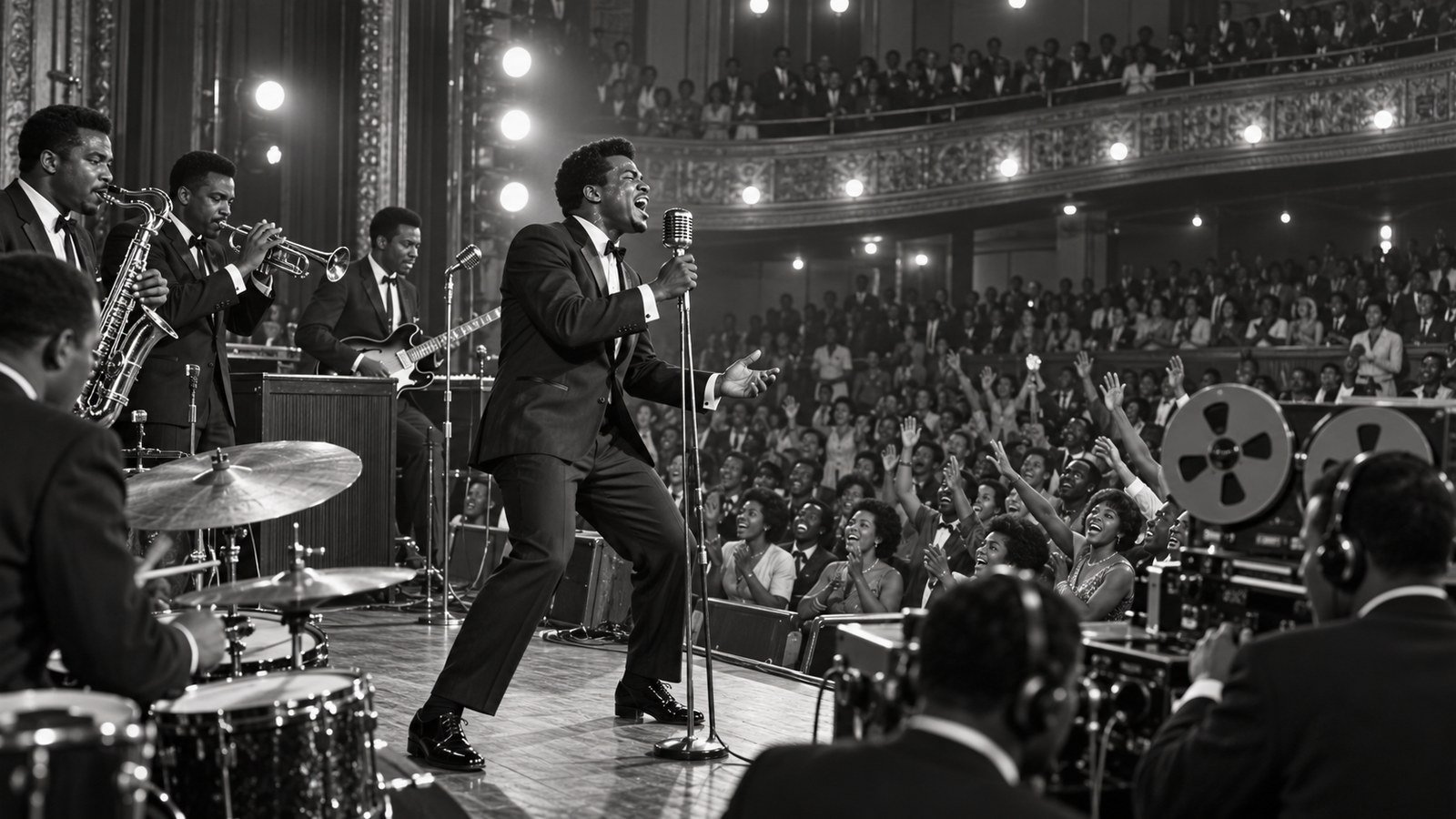
On October 24, 1962, James Brown and the Famous Flames recorded Live at the Apollo in Harlem. Brown moved through a tightly controlled revue of ballads, rhythm-and-blues hits and the dramatic cape routine surrounding ‘Please, Please, Please.’ The audience’s screams, responses and anticipation functioned as part of the music rather than background noise. His label doubted that a live album without a new single would sell, so Brown financed the recording himself. He selected an Amateur Night crowd at the Apollo, where demanding Harlem audiences had long tested performers. The date captures the event before later reputation made its consequences look inevitable, when audiences encountered a new release, performance or institution with only the expectations available at the time.
Capturing the show placed Black theatrical tradition, band discipline and audience participation at the center of an LP. It challenged the idea that concert albums were secondary souvenirs instead of complete artistic statements. Popular culture is never made by a famous name alone. Writers, performers, producers, technicians, broadcasters, retailers, venues and audiences shape what becomes visible and what survives. Their collaboration also determines which experiments reach the public and which disappear before they can build momentum. Looking at those conditions turns an anniversary from a list entry into a record of choices, limits and competing interests.
Released in 1963, the album reached number two on the pop chart and became Brown’s best-selling LP. It set a standard for live soul recording and encouraged further albums from major Black theaters. That afterlife matters because influence does not move in a straight line. Reruns, reissues, new technology, criticism and community memory can change the meaning of a work long after its first appearance. Durable pop history therefore holds creative achievement beside questions of labor, access, power and representation.
The tape preserves a performer, band and room operating as one instrument. Its excitement comes from precision under pressure: cues, pauses and emotional peaks land because years of stage labor made spontaneity repeatable. Returning to this October date means separating what participants knew then from what later audiences added. Recordings, photographs, broadcasts and recollections keep the moment active, but they also select and reshape it. That distinction protects against hindsight: a chart position, premiere, publication, concert or opening may become a neat milestone later, but the people present still faced uncertainty. Reading the moment in both directions—through its original conditions and its accumulated meanings—keeps celebration from replacing history. The distance between the immediate event and its continuing interpretation is what makes this episode worth revisiting.
The recording took place on October 24, 1962.
On October 24, 1962, James Brown and the Famous Flames recorded Live at the Apollo in Harlem. Brown moved through a tightly controlled revue of ballads, rhythm-and-blues hits and the dramatic cape routine surrounding 'Please, Please, Please.
James Brown financed the session himself.
Capturing the show placed Black theatrical tradition, band discipline and audience participation at the center of an LP. It challenged the idea that concert albums were secondary souvenirs instead of complete artistic statements.
The album reached number two on the Billboard LP chart.
Released in 1963, the album reached number two on the pop chart and became Brown's best-selling LP. It set a standard for live soul recording and encouraged further albums from major Black theaters.
Explore more of "On This Day ..."
Discover more events from the same date across news, politics, technology, sports, and other fields. Each link highlights significant moments that shaped history on different fronts.