

On This Day in Pop: November 3, 1954
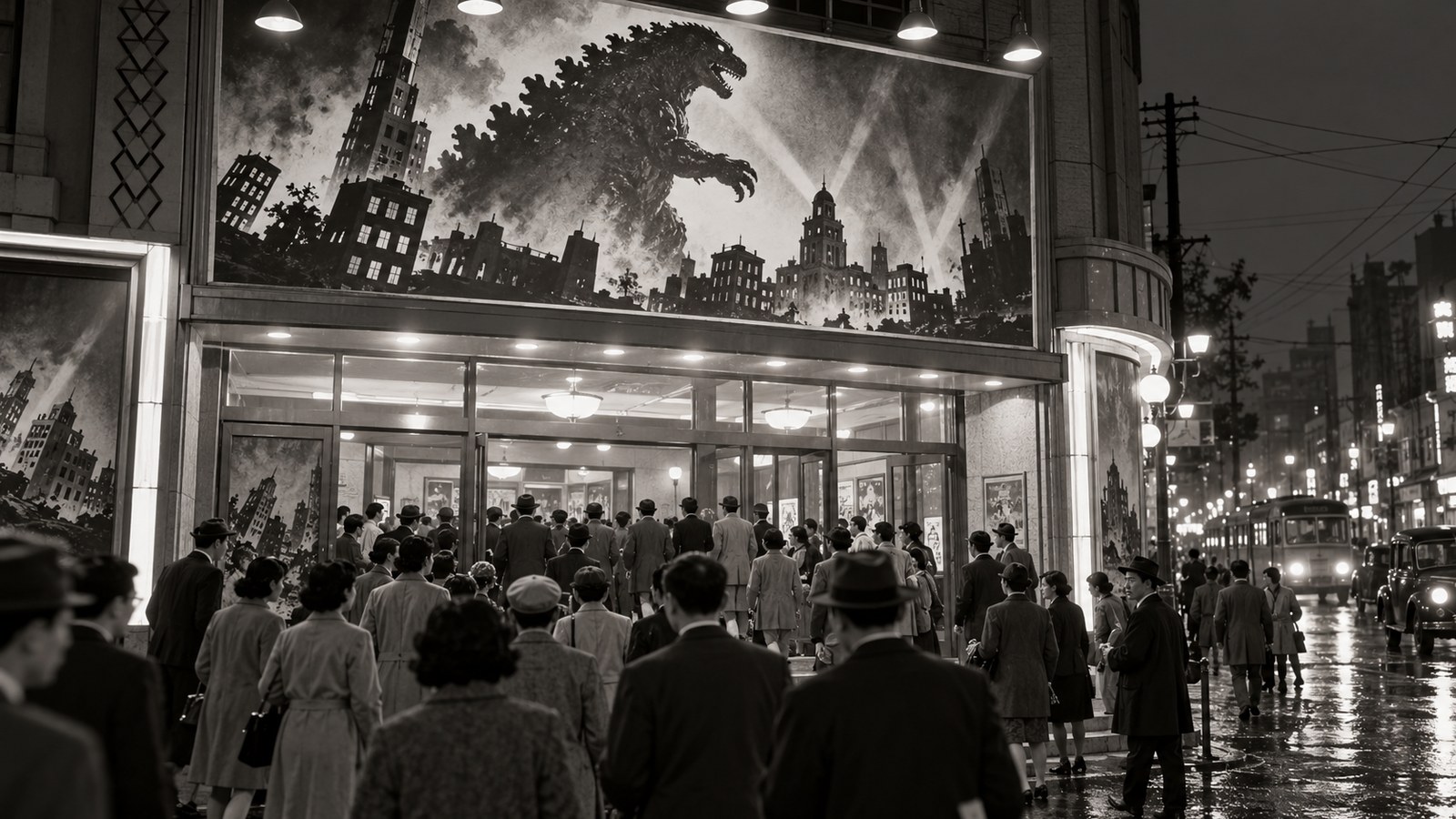
On November 3, 1954, Toho released Godzilla nationwide in Japan. Ishirō Honda’s film presented a giant creature awakened and transformed by nuclear testing, with Eiji Tsuburaya’s effects unit building miniature Tokyo streets for a performer in a heavy suit to destroy. Akira Ifukube’s score and the monster’s roar gave the threat a grave identity. Producer Tomoyuki Tanaka developed the project in a country still confronting wartime destruction and new anxiety about hydrogen-bomb tests. The Lucky Dragon No. 5 fishing crew’s exposure earlier in 1954 made radioactive danger immediate. The date captures the event before later reputation made its consequences look inevitable, when audiences encountered a new release, performance or institution with only the expectations available at the time.
The picture joined popular spectacle to postwar fear without reducing either element. Its destruction scenes offered excitement, but the human story treated scientific responsibility, grief and sacrifice with unusual seriousness for a monster film. Popular culture is never made by a famous name alone. Writers, performers, producers, technicians, broadcasters, retailers, venues and audiences shape what becomes visible and what survives. Their collaboration also determines which experiments reach the public and which disappear before they can build momentum. Looking at those conditions turns an anniversary from a list entry into a record of choices, limits and competing interests.
Godzilla became a major Japanese success and launched a long Toho series. Later films changed the creature from menace to defender and back again, while international versions altered dialogue and structure for new audiences. That afterlife matters because influence does not move in a straight line. Reruns, reissues, new technology, criticism and community memory can change the meaning of a work long after its first appearance. Durable pop history therefore holds creative achievement beside questions of labor, access, power and representation.
The release created an enduring screen icon and a flexible language for ecological, technological and political anxiety. Miniatures and suit performance also established a practical-effects tradition that influenced generations of tokusatsu production. Returning to this November date means separating what participants knew then from what later audiences added. Recordings, photographs, broadcasts and recollections keep the moment active, but they also select and reshape it. That distinction protects against hindsight: a chart position, premiere, publication, concert or opening may become a neat milestone later, but the people present still faced uncertainty. Reading the moment in both directions—through its original conditions and its accumulated meanings—keeps celebration from replacing history. The distance between the immediate event and its continuing interpretation is what makes this episode worth revisiting.
Godzilla received its nationwide Japanese release on November 3, 1954.
On November 3, 1954, Toho released Godzilla nationwide in Japan. Ishirō Honda's film presented a giant creature awakened and transformed by nuclear testing, with Eiji Tsuburaya's effects unit building miniature Tokyo streets for a performer in a heavy suit to destroy.
Ishirō Honda directed the film.
The picture joined popular spectacle to postwar fear without reducing either element. Its destruction scenes offered excitement, but the human story treated scientific responsibility, grief and sacrifice with unusual seriousness for a monster film.
Eiji Tsuburaya supervised the special effects.
Godzilla became a major Japanese success and launched a long Toho series. Later films changed the creature from menace to defender and back again, while international versions altered dialogue and structure for new audiences.
Explore more of "On This Day ..."
Discover more events from the same date across news, politics, technology, sports, and other fields. Each link highlights significant moments that shaped history on different fronts.