

On This Day in Pop: November 30, 1982
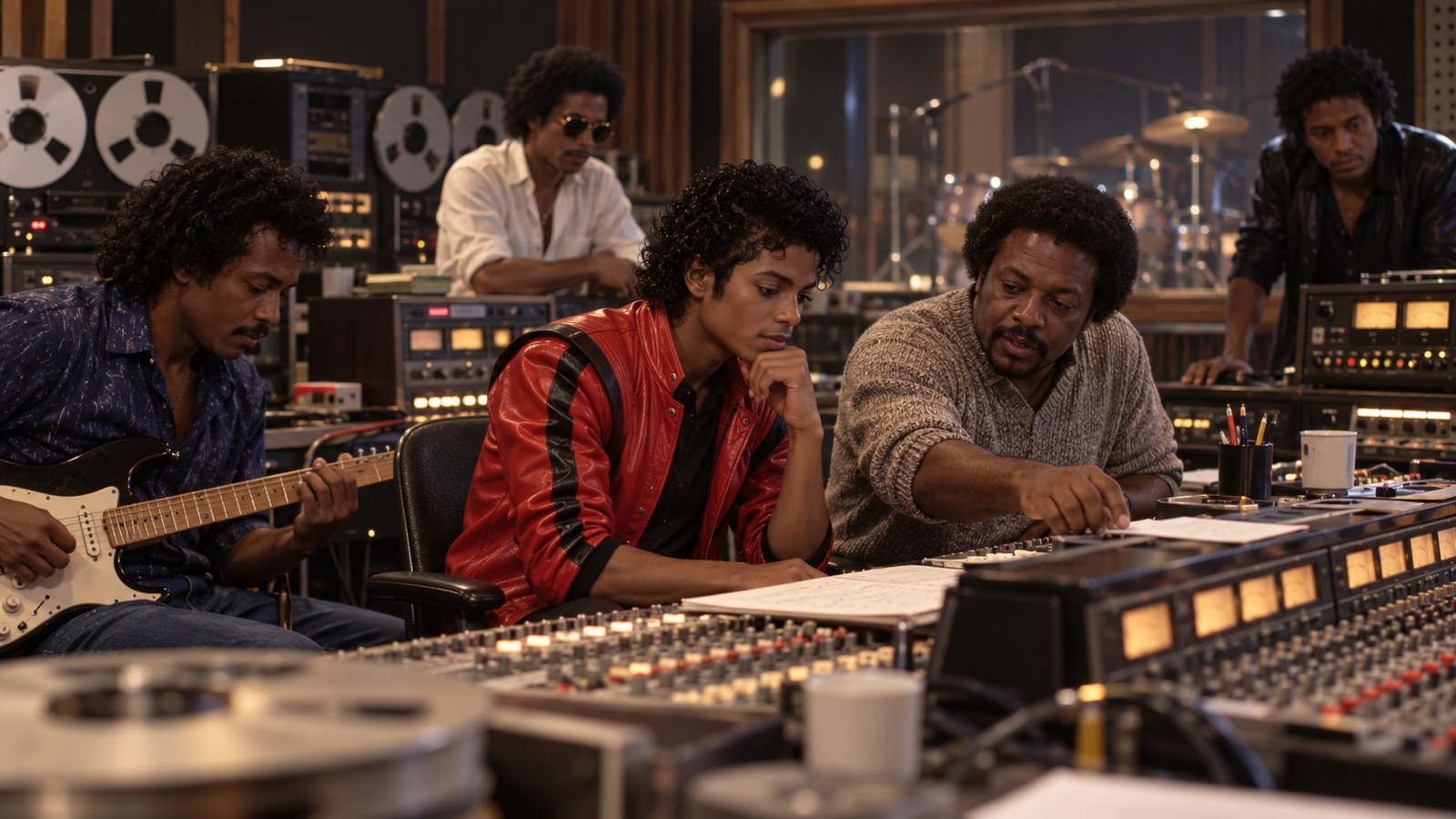
On November 30, 1982, Michael Jackson released Thriller. The nine-track album joined Jackson with producer Quincy Jones and a wide network of musicians, engineers and songwriters. Its range moved through post-disco rhythm, rock guitar, balladry and cinematic horror without losing a tightly controlled pop center. Jackson wanted to surpass the success of Off the Wall and pushed for songs with distinct identities and broad reach. Recording at Westlake Audio used analog multitracking, meticulous arrangements and repeated mixing to manage dense detail. The date captures the event before later reputation made its consequences look inevitable, when audiences encountered a new release, performance or institution with only the expectations available at the time.
The release aimed across radio formats at a time when American music media often remained racially segmented. Jackson’s performance and Jones’s production made crossover an artistic design rather than a secondary marketing label. Popular culture is never made by a famous name alone. Writers, performers, producers, technicians, broadcasters, retailers, venues and audiences shape what becomes visible and what survives. Their collaboration also determines which experiments reach the public and which disappear before they can build momentum. Looking at those conditions turns an anniversary from a list entry into a record of choices, limits and competing interests.
Seven singles reached the U.S. top ten, while Billie Jean, Beat It and the Thriller short film drove sales and challenged MTV’s exclusionary programming. The album won eight Grammy Awards and became the world’s best-selling album. That afterlife matters because influence does not move in a straight line. Reruns, reissues, new technology, criticism and community memory can change the meaning of a work long after its first appearance. Durable pop history therefore holds creative achievement beside questions of labor, access, power and representation.
Thriller changed the expected scale of a pop album campaign, linking recording, dance, fashion and ambitious video. Its commercial dominance should not obscure the collaborative studio labor that made each track function differently. Returning to this November date means separating what participants knew then from what later audiences added. Recordings, photographs, broadcasts and recollections keep the moment active, but they also select and reshape it. That distinction protects against hindsight: a chart position, premiere, publication, concert or opening may become a neat milestone later, but the people present still faced uncertainty. Reading the moment in both directions—through its original conditions and its accumulated meanings—keeps celebration from replacing history. The distance between the immediate event and its continuing interpretation is what makes this episode worth revisiting.
The widely recognized release date is November 30, 1982.
On November 30, 1982, Michael Jackson released Thriller. The nine-track album joined Jackson with producer Quincy Jones and a wide network of musicians, engineers and songwriters.
Quincy Jones produced the album with Michael Jackson.
The release aimed across radio formats at a time when American music media often remained racially segmented. Jackson's performance and Jones's production made crossover an artistic design rather than a secondary marketing label.
Thriller became the world's best-selling album.
Seven singles reached the U. S.
Explore more of "On This Day ..."
Discover more events from the same date across news, politics, technology, sports, and other fields. Each link highlights significant moments that shaped history on different fronts.