

On This Day in Pop: November 5, 1956
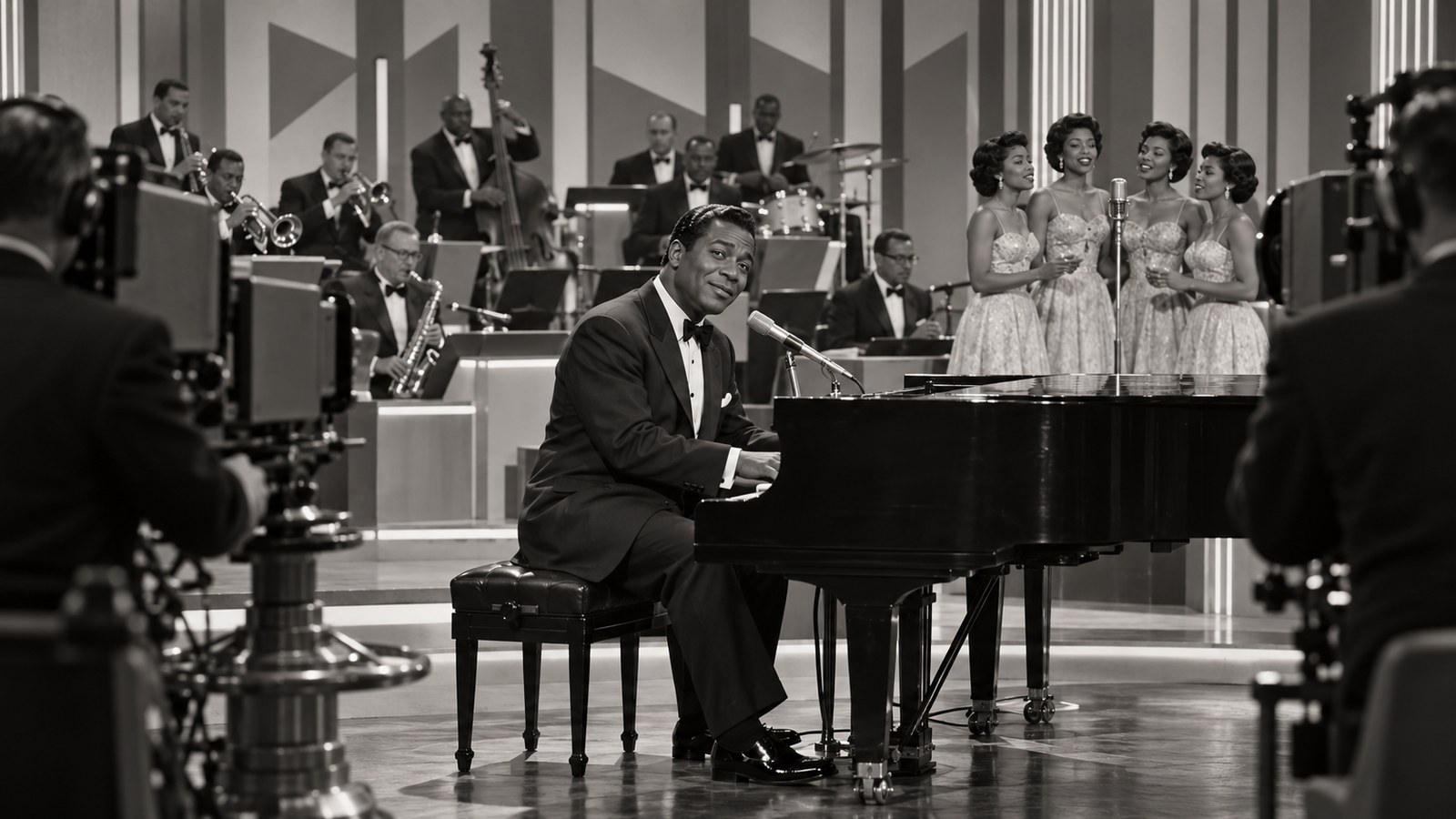
On November 5, 1956, The Nat King Cole Show premiered nationally on NBC. The fifteen-minute program placed Cole at a piano with an orchestra and vocal ensemble, presenting polished popular music in prime time. He became the first Black performer to host a nationally broadcast American television variety series. Cole was already an internationally successful singer and jazz pianist, but network executives doubted that national advertisers would support a Black host. NBC initially carried production costs while expecting sponsorship to follow. The date captures the event before later reputation made its consequences look inevitable, when audiences encountered a new release, performance or institution with only the expectations available at the time.
The premiere challenged television’s routine exclusion without pretending the barrier had disappeared. Cole’s calm authority and musical range made the program artistically credible, while advertiser resistance exposed the commercial machinery behind representation. Popular culture is never made by a famous name alone. Writers, performers, producers, technicians, broadcasters, retailers, venues and audiences shape what becomes visible and what survives. Their collaboration also determines which experiments reach the public and which disappear before they can build momentum. Looking at those conditions turns an anniversary from a list entry into a record of choices, limits and competing interests.
The show expanded to thirty minutes and welcomed major guests, including Ella Fitzgerald and Tony Bennett, yet no permanent national sponsor emerged. Cole ended the series in December 1957 after sixty-four episodes. That afterlife matters because influence does not move in a straight line. Reruns, reissues, new technology, criticism and community memory can change the meaning of a work long after its first appearance. Durable pop history therefore holds creative achievement beside questions of labor, access, power and representation.
The program opened a visible path later used by other Black hosts and variety stars. Its cancellation is equally important, showing that audience interest alone could not overcome discriminatory decisions made by sponsors and affiliates. Returning to this November date means separating what participants knew then from what later audiences added. Recordings, photographs, broadcasts and recollections keep the moment active, but they also select and reshape it. That distinction protects against hindsight: a chart position, premiere, publication, concert or opening may become a neat milestone later, but the people present still faced uncertainty. Reading the moment in both directions—through its original conditions and its accumulated meanings—keeps celebration from replacing history. The distance between the immediate event and its continuing interpretation is what makes this episode worth revisiting.
The series premiered on November 5, 1956.
On November 5, 1956, The Nat King Cole Show premiered nationally on NBC. The fifteen-minute program placed Cole at a piano with an orchestra and vocal ensemble, presenting polished popular music in prime time.
NBC broadcast the program.
The premiere challenged television's routine exclusion without pretending the barrier had disappeared. Cole's calm authority and musical range made the program artistically credible, while advertiser resistance exposed the commercial machinery behind representation.
Cole was the first Black host of a nationally broadcast U.S. variety show.
The show expanded to thirty minutes and welcomed major guests, including Ella Fitzgerald and Tony Bennett, yet no permanent national sponsor emerged. Cole ended the series in December 1957 after sixty-four episodes.
Explore more of "On This Day ..."
Discover more events from the same date across news, politics, technology, sports, and other fields. Each link highlights significant moments that shaped history on different fronts.