

On This Day in Pop: November 7, 1929
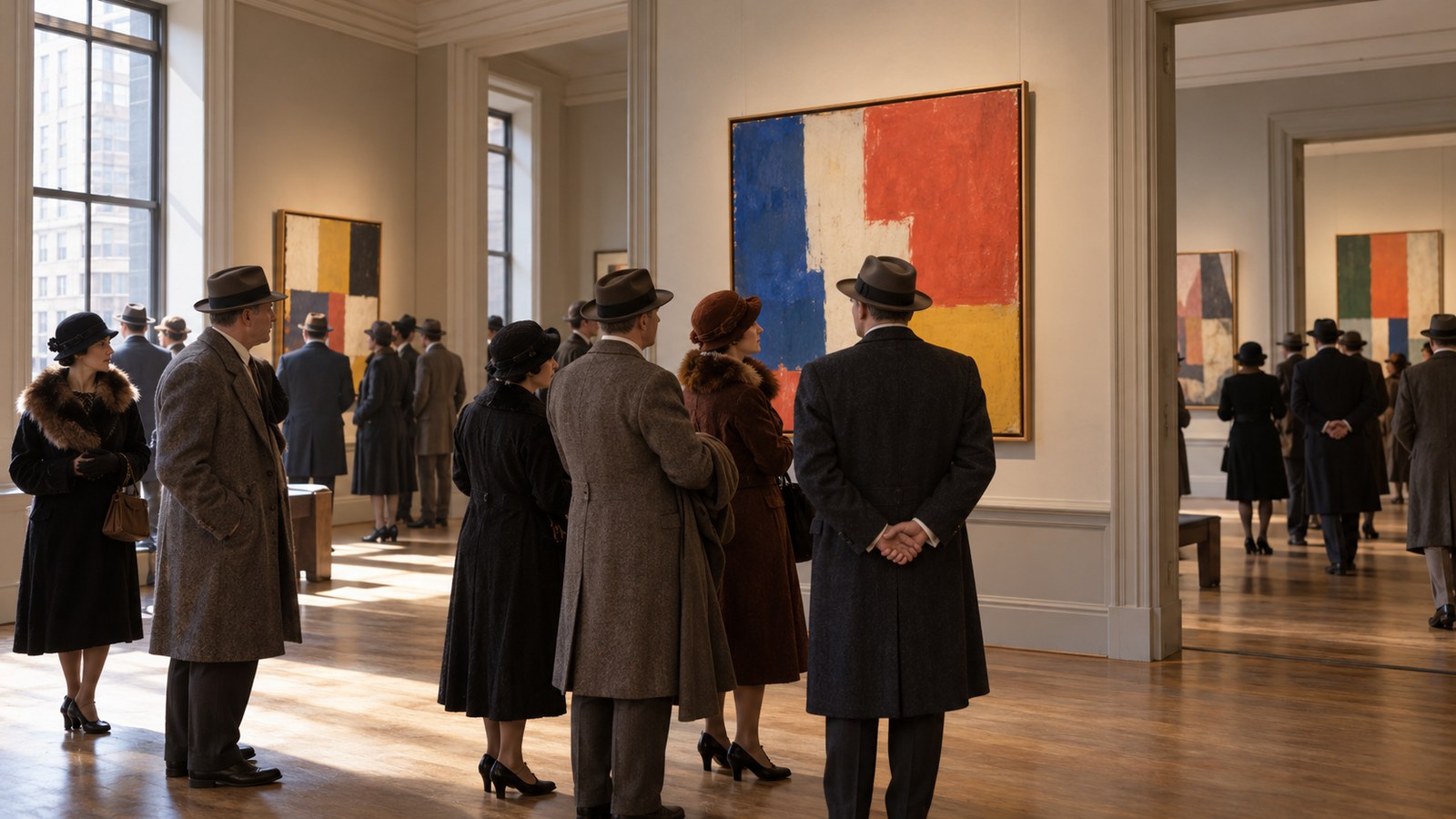
On November 7, 1929, the Museum of Modern Art opened its first exhibition in rented rooms in Manhattan. Visitors entered six rooms in the Heckscher Building at Fifth Avenue and Fifty-seventh Street to see work by Cézanne, Gauguin, Seurat and Van Gogh. The modest setting contrasted with the founders’ ambition to make modern art a continuing public institution. Lillie P. Bliss, Mary Quinn Sullivan and Abby Aldrich Rockefeller drove the project, while twenty-seven-year-old Alfred H. Barr Jr. became its founding director. The opening came days after the Wall Street crash. The date captures the event before later reputation made its consequences look inevitable, when audiences encountered a new release, performance or institution with only the expectations available at the time.
The museum challenged conservative collecting habits and argued that recent art, design, photography and film deserved serious study. It also depended on loans, patronage and a selective definition of modernism that later generations would broaden and contest. Popular culture is never made by a famous name alone. Writers, performers, producers, technicians, broadcasters, retailers, venues and audiences shape what becomes visible and what survives. Their collaboration also determines which experiments reach the public and which disappear before they can build momentum. Looking at those conditions turns an anniversary from a list entry into a record of choices, limits and competing interests.
Strong attendance pushed MoMA through several larger temporary homes before its permanent Fifty-third Street building opened in 1939. Its exhibitions helped shape the international canon of modern and contemporary art. That afterlife matters because influence does not move in a straight line. Reruns, reissues, new technology, criticism and community memory can change the meaning of a work long after its first appearance. Durable pop history therefore holds creative achievement beside questions of labor, access, power and representation.
The first show matters because a global institution began as an experimental sequence of rented galleries. Its authority grew through choices about what to display, preserve and explain—choices that continue to influence public taste. Returning to this November date means separating what participants knew then from what later audiences added. Recordings, photographs, broadcasts and recollections keep the moment active, but they also select and reshape it. That distinction protects against hindsight: a chart position, premiere, publication, concert or opening may become a neat milestone later, but the people present still faced uncertainty. Reading the moment in both directions—through its original conditions and its accumulated meanings—keeps celebration from replacing history. The distance between the immediate event and its continuing interpretation is what makes this episode worth revisiting.
MoMA's inaugural exhibition opened on November 7, 1929.
On November 7, 1929, the Museum of Modern Art opened its first exhibition in rented rooms in Manhattan. Visitors entered six rooms in the Heckscher Building at Fifth Avenue and Fifty-seventh Street to see work by Cézanne, Gauguin, Seurat and Van Gogh.
The museum began in rented rooms at 730 Fifth Avenue.
The museum challenged conservative collecting habits and argued that recent art, design, photography and film deserved serious study. It also depended on loans, patronage and a selective definition of modernism that later generations would broaden and contest.
Its first show featured Cézanne, Gauguin, Seurat and Van Gogh.
Strong attendance pushed MoMA through several larger temporary homes before its permanent Fifty-third Street building opened in 1939. Its exhibitions helped shape the international canon of modern and contemporary art.
Explore more of "On This Day ..."
Discover more events from the same date across news, politics, technology, sports, and other fields. Each link highlights significant moments that shaped history on different fronts.