

On This Day in Pop: November 9, 1961
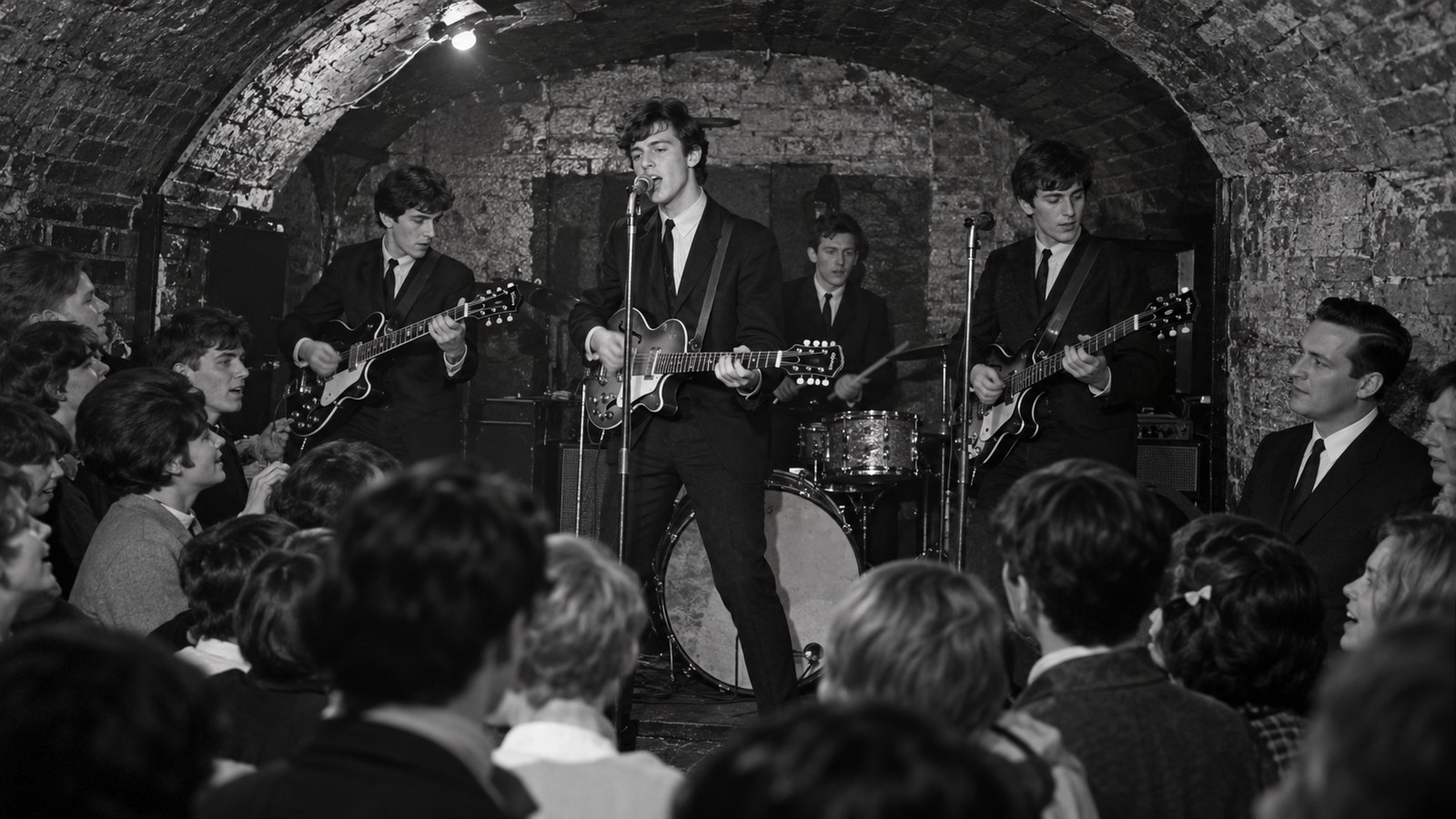
On November 9, 1961, Brian Epstein first watched the Beatles perform at Liverpool’s Cavern Club. The group played a lunchtime session in the cellar club as tightly packed young listeners stood beneath brick arches. Epstein, a well-dressed record-store manager, entered with assistant Alistair Taylor and met the musicians after the set. Customers at Epstein’s NEMS shop had been asking for a local single featuring the Beatles, prompting his curiosity. The band had developed a rough, energetic stage act through long engagements in Liverpool and Hamburg. The date captures the event before later reputation made its consequences look inevitable, when audiences encountered a new release, performance or institution with only the expectations available at the time.
The encounter joined an unruly live identity to a manager skilled in presentation, retail and negotiation. Epstein recognized potential, but his later discipline and ambition also changed how the Beatles dressed, performed and approached the industry. Popular culture is never made by a famous name alone. Writers, performers, producers, technicians, broadcasters, retailers, venues and audiences shape what becomes visible and what survives. Their collaboration also determines which experiments reach the public and which disappear before they can build momentum. Looking at those conditions turns an anniversary from a list entry into a record of choices, limits and competing interests.
Epstein became the group’s manager early in 1962, secured an audition with George Martin and guided the campaign that carried Beatlemania beyond Britain. His death in 1967 left the band without its central business organizer. That afterlife matters because influence does not move in a straight line. Reruns, reissues, new technology, criticism and community memory can change the meaning of a work long after its first appearance. Durable pop history therefore holds creative achievement beside questions of labor, access, power and representation.
The lunchtime visit demonstrates how popular breakthroughs depend on intermediaries who can translate local excitement into institutional opportunity. The music was already working; Epstein helped make distant gatekeepers hear it. Returning to this November date means separating what participants knew then from what later audiences added. Recordings, photographs, broadcasts and recollections keep the moment active, but they also select and reshape it. That distinction protects against hindsight: a chart position, premiere, publication, concert or opening may become a neat milestone later, but the people present still faced uncertainty. Reading the moment in both directions—through its original conditions and its accumulated meanings—keeps celebration from replacing history. The distance between the immediate event and its continuing interpretation is what makes this episode worth revisiting.
Epstein saw the Beatles at the Cavern on November 9, 1961.
On November 9, 1961, Brian Epstein first watched the Beatles perform at Liverpool's Cavern Club. The group played a lunchtime session in the cellar club as tightly packed young listeners stood beneath brick arches.
He managed the NEMS record store.
The encounter joined an unruly live identity to a manager skilled in presentation, retail and negotiation. Epstein recognized potential, but his later discipline and ambition also changed how the Beatles dressed, performed and approached the industry.
The performance was one of the club's lunchtime sessions.
Epstein became the group's manager early in 1962, secured an audition with George Martin and guided the campaign that carried Beatlemania beyond Britain. His death in 1967 left the band without its central business organizer.
Explore more of "On This Day ..."
Discover more events from the same date across news, politics, technology, sports, and other fields. Each link highlights significant moments that shaped history on different fronts.