

On This Day in Pop: November 24, 1966
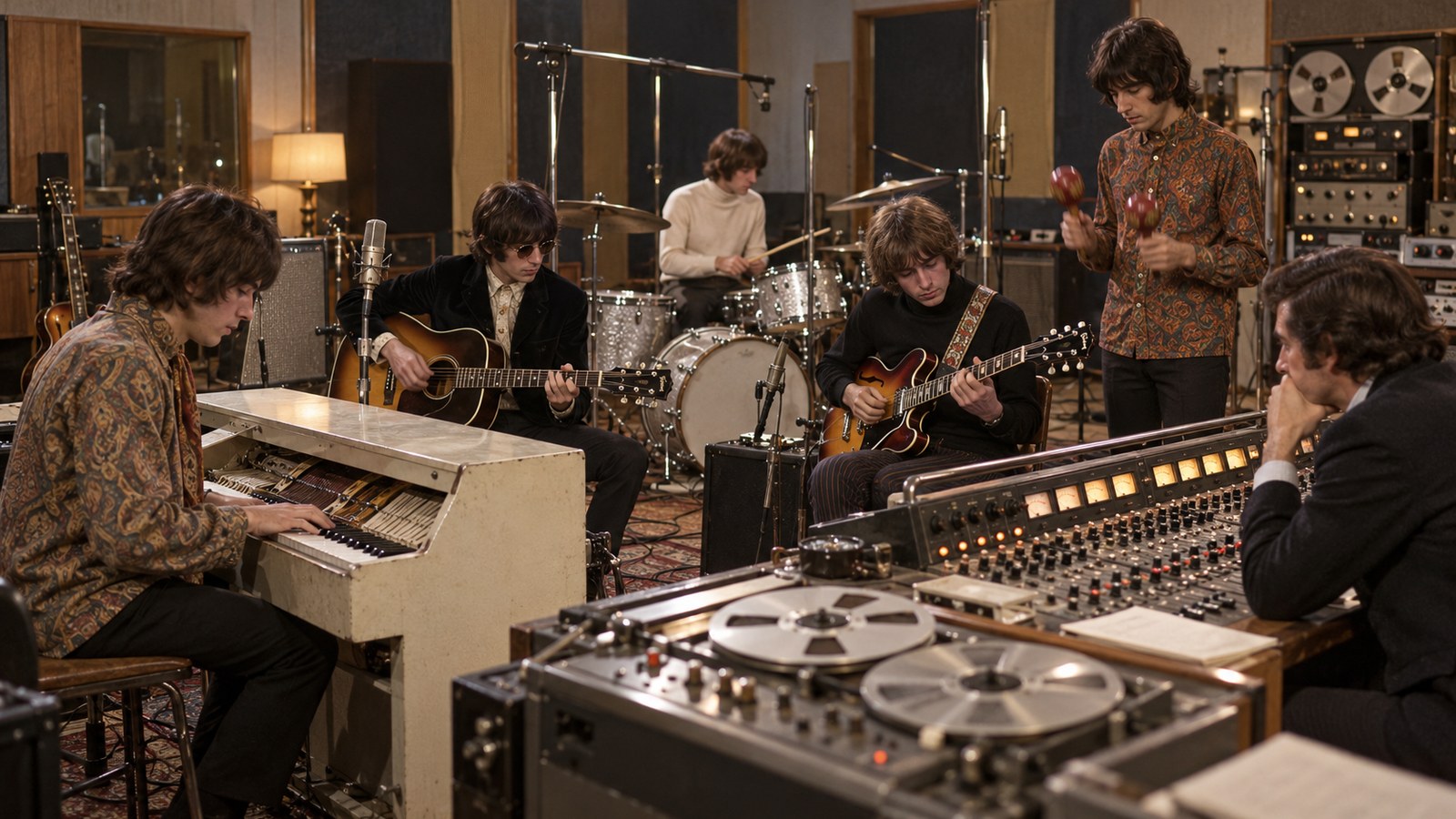
On November 24, 1966, the Beatles began recording Strawberry Fields Forever at EMI Studios in London. John Lennon played the new song for the group before they built take one with Mellotron, guitars, bass, drums, maracas and layered voices in Studio Two. The spare first arrangement was only the beginning of weeks of experimentation. The band had stopped touring in August and returned to the studio without the pressure of an immediate concert schedule. Lennon drew the song from childhood memories of Strawberry Field near his Liverpool home. The date captures the event before later reputation made its consequences look inevitable, when audiences encountered a new release, performance or institution with only the expectations available at the time.
The session marked a shift toward the studio as the Beatles’ primary creative environment. Tape speed, overdubbing, unusual instruments and producer George Martin’s problem-solving could now shape compositions that were never designed for direct stage reproduction. Popular culture is never made by a famous name alone. Writers, performers, producers, technicians, broadcasters, retailers, venues and audiences shape what becomes visible and what survives. Their collaboration also determines which experiments reach the public and which disappear before they can build momentum. Looking at those conditions turns an anniversary from a list entry into a record of choices, limits and competing interests.
Later takes divided the song between a lighter band arrangement and an orchestral version, which Martin and engineer Geoff Emerick joined despite different keys and tempos. The single appeared with Penny Lane in February 1967. That afterlife matters because influence does not move in a straight line. Reruns, reissues, new technology, criticism and community memory can change the meaning of a work long after its first appearance. Durable pop history therefore holds creative achievement beside questions of labor, access, power and representation.
The first evening opened a concentrated period of psychedelic recording. Its lasting lesson is that experimentation was not decoration added after writing; arrangement, machinery and editing became parts of composition itself. Returning to this November date means separating what participants knew then from what later audiences added. Recordings, photographs, broadcasts and recollections keep the moment active, but they also select and reshape it. That distinction protects against hindsight: a chart position, premiere, publication, concert or opening may become a neat milestone later, but the people present still faced uncertainty. Reading the moment in both directions—through its original conditions and its accumulated meanings—keeps celebration from replacing history. The distance between the immediate event and its continuing interpretation is what makes this episode worth revisiting.
Recording began on November 24, 1966.
On November 24, 1966, the Beatles began recording Strawberry Fields Forever at EMI Studios in London. John Lennon played the new song for the group before they built take one with Mellotron, guitars, bass, drums, maracas and layered voices in Studio Two.
The session took place in EMI Studio Two.
The session marked a shift toward the studio as the Beatles' primary creative environment. Tape speed, overdubbing, unusual instruments and producer George Martin's problem-solving could now shape compositions that were never designed for direct stage reproduction.
The first take used Mellotron and the Beatles' core instruments.
Later takes divided the song between a lighter band arrangement and an orchestral version, which Martin and engineer Geoff Emerick joined despite different keys and tempos. The single appeared with Penny Lane in February 1967.
Explore more of "On This Day ..."
Discover more events from the same date across news, politics, technology, sports, and other fields. Each link highlights significant moments that shaped history on different fronts.