

On This Day in Science: April 23, 1967
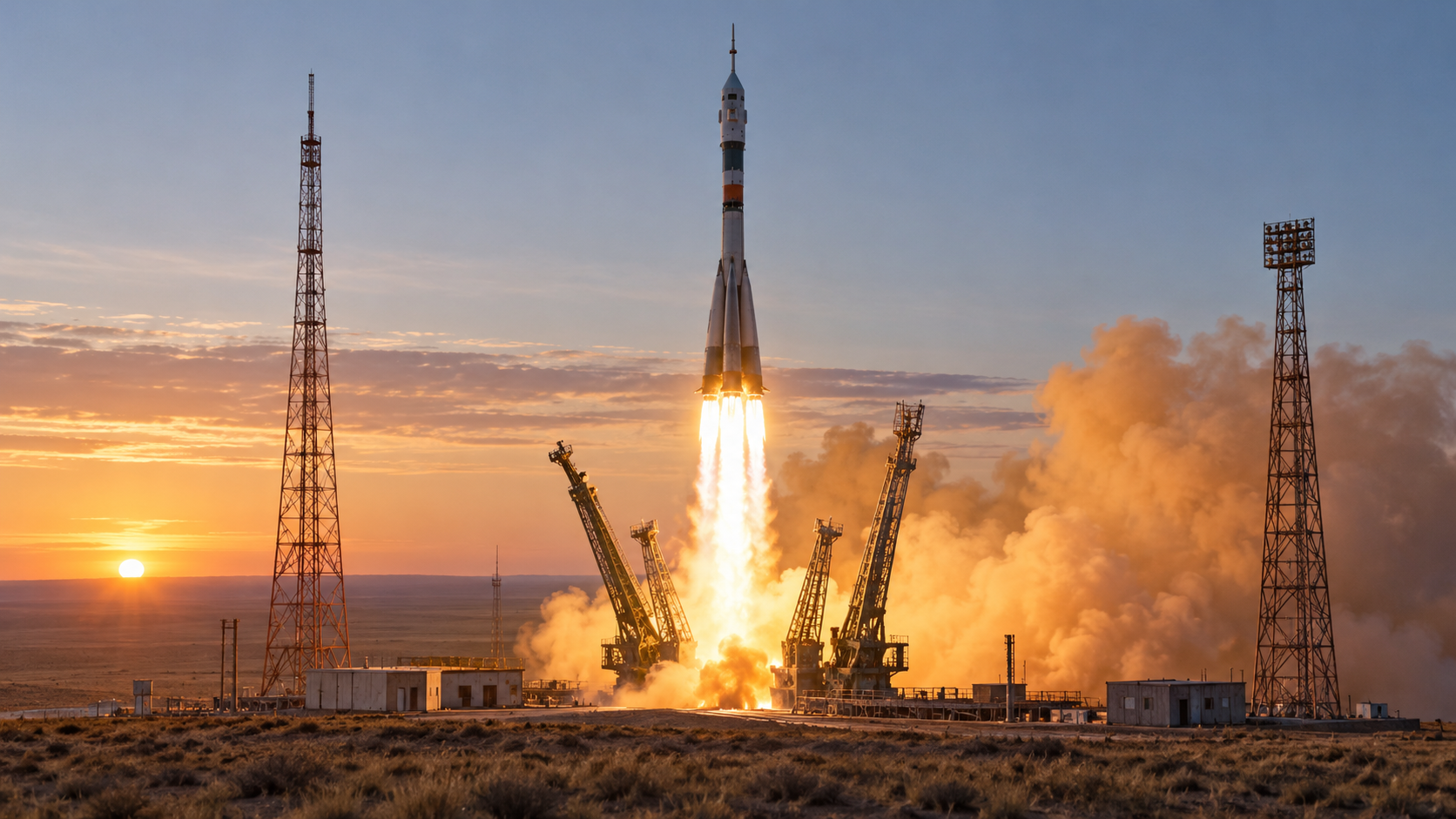
On April 23, 1967, the Soviet Union launched cosmonaut Vladimir Komarov aboard Soyuz 1 from Baikonur. The new spacecraft was intended to rendezvous with a second Soyuz, after which crew members would transfer by spacewalk. Soon after orbit insertion, one solar array failed to unfold, reducing electrical power and disturbing the craft’s balance. Other orientation and control problems followed.
Soyuz was more capable than the earlier Vostok spacecraft, with separate orbital, descent, and service modules and systems for rendezvous and docking. That complexity arrived before enough uncrewed testing had resolved major weaknesses. The planned Soyuz 2 launch was canceled, and controllers concentrated on bringing Komarov home as power declined and automatic orientation proved unreliable.
Komarov performed a manual reentry after an earlier automated attempt failed. The descent module entered the atmosphere, but its main parachute did not deploy correctly and the reserve became entangled. The capsule struck the ground at high speed on April 24, killing Komarov. He became the first person to die during a spaceflight mission.
The tragedy led to design changes and a long pause in crewed Soyuz flights. Later versions became exceptionally important and long-lived, but that record does not erase the risks exposed in 1967. Soyuz 1 is a case where schedule pressure, insufficient testing, and known technical concerns converged with fatal consequences. The anniversary highlights the difference between a first result and a finished understanding. A successful observation can settle one question while opening several harder ones, and even a failed objective can reshape later designs. Preserved data, specimens, photographs, and hardware allow new generations to revisit the work with better tools. Science advances through that continuity rather than stopping on a memorable date. Its calendar date is an entry point, not an endpoint. The people involved worked with the instruments, assumptions, and social conditions of their time, and later research has both extended and corrected their conclusions. Separating what was known that day from what became clear afterward protects the history from myth and shows how cumulative evidence turns an episode into lasting scientific knowledge. For science history, the event also shows how evidence moves from an observation or engineered test into a durable body of knowledge. Instruments supplied measurements, specialists debated interpretation, and later work refined what the first result could mean. Archives preserve the early record while new methods let researchers ask different questions of it. That continuing revision is the process through which a dated milestone remains scientifically useful.
One solar array failed to deploy, reducing electricity and complicating spacecraft orientation.
Additional sensor and control problems forced cancellation of the planned rendezvous mission.
Komarov carried out a manual reentry after automation problems.
The main parachute failed and the reserve became entangled before impact.
Crewed Soyuz missions paused while engineers changed systems and procedures.
Later reliability grew from confronting the failures revealed by the first flight.
Explore more of "On This Day ..."
Discover more events from the same date across news, politics, technology, sports, and other fields. Each link highlights significant moments that shaped history on different fronts.