

On This Day in Science: May 23, 1958
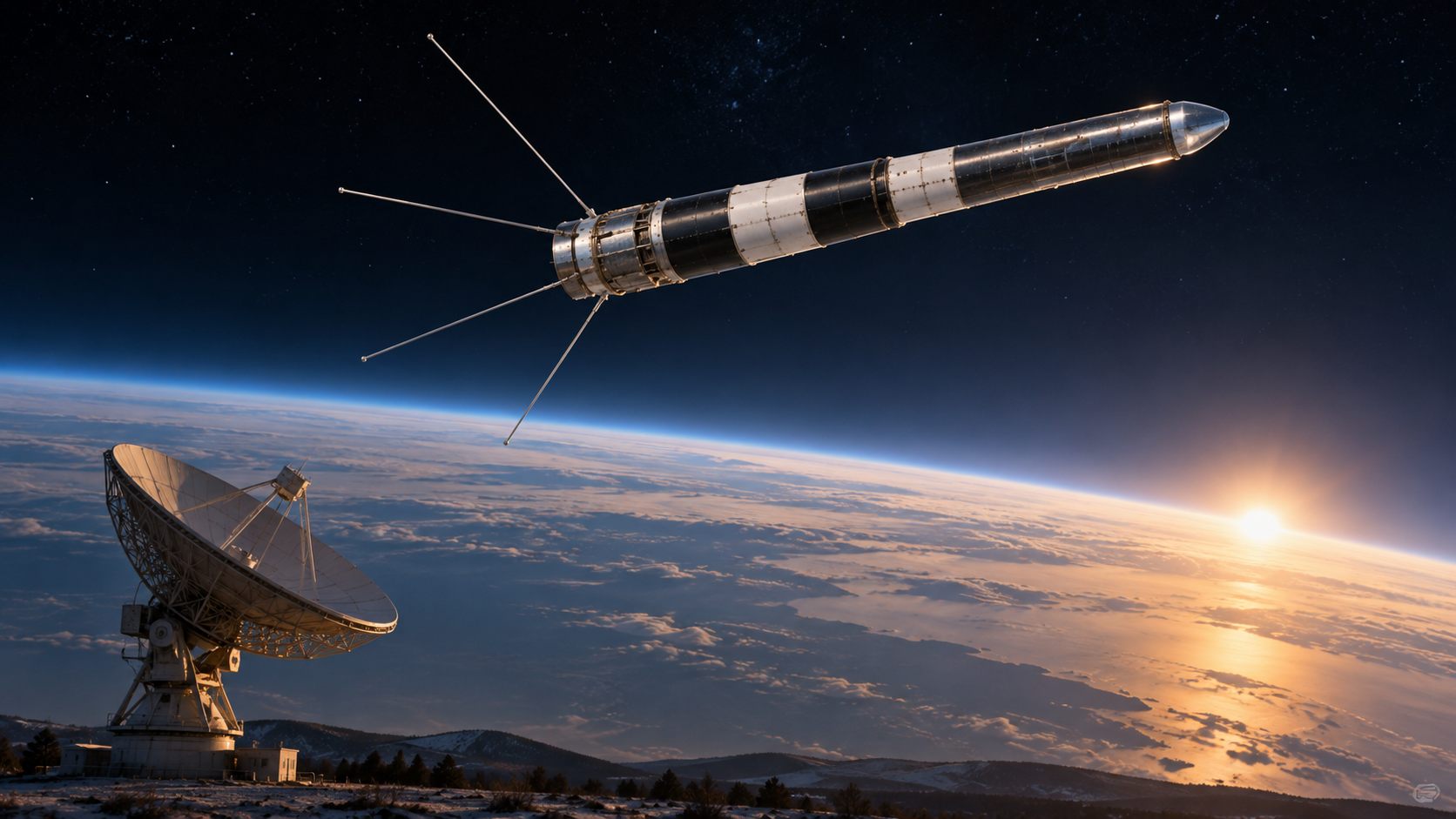
On May 23, 1958, Explorer 1 made its final radio transmission after its batteries were exhausted. The United States’ first successful satellite had launched on January 31 with a cosmic-ray detector designed by James Van Allen’s University of Iowa team. During nearly four months of operation, the instrument returned puzzling data that helped reveal belts of energetic particles trapped by Earth’s magnetic field.
At certain altitudes, the detector counted far fewer cosmic rays than expected. Van Allen’s team proposed that radiation was so intense that it saturated the Geiger tube, producing an apparent absence rather than a true low value. Explorer 3 carried a tape recorder and supplied broader orbital coverage, confirming the interpretation and helping map what became known as the Van Allen belts.
Explorer 1 also carried micrometeorite detectors and remained in orbit long after its transmitter stopped. Atmospheric drag gradually lowered the satellite until it reentered in 1970 after more than fifty-eight thousand orbits. Its useful scientific lifetime was therefore set by battery and communications limits, not by the survival of the structure.
The last signal closed a short operating period with a large legacy. It demonstrated that instruments can fail in scientifically informative ways and established space as an environment to be measured, not simply crossed. The anniversary highlights the difference between a first result and a finished understanding. A successful observation can settle one question while opening several harder ones, and even a failed objective can reshape later designs. Preserved data, specimens, photographs, and hardware allow new generations to revisit the work with better tools. Science advances through that continuity rather than stopping on a memorable date. Its calendar date is an entry point, not an endpoint. The people involved worked with the instruments, assumptions, and social conditions of their time, and later research has both extended and corrected their conclusions. Separating what was known that day from what became clear afterward protects the history from myth and shows how cumulative evidence turns an episode into lasting scientific knowledge. For science history, the event also shows how evidence moves from an observation or engineered test into a durable body of knowledge. Instruments supplied measurements, specialists debated interpretation, and later work refined what the first result could mean. Archives preserve the early record while new methods let researchers ask different questions of it. That continuing revision is the process through which a dated milestone remains scientifically useful. Seen across a longer timeline, scientific milestones are junctions rather than isolated beginnings. Earlier experiments, tools, and institutions made the work possible, while later teams tested limits and carried the result into new settings. What survives is a traceable chain of evidence, correction, and application that allows one moment to remain relevant as knowledge and technology continue to change.
Explorer 1's cosmic-ray counts sometimes dropped unexpectedly at high altitude.
The instrument was being overwhelmed by intense radiation rather than finding empty space.
Explorer 3 recorded measurements across portions of the orbit beyond ground-station range.
Combined evidence confirmed belts of charged particles held by Earth's magnetic field.
Battery exhaustion ended transmissions after about four months.
Explorer 1 continued circling Earth until atmospheric reentry in 1970.
Explore more of "On This Day ..."
Discover more events from the same date across news, politics, technology, sports, and other fields. Each link highlights significant moments that shaped history on different fronts.