

On This Day in Science: June 6, 1971
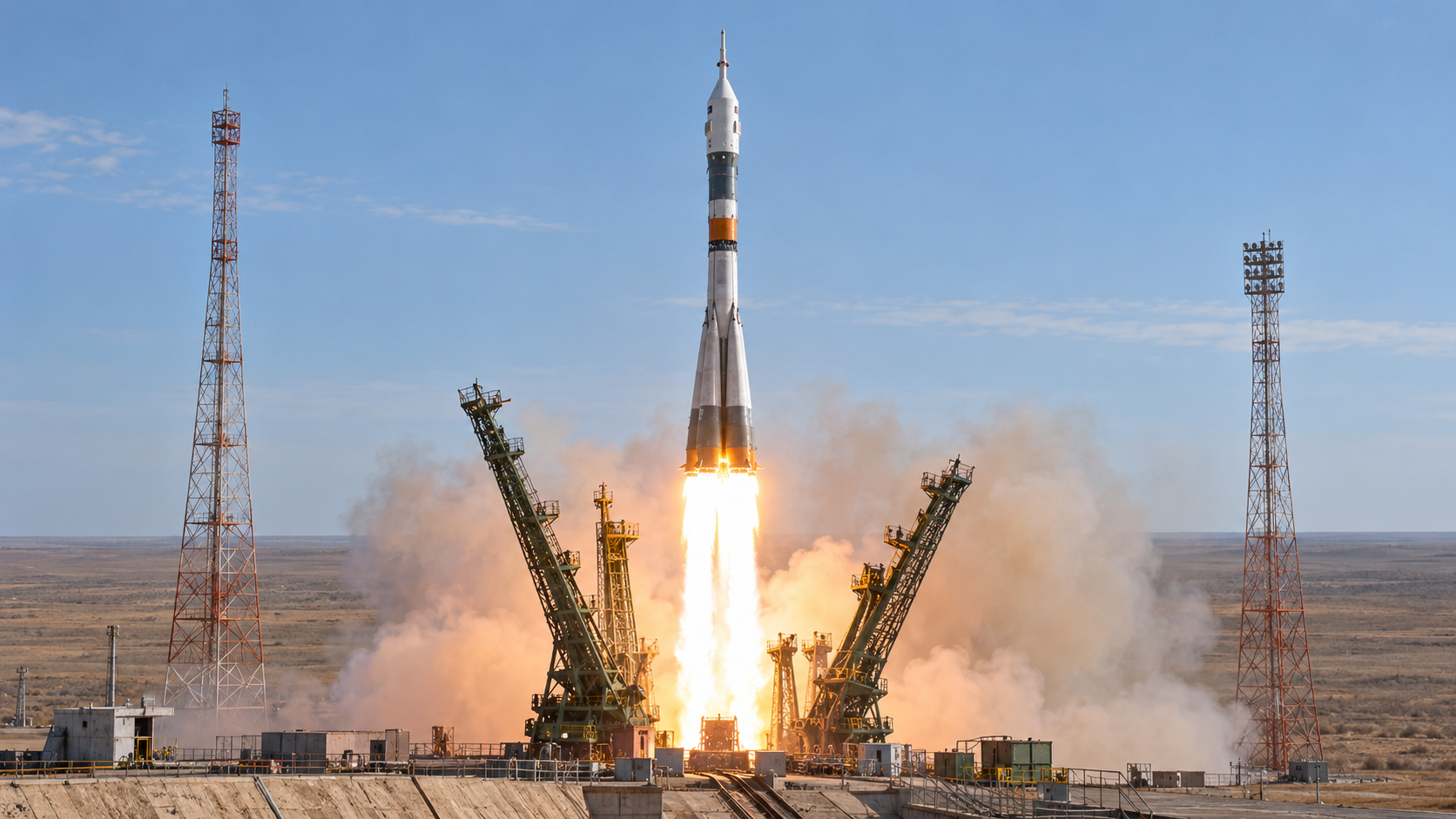
On June 6, 1971, the Soviet Union launched Soyuz 11 with Georgy Dobrovolsky, Vladislav Volkov, and Viktor Patsayev aboard. Their destination was Salyut 1, the world’s first space station. An earlier crew had docked but could not enter because the connection did not form a complete pressure seal, leaving Soyuz 11 to attempt the first occupied station mission.
After docking on June 7, the cosmonauts entered a laboratory with more room and equipment than a capsule could provide. They operated an astronomical observatory, photographed Earth, studied plant growth and human adaptation, and maintained the station for more than three weeks. Smoke from an electrical problem briefly forced them back toward their spacecraft.
The mission proved that a crew could live and work in an orbital station, but it ended in tragedy. During preparations for reentry on June 30, a pressure-equalization valve opened prematurely as the Soyuz modules separated. Cabin air escaped, and all three crew members died before landing. They had not been wearing pressure suits because of the capsule’s limited space.
The loss led to redesigned valves, pressure suits during critical phases, and a temporary reduction to two-person Soyuz crews. Soyuz 11 therefore stands at both the beginning of long-duration station work and a painful turning point in spacecraft safety. Seen across a longer timeline, scientific milestones are junctions rather than isolated beginnings. Earlier experiments, tools, and institutions made the work possible, while later teams tested limits and carried the result into new settings. What survives is a traceable chain of evidence, correction, and application that allows one moment to remain relevant as knowledge and technology continue to change. The anniversary highlights the difference between a first result and a finished understanding. A successful observation can settle one question while opening several harder ones, and even a failed objective can reshape later designs. Preserved data, specimens, photographs, and hardware allow new generations to revisit the work with better tools. Science advances through that continuity rather than stopping on a memorable date. Its calendar date is an entry point, not an endpoint. The people involved worked with the instruments, assumptions, and social conditions of their time, and later research has both extended and corrected their conclusions. Separating what was known that day from what became clear afterward protects the history from myth and shows how cumulative evidence turns an episode into lasting scientific knowledge. For science history, the event also shows how evidence moves from an observation or engineered test into a durable body of knowledge. Instruments supplied measurements, specialists debated interpretation, and later work refined what the first result could mean. Archives preserve the early record while new methods let researchers ask different questions of it. That continuing revision is the process through which a dated milestone remains scientifically useful.
Soyuz 11 achieved a sealed docking and its crew entered Salyut 1.
Their stay demonstrated sustained human work in a purpose-built orbital laboratory.
The station supported astronomy, Earth observation, biology, and medical monitoring.
Larger living volume and longer missions introduced new operational and human-factors questions.
A valve opened during module separation and depressurized the descent capsule.
Later Soyuz operations restored launch and landing suits and revised the vehicle's safety design.
Explore more of "On This Day ..."
Discover more events from the same date across news, politics, technology, sports, and other fields. Each link highlights significant moments that shaped history on different fronts.