

On This Day in Science: September 9, 1975
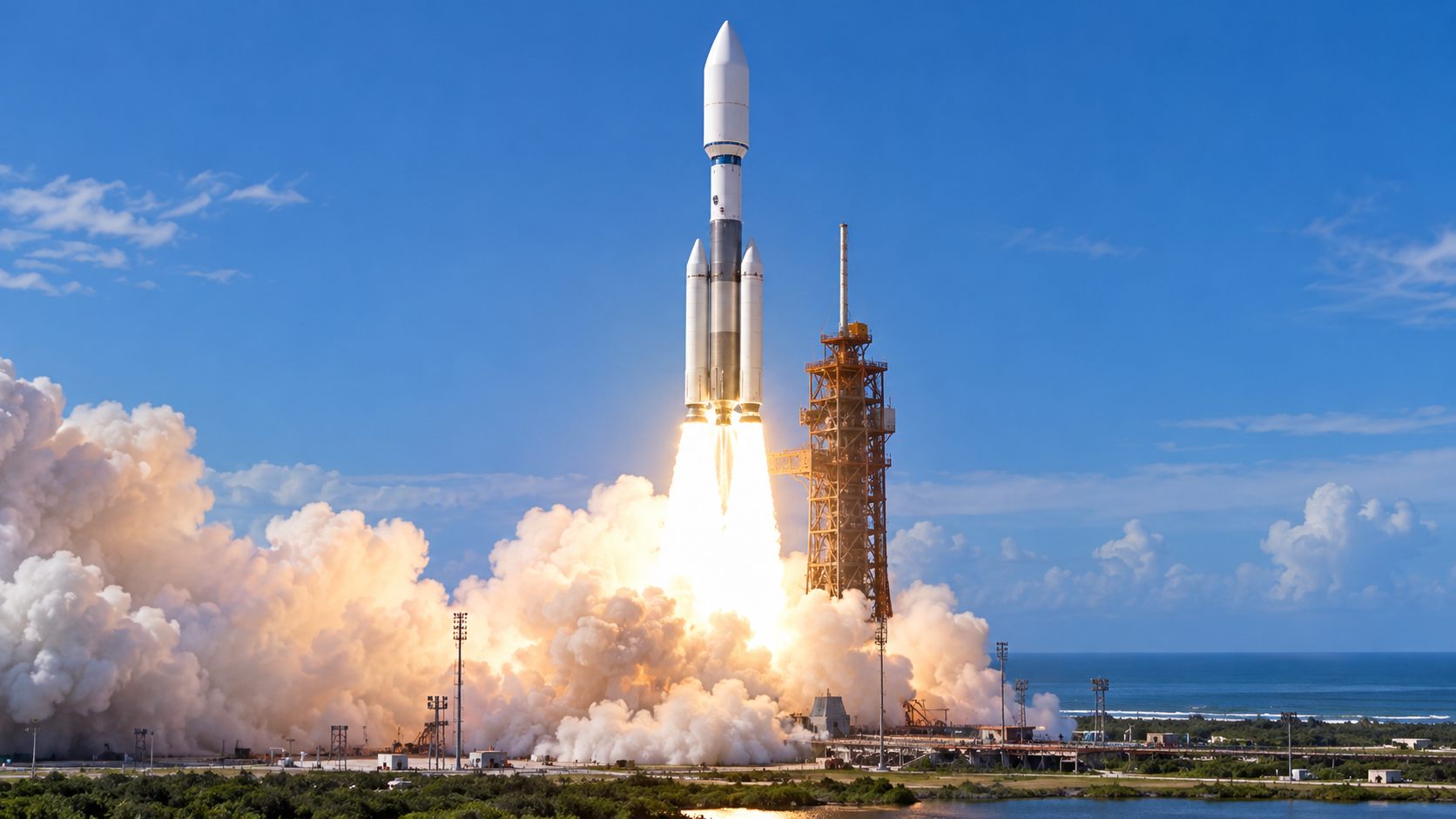
On September 9, 1975, NASA launched Viking 2 from Cape Canaveral on a Titan IIIE-Centaur rocket. The spacecraft combined an orbiter with a sterilized lander, closely matching Viking 1. Together the pair was designed to image Mars globally, study its atmosphere and surface, and conduct the first dedicated experiments searching for signs of microbial activity.
The orbiter served as a communications relay and a scientific platform. Its cameras mapped possible landing sites and later documented clouds, dust storms, frost, volcanoes, channels, and polar terrain. After orbital reconnaissance, the lander separated and descended to Utopia Planitia on September 3, 1976.
Viking 2’s lander carried panoramic cameras, weather instruments, a sampling arm, chemical analysis equipment, and three biology experiments. The hardware had undergone careful heat sterilization to reduce the chance that terrestrial organisms would confuse the search or contaminate Mars.
The launch began a mission that operated for years and supplied a foundational archive of Martian observations. Viking’s life-detection results proved difficult to interpret, but the mission established standards for planetary protection, autonomous landing, surface imaging, and chemical analysis that shaped every later Mars program. For science history, the event also shows how evidence moves from an observation or engineered test into a durable body of knowledge. Instruments supplied measurements, specialists debated interpretation, and later work refined what the first result could mean. Archives preserve the early record while new methods let researchers ask different questions of it. That continuing revision is the process through which a dated milestone remains scientifically useful. Seen across a longer timeline, scientific milestones are junctions rather than isolated beginnings. Earlier experiments, tools, and institutions made the work possible, while later teams tested limits and carried the result into new settings. What survives is a traceable chain of evidence, correction, and application that allows one moment to remain relevant as knowledge and technology continue to change. The anniversary highlights the difference between a first result and a finished understanding. A successful observation can settle one question while opening several harder ones, and even a failed objective can reshape later designs. Preserved data, specimens, photographs, and hardware allow new generations to revisit the work with better tools. Science advances through that continuity rather than stopping on a memorable date. Its calendar date is an entry point, not an endpoint. The people involved worked with the instruments, assumptions, and social conditions of their time, and later research has both extended and corrected their conclusions. Separating what was known that day from what became clear afterward protects the history from myth and shows how cumulative evidence turns an episode into lasting scientific knowledge.
An orbiter carried the lander to Mars and then became a mapper and relay.
This architecture linked global reconnaissance with direct surface measurements.
The lander was sterilized and equipped with three distinct biology experiments.
Mission designers tried to separate possible life signals from ordinary chemistry.
Viking 2 returned images and environmental data over several years.
Its results became reference points for selecting and interpreting later landing sites.
Explore more of "On This Day ..."
Discover more events from the same date across news, politics, technology, sports, and other fields. Each link highlights significant moments that shaped history on different fronts.