

On This Day in Science: October 11, 1984
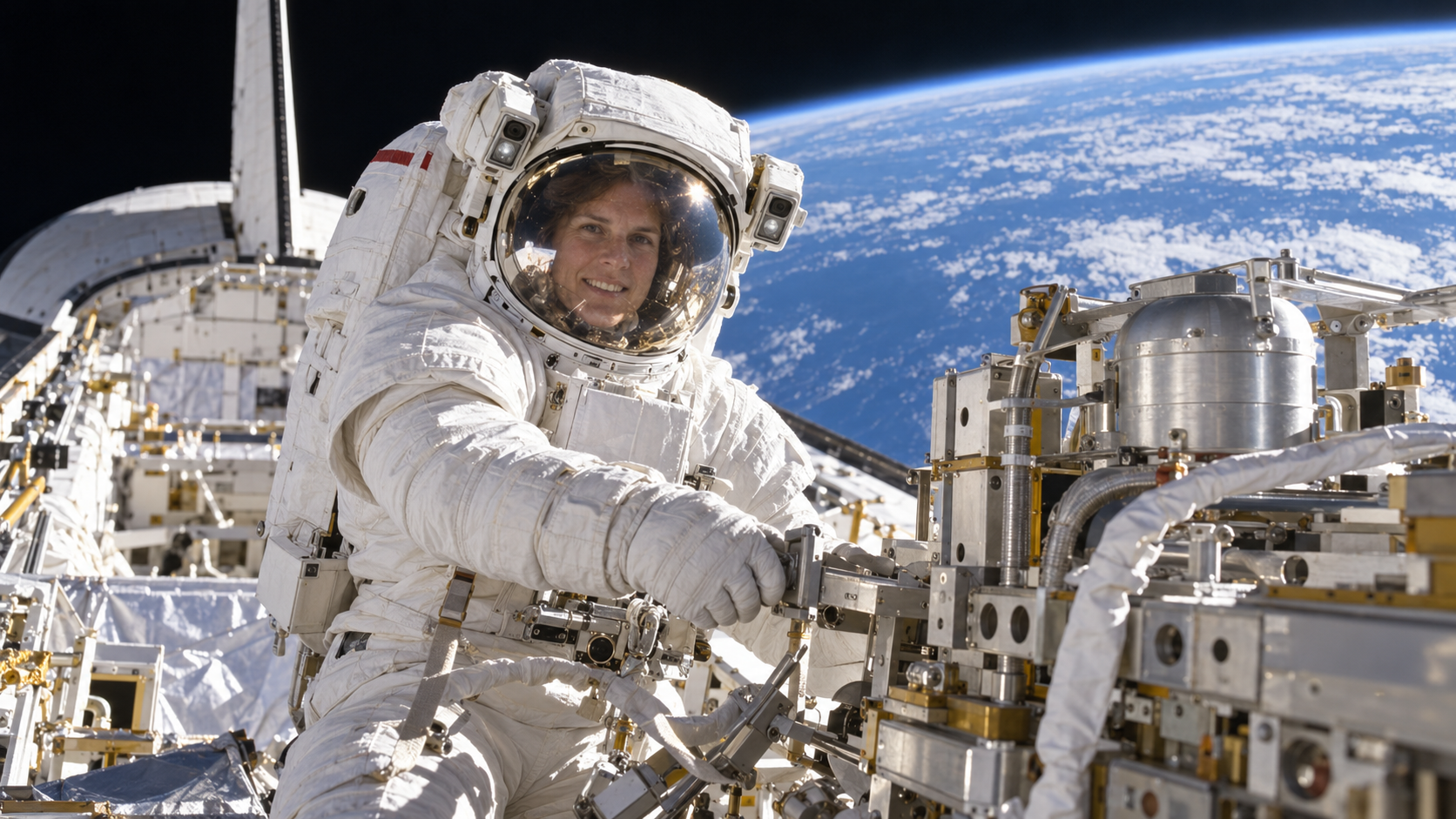
On October 11, 1984, astronaut Kathryn D. Sullivan became the first American woman to perform a spacewalk. She and David Leestma left the space shuttle Challenger’s airlock during mission STS-41-G for an excursion lasting more than three hours.
The pair tested an orbital refueling system intended to show that a spacecraft could transfer propellant in microgravity. They connected and operated equipment in the payload bay while wearing extravehicular mobility units that supplied oxygen, cooling, communications, and pressure.
STS-41-G carried a crew of seven, the largest space crew flown to that date, and included the first flight with two American women aboard. Its Earth-observation payload studied the atmosphere, oceans, and land, giving the mission scientific goals beyond the technology demonstration.
Sullivan’s spacewalk expanded the range of roles visibly open to women in the U.S. astronaut corps. She later flew two more shuttle missions, helped deploy the Hubble Space Telescope, and became an oceanographer and federal science leader. What makes the event scientifically important is not only priority, but the ability of others to check, repeat, compare, or build on the result. That process can reveal limitations hidden by the excitement of a first success. It also explains why careful archives and transparent measurements matter as much as the date remembered by the public. Modern interpretations benefit from evidence that the original participants did not possess. New instruments and analytical methods can recover additional detail, while historical scholarship clarifies questions of credit, context, and consequence. Holding the original achievement and those later corrections together produces a more accurate account than either celebration or dismissal alone. The anniversary also illustrates how a scientific milestone becomes useful through records that later researchers can inspect. Instruments, notebooks, images, specimens, and engineering reports preserve more than a celebratory date: they show what was actually measured, what remained uncertain, and how conclusions changed as better methods became available. Placed in a longer timeline, the event was a junction rather than a finished answer. Earlier discoveries and technical work made it possible, while later teams tested its limits and applied the result in new settings. That traceable sequence of evidence and revision is what turns one day into a durable part of scientific history. The episode also separates a first demonstration from mature understanding. A successful observation or flight can settle one question while exposing harder problems in reliability, interpretation, safety, and scale. Preserved data allow later generations to revisit the achievement without confusing what was known on the date with what became clear afterward.
Sullivan and Leestma moved through the open payload bay on safety tethers.
Their suits functioned as individual spacecraft during the excursion.
The experiment practiced connections and fluid transfer in microgravity.
It addressed techniques needed to service or extend future spacecraft.
Sullivan's EVA marked a barrier crossed in American human spaceflight.
Her later career joined orbital operations, ocean science, and public leadership.
Explore more of "On This Day ..."
Discover more events from the same date across news, politics, technology, sports, and other fields. Each link highlights significant moments that shaped history on different fronts.