

On This Day in Science: October 20, 2018
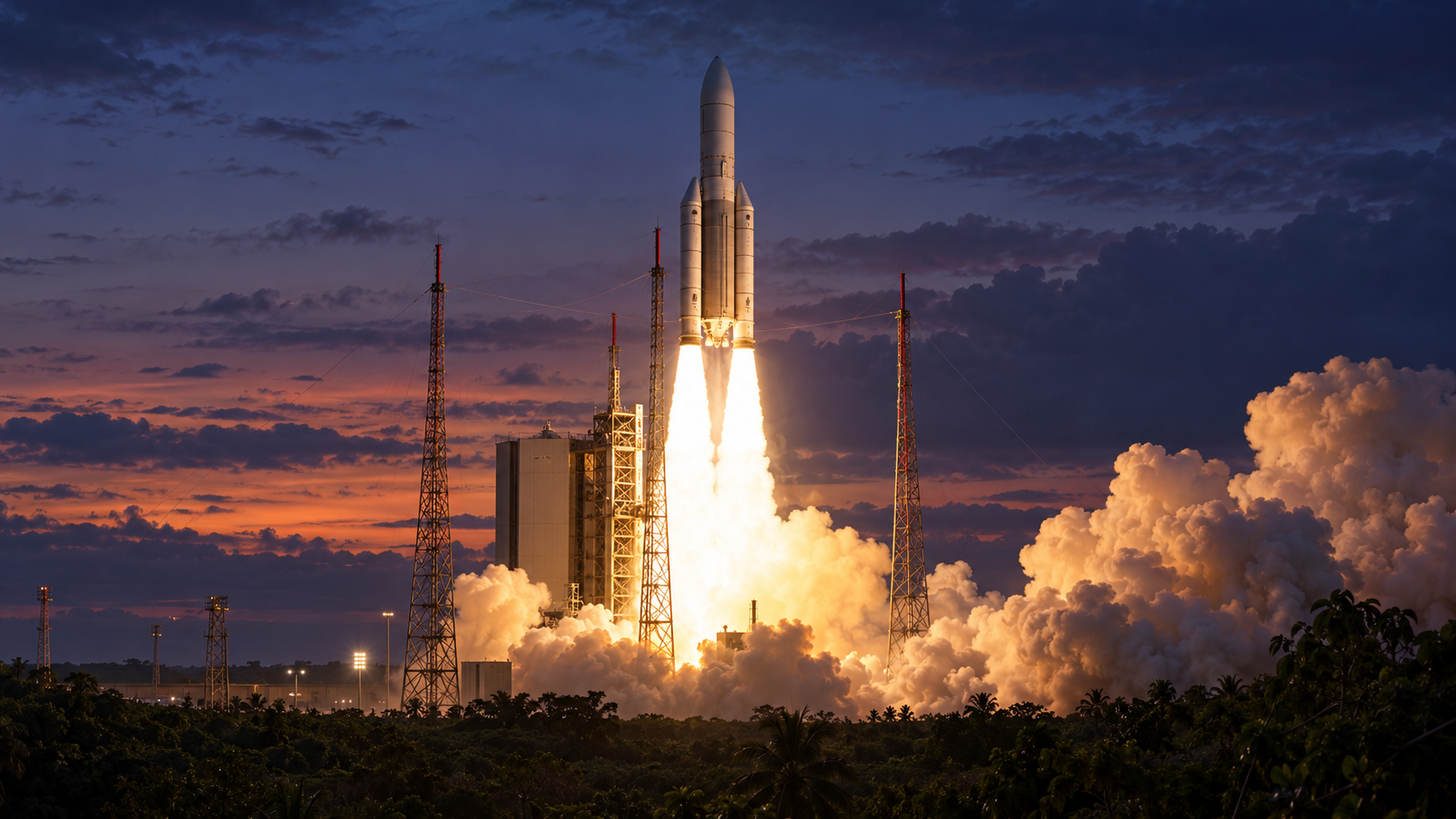
On October 20, 2018, an Ariane 5 rocket launched BepiColombo from Europe’s spaceport in Kourou, French Guiana. The mission is a partnership between the European Space Agency and the Japan Aerospace Exploration Agency to investigate Mercury with two complementary orbiters.
The Mercury Planetary Orbiter carries instruments for geology, composition, gravity, magnetism, and the exosphere. Mio, the Mercury Magnetospheric Orbiter, is designed to study charged particles and the magnetic environment. A transfer module provides solar-electric propulsion during the cruise.
Reaching Mercury is difficult because a spacecraft falling toward the Sun gains speed. BepiColombo uses ion propulsion and repeated flybys of Earth, Venus, and Mercury to reduce energy gradually before orbital insertion, trading travel time for manageable propellant demands.
The launch began a mission intended to connect Mercury’s surface, interior, exosphere, and magnetosphere. Its measurements are designed to test how a small rocky planet with an unusually large core formed and evolved so close to the Sun. Placed in a longer timeline, the event was a junction rather than a finished answer. Earlier discoveries and technical work made it possible, while later teams tested its limits and applied the result in new settings. That traceable sequence of evidence and revision is what turns one day into a durable part of scientific history. The episode also separates a first demonstration from mature understanding. A successful observation or flight can settle one question while exposing harder problems in reliability, interpretation, safety, and scale. Preserved data allow later generations to revisit the achievement without confusing what was known on the date with what became clear afterward. Its calendar date is an entry point rather than an endpoint. The people involved worked with the tools, assumptions, institutions, and social conditions of their time. Later research has extended some conclusions and corrected others, showing how science advances by keeping evidence open to comparison instead of treating a memorable event as final. What makes the event scientifically important is not only priority, but the ability of others to check, repeat, compare, or build on the result. That process can reveal limitations hidden by the excitement of a first success. It also explains why careful archives and transparent measurements matter as much as the date remembered by the public. Modern interpretations benefit from evidence that the original participants did not possess. New instruments and analytical methods can recover additional detail, while historical scholarship clarifies questions of credit, context, and consequence. Holding the original achievement and those later corrections together produces a more accurate account than either celebration or dismissal alone.
ESA's planetary orbiter and JAXA's magnetospheric orbiter share the cruise.
They separate at Mercury to observe the same world from different scientific perspectives.
Gravity assists and ion thrust remove orbital energy over several years.
A direct fast approach would require far more propellant to enter orbit.
Mercury has a large core, a global magnetic field, and severe temperature swings.
BepiColombo links those properties to the planet's origin and geological history.
Explore more of "On This Day ..."
Discover more events from the same date across news, politics, technology, sports, and other fields. Each link highlights significant moments that shaped history on different fronts.