

On This Day in Science: October 22, 1975
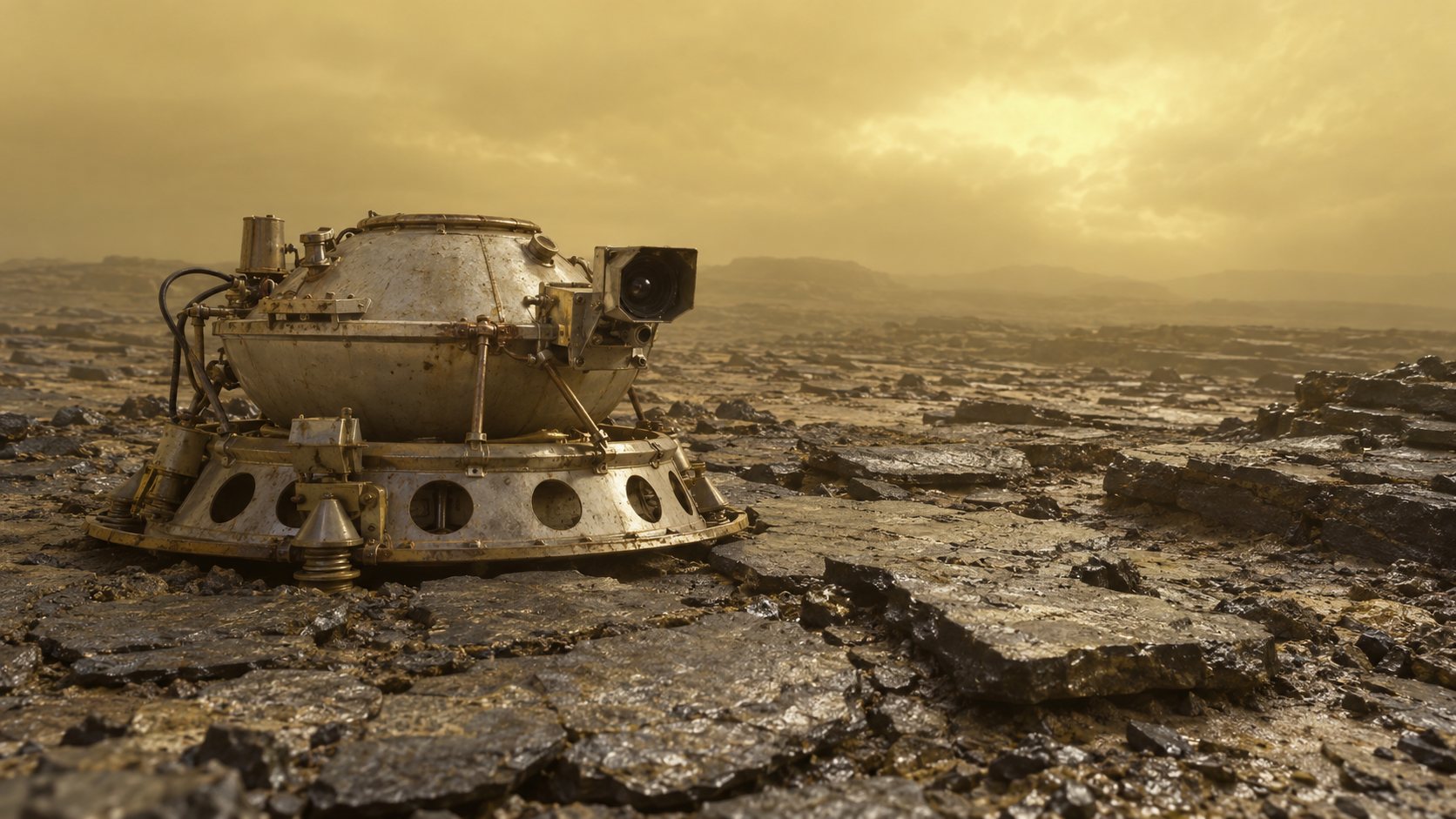
On October 22, 1975, the Soviet Venera 9 lander reached the surface of Venus and transmitted the first image taken from the ground on another planet. The descent capsule survived the atmosphere and came to rest on a slope covered with angular rocks and slab-like material.
A separate orbiter relayed the lander’s radio signal to Earth. Venera 9 measured temperature, pressure, winds, clouds, and light during descent, then operated for fifty-three minutes on the surface in conditions near 485 degrees Celsius and about ninety times Earth’s sea-level pressure.
One of its two camera covers failed to release, limiting the panorama, but the working camera showed a well-lit rocky landscape. The image disproved expectations that diffuse clouds would leave the surface in deep darkness and gave geologists their first direct view of Venusian terrain.
The mission demonstrated that carefully cooled and pressure-resistant electronics could work briefly on Venus. Later Venera landers returned wider panoramas, color images, chemical measurements, and drilling results, building on the engineering path Venera 9 established. Its calendar date is an entry point rather than an endpoint. The people involved worked with the tools, assumptions, institutions, and social conditions of their time. Later research has extended some conclusions and corrected others, showing how science advances by keeping evidence open to comparison instead of treating a memorable event as final. What makes the event scientifically important is not only priority, but the ability of others to check, repeat, compare, or build on the result. That process can reveal limitations hidden by the excitement of a first success. It also explains why careful archives and transparent measurements matter as much as the date remembered by the public. Modern interpretations benefit from evidence that the original participants did not possess. New instruments and analytical methods can recover additional detail, while historical scholarship clarifies questions of credit, context, and consequence. Holding the original achievement and those later corrections together produces a more accurate account than either celebration or dismissal alone. The anniversary also illustrates how a scientific milestone becomes useful through records that later researchers can inspect. Instruments, notebooks, images, specimens, and engineering reports preserve more than a celebratory date: they show what was actually measured, what remained uncertain, and how conclusions changed as better methods became available. Placed in a longer timeline, the event was a junction rather than a finished answer. Earlier discoveries and technical work made it possible, while later teams tested its limits and applied the result in new settings. That traceable sequence of evidence and revision is what turns one day into a durable part of scientific history.
A rotating optical system scanned a narrow panorama around the lander.
The returned strip became the first surface photograph from beyond the Moon.
One protective camera cap failed to separate after landing.
The remaining view still revealed rocks, slabs, and unexpectedly strong surface light.
The pressure vessel and thermal protection delayed heat damage.
Fifty-three minutes of operation proved that direct Venus surface science was possible.
Explore more of "On This Day ..."
Discover more events from the same date across news, politics, technology, sports, and other fields. Each link highlights significant moments that shaped history on different fronts.