

On This Day in Sports: January 1, 1902
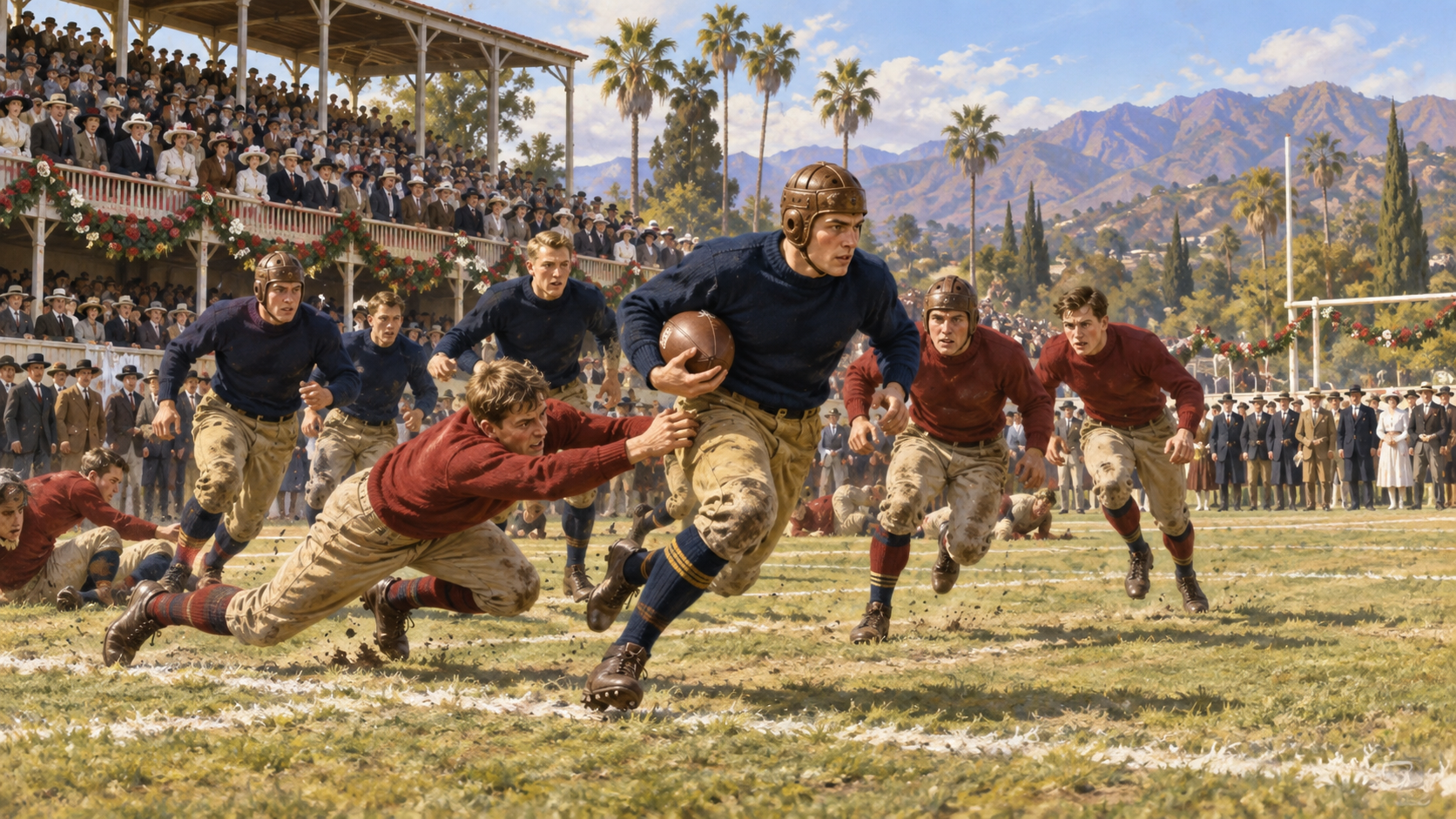
On January 1, 1902, Michigan defeated Stanford 49–0 in Pasadena, California, in the postseason football contest that would eventually be remembered as the first Rose Bowl Game. Organizers called it the Tournament East-West football game, pairing an unbeaten Midwestern powerhouse with a leading team from the Pacific Coast. Michigan, coached by Fielding H. Yost, overwhelmed Stanford with the speed and precision that had defined its 1901 season. The lopsided contest ended early at Stanford’s request, leaving no uncertainty about the result. Yet the mismatch became the starting point for an event that would connect New Year’s Day, college football, and Pasadena for generations.
The game was created as an addition to Pasadena’s Tournament of Roses festivities. The floral parade had begun in 1890 as a civic celebration promoting Southern California’s winter climate, and organizers wanted an athletic attraction capable of drawing visitors and national attention. Football was growing rapidly on college campuses, but it was still rough, regionally organized, and years away from a modern championship structure. Inviting teams from opposite sides of the country gave the contest a novel intersectional appeal. Michigan arrived after a dominant season in which it had allowed no opponent to score, while Stanford represented western football before a home-region crowd. About 8,000 spectators came to Tournament Park to see how the regions compared.
They saw a rout rather than a balanced showcase. Michigan scored repeatedly and finished its perfect season with another shutout, while Stanford could not sustain an answer. The margin discouraged organizers from making football an immediate annual tradition. In subsequent years they experimented with chariot races and other attractions, and the East-West football game did not return until 1916. That gap is an important qualification: the 1902 contest was the origin of the Rose Bowl tradition, not the first installment in an uninterrupted yearly series. It also took place at Tournament Park, not in the stadium now known as the Rose Bowl, which opened two decades later.
Once football returned, the game became a premier meeting between eastern and western teams and inspired a wider postseason bowl system. The permanent Rose Bowl stadium hosted the contest beginning in 1923, giving the event the name and visual identity familiar today. Conference agreements, television, sponsorship, and championship formats later changed how participants were chosen, but the New Year setting endured. The 1902 game matters less for its competitive drama than for the durable idea it introduced: teams could travel after the regular season for a destination event tied to civic pageantry and national attention. From that experiment grew college football’s bowl culture and the long-running game celebrated as the Granddaddy of Them All.
Pasadena’s winter festival began with flowers and local athletic displays, not football. Civic leaders added an interregional college game to attract visitors and publicity beyond Southern California.
Michigan entered under first-year coach Fielding Yost after an extraordinary unbeaten season. Stanford supplied the western opponent, giving spectators a rare direct comparison between teams from distant football regions.
Michigan’s 49–0 victory confirmed its dominance but undermined the hope for a close spectacle. Stanford asked that the game end before the scheduled finish because the result was beyond reach.
Football disappeared from the festival program for more than a decade. The modern tradition traces its ancestry to 1902, but annual East-West games began only when the sport returned in 1916.
The event showed that postseason football could function as tourism, entertainment, and civic promotion at the same time. Other cities later adopted the bowl model with their own seasonal identities.
Today’s Rose Bowl has passed through conference tie-ins and national playoff systems. Its persistent New Year prestige still rests on the combination first attempted at Tournament Park: elite football staged as a destination celebration.
Explore more of "On This Day ..."
Discover more events from the same date across news, politics, technology, sports, and other fields. Each link highlights significant moments that shaped history on different fronts.