

On This Day in Sports: December 31, 1967
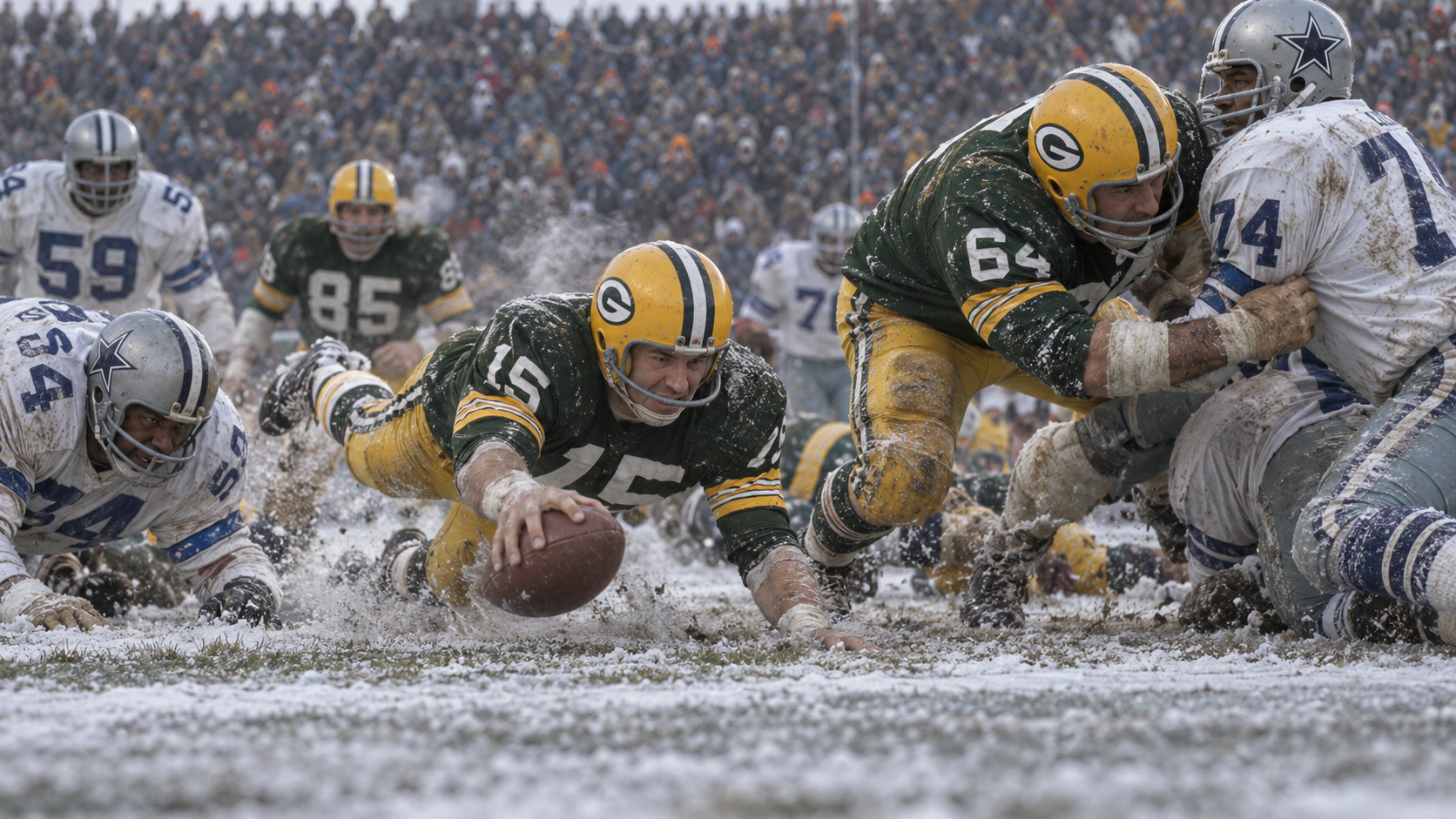
On December 31, 1967, the Green Bay Packers defeated the Dallas Cowboys 21-17 in the NFL Championship Game remembered as the Ice Bowl. Bart Starr’s quarterback sneak with 13 seconds left completed a late drive in an official temperature of 13 degrees below zero at Lambeau Field. Green Bay won 21-17. The official temperature was 13 degrees below zero. Those details establish the result and its setting, but the day’s importance came from the larger historical pressure surrounding the competition and the people who carried it through.
Green Bay sought a third straight league championship under Vince Lombardi, while Dallas aimed to break through under Tom Landry. The frozen field and dangerous wind chill affected footing, equipment and communication. Bart Starr scored on a quarterback sneak. Only 13 seconds remained. Together, those points show how preparation, rules, institutions and public expectations shaped the circumstances before the decisive action began. They also separate the documented background from later legend and retrospective interpretation.
The Packers trailed 17-14 before Starr guided a 68-yard final drive. On third-and-goal from inside the one, he followed Jerry Kramer’s block and crossed the frozen goal line. The winning drive covered 68 yards. Green Bay later won Super Bowl II. The immediate result therefore involved more than a single score or statistic: it changed a record, championship, career or institution and gave contemporary audiences a clear reason to understand that the moment was unusual.
Green Bay advanced to win Super Bowl II, completing Lombardi’s final season as head coach. The extreme conditions and decisive sneak made the Ice Bowl a lasting symbol of football endurance. Seen from today, the event remains useful because it connects a measurable sports outcome with the systems around it—teammates, opponents, officials, venues, media and rules. The outcome was not inevitable, and its meaning did not end when play stopped. Preserving the exact date and qualifications helps explain why later generations still return to it. It also prevents a famous image or headline from replacing the fuller story of what actually happened. The best sports history holds achievement and limitation together, showing both the performance itself and the conditions that made it possible. That broader view preserves context without taking attention away from the people who performed under pressure. Contemporary reports and official records provide the firmest foundation for remembering the achievement without exaggerating what the participants could know at the time. In that sense, December 31, 1967 still offers a focused view of how athletic excellence, public memory and institutional change can meet in a single day.
Green Bay won 21-17.
The official temperature was 13 degrees below zero.
Bart Starr scored on a quarterback sneak.
Only 13 seconds remained.
The winning drive covered 68 yards.
Green Bay later won Super Bowl II.
Explore more "On This Day in Sports"
Discover more landmark games, records, championships, and turning points from sports history. Each day revisits the athletes, teams, and moments that shaped competition and culture.