

On This Day in Sports: January 25, 1924
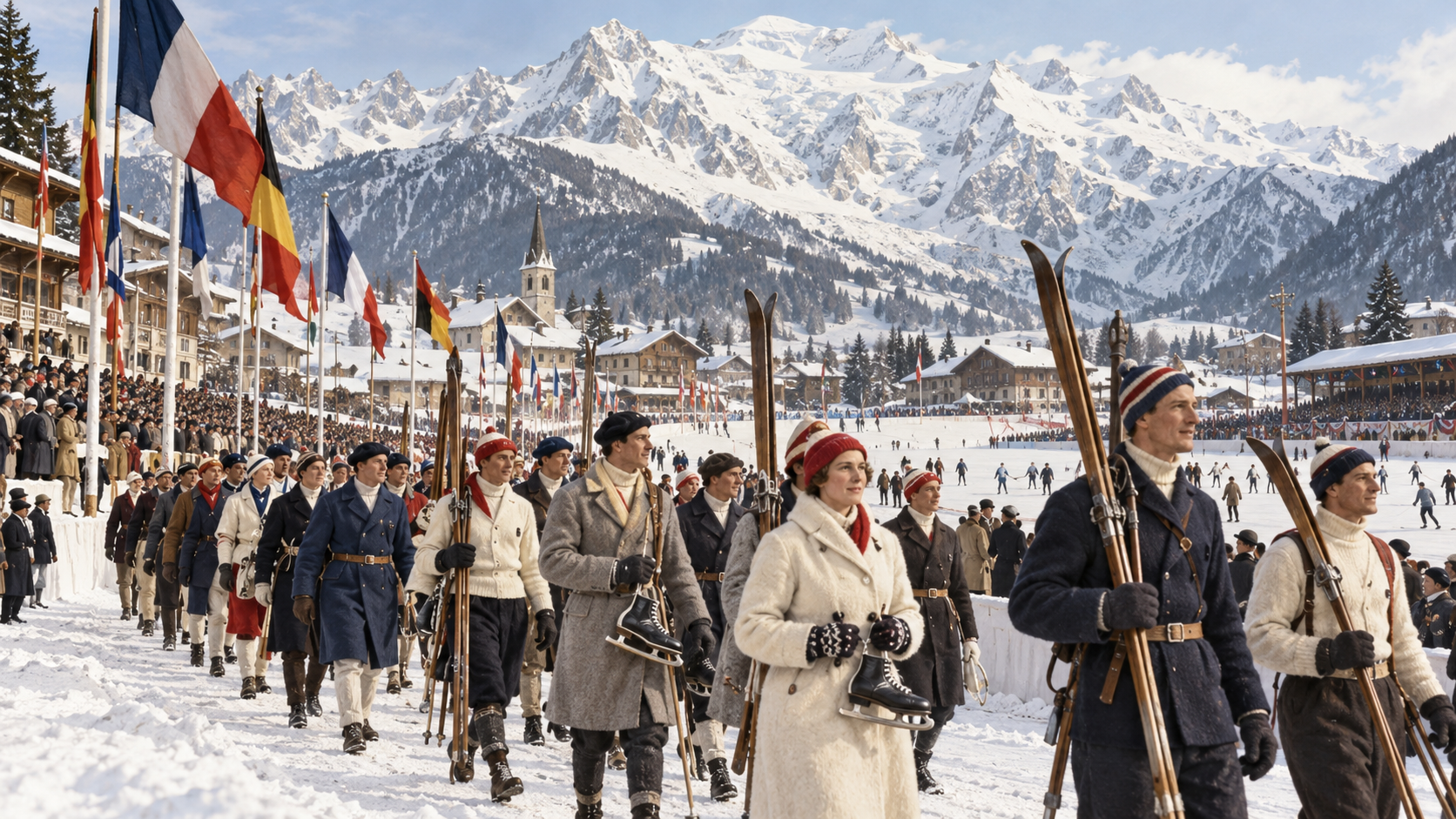
On January 25, 1924, athletes and officials gathered in Chamonix, France, for the opening of an event billed as International Winter Sports Week. The competition was organized under the patronage of the International Olympic Committee, but it was not yet officially called the Winter Olympics. Sixteen nations sent 258 athletes—247 men and 11 women—to compete in 16 events across six sports. Beneath Mont Blanc, the ceremony created a new stage for cold-weather disciplines that had previously appeared only in limited form alongside the Summer Games.
The opening procession moved through the Alpine town to the skating rink, where the delegations assembled before French official Gaston Vidal formally declared the festival open. Military patrol competitor Camille Mandrillon took the athletes’ oath. The venues were practical rather than grand: an outdoor ice surface, ski jumps, cross-country trails and a bobsleigh track shaped by the mountain setting. Yet the scale was unprecedented, bringing speed skating, figure skating, ice hockey, bobsleigh, curling and Nordic skiing together within one international program.
Competition began the next day, when American speed skater Charles Jewtraw won the 500 meters and became the first champion of the winter festival. Norway’s Thorleif Haug dominated the Nordic events, while Finland’s Clas Thunberg earned five speed-skating medals. Canada overwhelmed the ice hockey field, and figure skater Sonja Henie appeared at only eleven years old, finishing last but beginning one of the sport’s most famous careers. These athletes gave the new gathering distinctive heroes and demonstrated that winter sport could sustain a global spectacle of its own.
The success at Chamonix settled an argument that had divided Olympic organizers, particularly those concerned about competition with established Nordic Games. In 1925, the IOC decided to create a recurring Olympic Winter Games, and Chamonix was later recognized retroactively as the first edition. What opened as a modest eleven-day experiment became the foundation of a permanent international tradition. The date therefore marks more than a ceremony: it marks the moment winter athletes gained an Olympic identity, host regions discovered a new kind of global event, and snow and ice became equal partners in the modern Olympic movement. Nearly every Winter Games since has expanded on the blueprint laid down in that small French resort. The medal table also established patterns that would define early Winter Olympic competition, with Norway and Finland leading through their strength in skiing and skating. France earned only three medals as host, but the organizational achievement proved more consequential than the results. Chamonix showed that winter conditions could be managed within a concentrated international schedule and gave the Olympic movement room to grow beyond summer stadiums.
The Chamonix event was originally called International Winter Sports Week and received Olympic recognition only afterward.
Sixteen nations entered 258 athletes, including just eleven women, across sixteen medal events.
Jewtraw of the United States won the 500-meter speed skate and became the first winter champion.
Thunberg collected five medals, while Haug starred in the Nordic skiing events for Norway.
Canada dominated the hockey tournament, scoring 110 goals while conceding only three.
The success of Chamonix persuaded the IOC to establish a regular Winter Olympic cycle.
Explore more "On This Day in Sports"
Discover more landmark games, records, championships, and turning points from sports history. Each day revisits the athletes, teams, and moments that shaped competition and culture.