

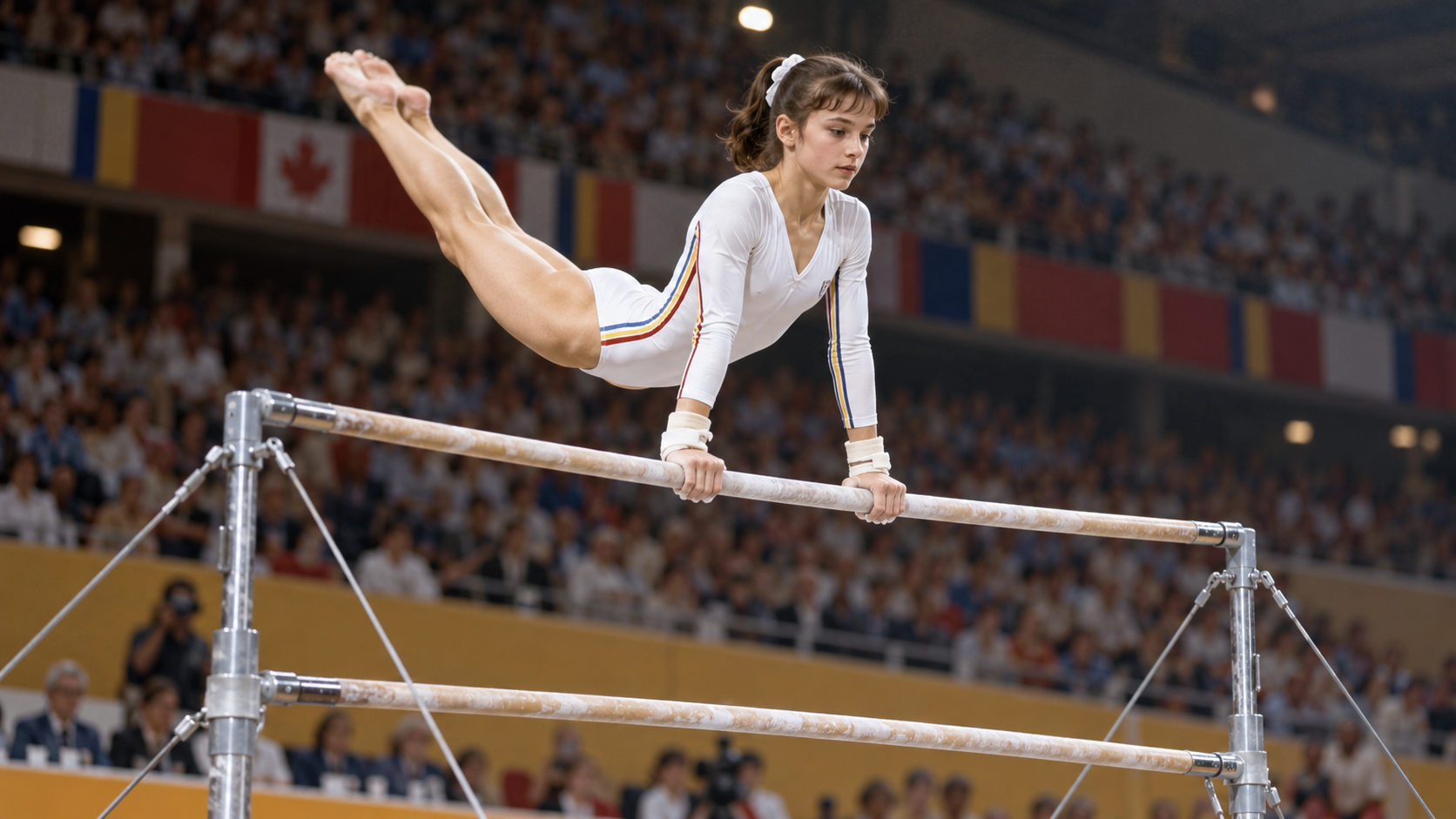
On This Day in Sports: July 18, 1976
On July 18, 1976, 14-year-old Nadia Comăneci earned the first perfect 10 in Olympic gymnastics history during the women’s team competition in Montreal. Her uneven-bars routine combined exact handstands, fluid transitions and a controlled landing. The scoreboard displayed 1.00 because its equipment had not been designed to show a four-digit 10.00. The public record fixes the central details with unusual clarity: Comăneci was 14 years old. The routine was performed on uneven bars. Together, those facts explain why July 18, 1976 stands apart from the ordinary flow of a season and deserves to be remembered as a distinct historical moment.
The Romanian teenager arrived as the 1975 European all-around champion but was competing at her first Olympics. Gymnastics scoring theoretically allowed a ten, yet judges had never awarded one at the Games, and the arena’s electronic system reflected that assumption. Two further details help reconstruct how the achievement unfolded: The scoreboard showed 1.00. It was the first Olympic gymnastics 10. They move the story beyond a headline by showing the pressure, setting and competitive choices that shaped the decisive action in real time.
Comăneci moved through the bars with exceptional line and timing, then landed without a visible step. Confusion briefly followed when 1.00 appeared. Officials clarified that every judge had awarded the maximum score, turning a technical display into an instant Olympic landmark. The wider context is equally important. She earned seven perfect tens in Montreal. Comăneci won three gold medals at the Games. Those points connect one day’s performance to a longer career, institution or rivalry and clarify why the event continued to matter after the immediate celebration had ended.
She received six additional perfect tens in Montreal and won three gold medals, including the all-around title. The achievement helped make women’s gymnastics a major television event and shifted attention toward younger athletes. Later scoring systems changed, but the phrase perfect 10 remains inseparable from her name. Seen from today, the milestone remains compelling because it joins a measurable result with the uncertainty of live competition. Nothing about the outcome was guaranteed beforehand. That combination of preparation, opportunity and execution transformed the date from another entry on the schedule into lasting sports history. It also reveals how records and championships depend on teammates, opponents, officials, venues and rules that shape the opportunity. Preserving those surrounding details helps explain both the achievement itself and the reason later generations still discuss it. The date therefore offers a useful window into how sporting excellence is created, witnessed and remembered.
Comăneci was 14 years old.
The routine was performed on uneven bars.
The scoreboard showed 1.00.
It was the first Olympic gymnastics 10.
She earned seven perfect tens in Montreal.
Comăneci won three gold medals at the Games.
Explore more "On This Day in Sports"
Discover more landmark games, records, championships, and turning points from sports history. Each day revisits the athletes, teams, and moments that shaped competition and culture.