

On This Day in Sports: July 19, 1996
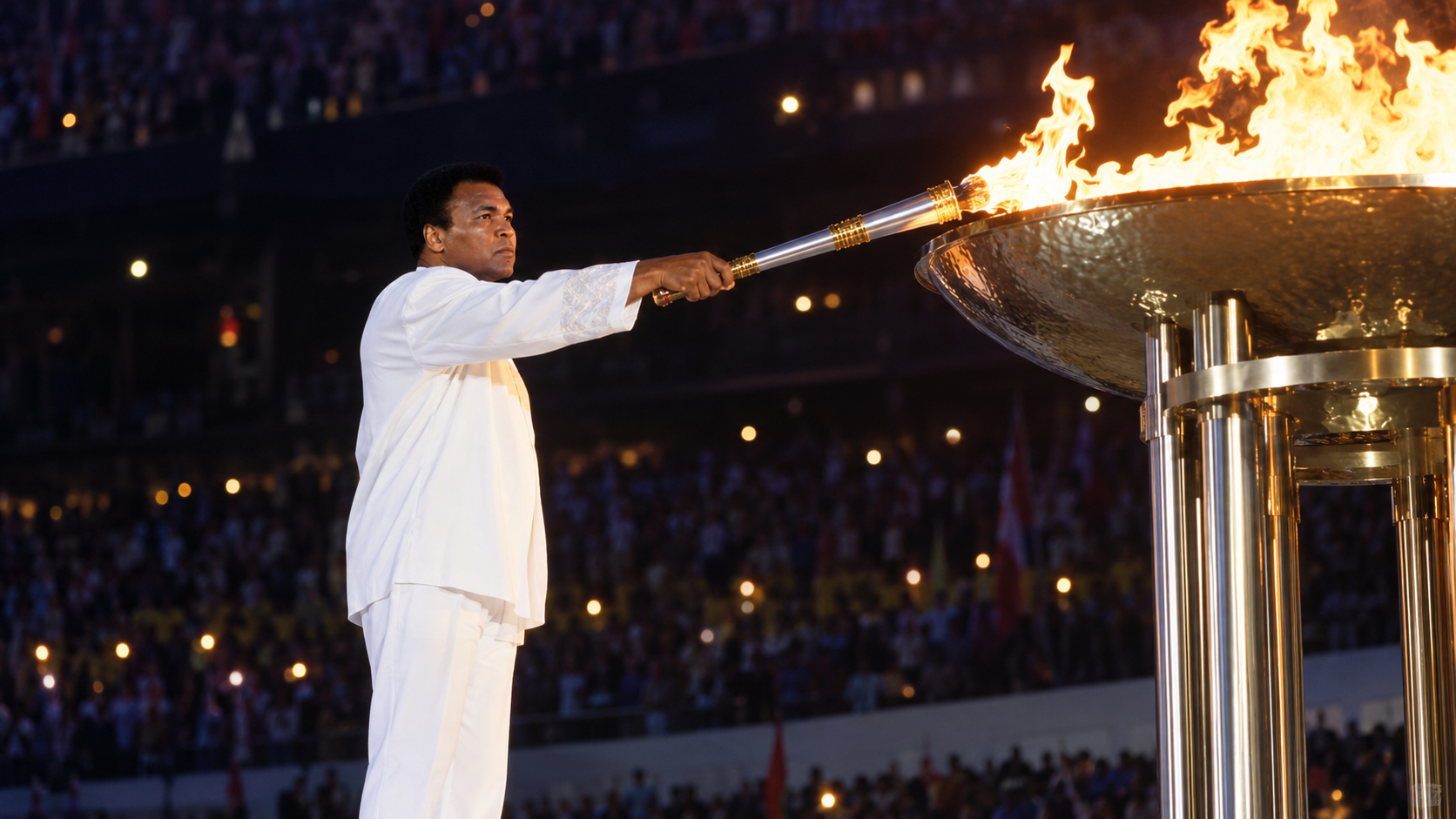
On July 19, 1996, the Centennial Olympic Games opened in Atlanta with former heavyweight champion Muhammad Ali lighting the cauldron. Ali’s appearance was kept secret until the final torch relay inside Olympic Stadium. The trembling caused by Parkinson’s disease made the moment both visibly human and symbolically powerful. The public record fixes the central details with unusual clarity: The Games opened in Atlanta. Muhammad Ali lit the cauldron. Together, those facts explain why July 19, 1996 stands apart from the ordinary flow of a season and deserves to be remembered as a distinct historical moment.
Atlanta won the right to host the centennial Games in a competition with Athens and four other cities. Organizers relied heavily on private funding and corporate sponsorship. A record 197 national Olympic committees ultimately took part in the competition. Two further details help reconstruct how the achievement unfolded: Janet Evans carried the flame into the stadium. Ali’s appearance was a surprise. They move the story beyond a headline by showing the pressure, setting and competitive choices that shaped the decisive action in real time.
After a ceremony filled with music and regional imagery, swimmer Janet Evans carried the flame onto the field and passed it toward Ali. He raised a smaller torch to ignite a mechanism that sent fire upward to the cauldron while the stadium watched in silence and then erupted. The wider context is equally important. A record 197 delegations participated. More than 10,000 athletes competed. Those points connect one day’s performance to a longer career, institution or rivalry and clarify why the event continued to matter after the immediate celebration had ended.
The Games brought more than 10,000 athletes to Atlanta and expanded the Olympic program with new events. A bombing eight days later cast a shadow over the celebration, but competition continued. Ali’s cauldron lighting endured as the opening ceremony’s defining image and a statement about courage beyond athletic prime. Seen from today, the milestone remains compelling because it joins a measurable result with the uncertainty of live competition. Nothing about the outcome was guaranteed beforehand. That combination of preparation, opportunity and execution transformed the date from another entry on the schedule into lasting sports history. It also reveals how records and championships depend on teammates, opponents, officials, venues and rules that shape the opportunity. Preserving those surrounding details helps explain both the achievement itself and the reason later generations still discuss it. The date therefore offers a useful window into how sporting excellence is created, witnessed and remembered.
The Games opened in Atlanta.
Muhammad Ali lit the cauldron.
Janet Evans carried the flame into the stadium.
Ali’s appearance was a surprise.
A record 197 delegations participated.
More than 10,000 athletes competed.
Explore more "On This Day in Sports"
Discover more landmark games, records, championships, and turning points from sports history. Each day revisits the athletes, teams, and moments that shaped competition and culture.