

On This Day in Sports: July 23, 1962
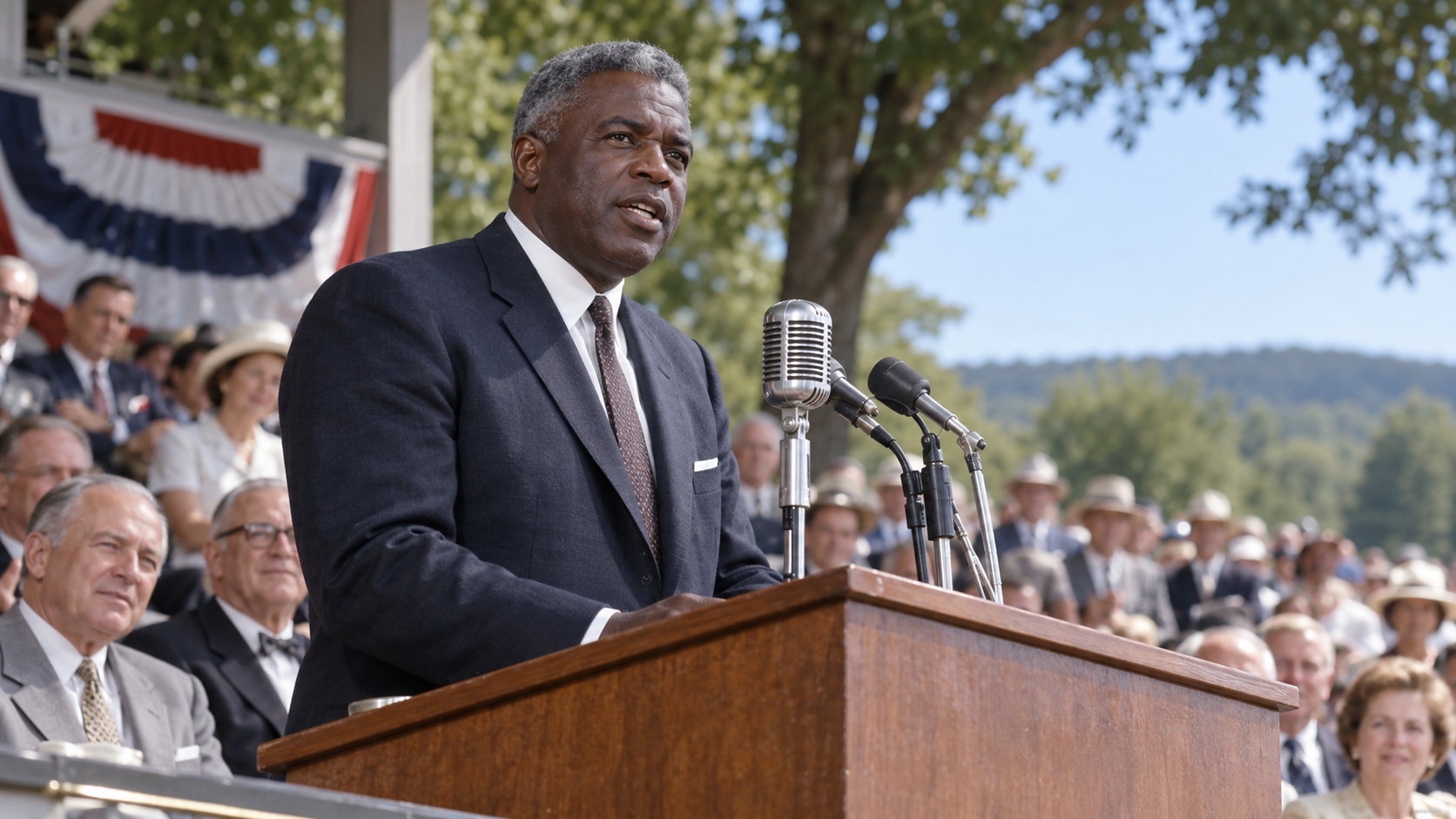
On July 23, 1962, Jackie Robinson was inducted into the National Baseball Hall of Fame in Cooperstown, New York. Five years after retiring, he became the first Black player honored with a plaque in the museum. Robinson entered alongside Bob Feller, Edd Roush and Bill McKechnie. The public record fixes the central details with unusual clarity: Robinson was inducted in Cooperstown. He entered five years after retiring. Together, those facts explain why July 23, 1962 stands apart from the ordinary flow of a season and deserves to be remembered as a distinct historical moment.
Robinson had broken Major League Baseball’s modern color barrier with the Brooklyn Dodgers in 1947. Over ten seasons he won Rookie of the Year, a Most Valuable Player award and the 1955 World Series while enduring organized hostility and constant scrutiny. Two further details help reconstruct how the achievement unfolded: He was the Hall’s first Black inductee. Bob Feller was inducted the same day. They move the story beyond a headline by showing the pressure, setting and competitive choices that shaped the decisive action in real time.
Addressing the crowd, Robinson focused on his playing record and the people who helped his career rather than delivering a broad civil-rights speech. The induction confirmed that voters recognized both his elite performance and his singular place in baseball history. The wider context is equally important. Robinson won the 1949 NL MVP award. MLB later retired number 42 throughout the league. Those points connect one day’s performance to a longer career, institution or rivalry and clarify why the event continued to matter after the immediate celebration had ended.
Robinson continued working for political and economic equality until his death in 1972. Major League Baseball later retired number 42 across every club, and Jackie Robinson Day became an annual observance. His Hall of Fame plaque stands as an institutional acknowledgment of excellence achieved while transforming the game. Seen from today, the milestone remains compelling because it joins a measurable result with the uncertainty of live competition. Nothing about the outcome was guaranteed beforehand. That combination of preparation, opportunity and execution transformed the date from another entry on the schedule into lasting sports history. It also reveals how records and championships depend on teammates, opponents, officials, venues and rules that shape the opportunity. Preserving those surrounding details helps explain both the achievement itself and the reason later generations still discuss it. The date therefore offers a useful window into how sporting excellence is created, witnessed and remembered.
Robinson was inducted in Cooperstown.
He entered five years after retiring.
He was the Hall’s first Black inductee.
Bob Feller was inducted the same day.
Robinson won the 1949 NL MVP award.
MLB later retired number 42 throughout the league.
Explore more "On This Day in Sports"
Discover more landmark games, records, championships, and turning points from sports history. Each day revisits the athletes, teams, and moments that shaped competition and culture.