

On This Day in Sports: September 8, 1998
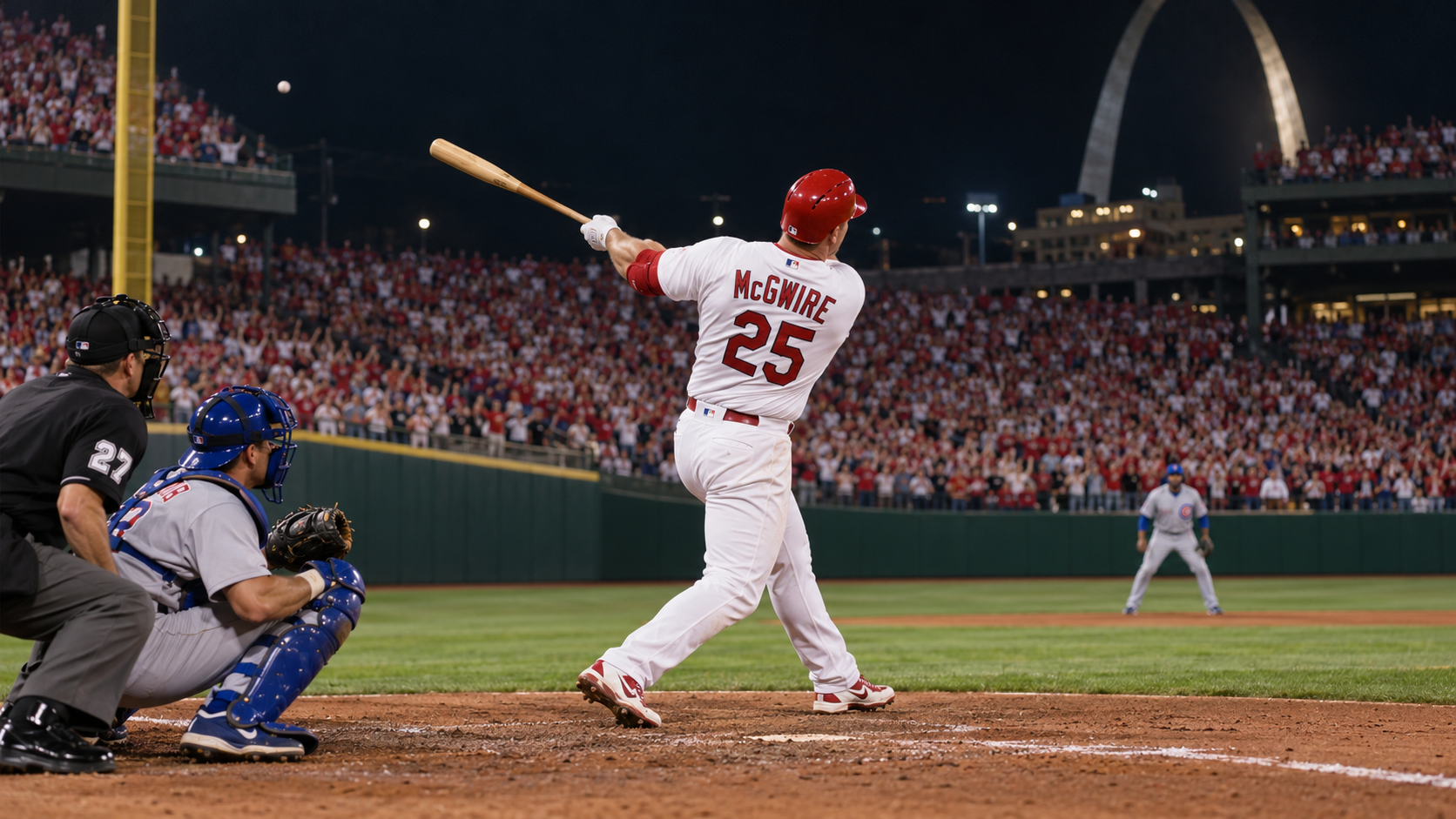
On September 8, 1998, Mark McGwire hit his 62nd home run of the season at Busch Stadium, passing Roger Maris’s 1961 major-league record. The St. Louis slugger drove a pitch from Chicago Cubs right-hander Steve Trachsel over the left-field wall in the fourth inning, then shared the moment with rival Sammy Sosa. Steve Trachsel surrendered the home run. The homer came in the fourth inning. Those details establish the result and its setting, but the day’s importance came from the larger historical pressure surrounding the competition and the people who carried it through.
McGwire and Sosa had spent the summer pursuing Maris in a nationally followed race that drew renewed attention to baseball. McGwire tied the record one night earlier, setting up another sellout crowd and intense coverage for every plate appearance. Roger Maris had held the record at 61. Sammy Sosa was playing right field for Chicago. Together, those points show how preparation, rules, institutions and public expectations shaped the circumstances before the decisive action began. They also separate the documented background from later legend and retrospective interpretation.
The historic swing produced a low line drive that barely cleared the wall. McGwire initially missed first base and returned to touch it, embraced his son at home plate and later met Sosa near the infield during the prolonged celebration. St. Louis won the game 6-3. McGwire finished the season with 70. The immediate result therefore involved more than a single score or statistic: it changed a record, championship, career or institution and gave contemporary audiences a clear reason to understand that the moment was unusual.
McGwire finished with 70 home runs and Sosa with 66, while Barry Bonds surpassed both totals in 2001. Later evidence and admissions about performance-enhancing drugs complicated the meaning of the chase without erasing its enormous cultural impact in 1998. Seen from today, the event remains useful because it connects a measurable sports outcome with the systems around it—teammates, opponents, officials, venues, media and rules. The outcome was not inevitable, and its meaning did not end when play stopped. Preserving the exact date and qualifications helps explain why later generations still return to it. It also prevents a famous image or headline from replacing the fuller story of what actually happened. The best sports history holds achievement and limitation together, showing both the performance itself and the conditions that made it possible. That broader view preserves context without taking attention away from the people who performed under pressure. In that sense, September 8, 1998 still offers a focused view of how athletic excellence, public memory and institutional change can meet in a single day.
Steve Trachsel surrendered the home run.
The homer came in the fourth inning.
Roger Maris had held the record at 61.
Sammy Sosa was playing right field for Chicago.
St. Louis won the game 6-3.
McGwire finished the season with 70.
Explore more "On This Day in Sports"
Discover more landmark games, records, championships, and turning points from sports history. Each day revisits the athletes, teams, and moments that shaped competition and culture.