

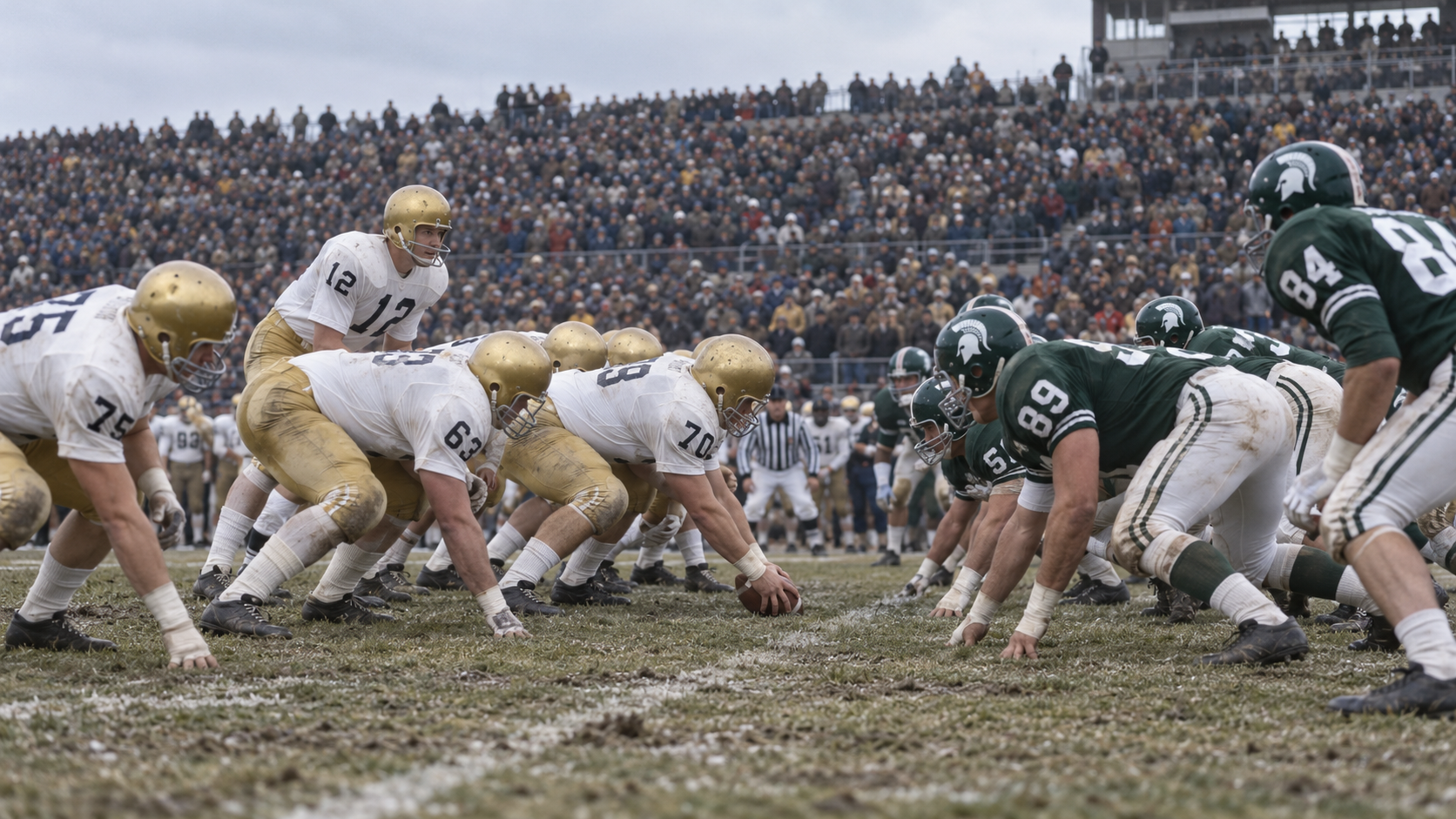
On This Day in Sports: November 19, 1966
On November 19, 1966, top-ranked Notre Dame and No. 2 Michigan State played to a 10-10 tie at Spartan Stadium in the matchup billed as the Game of the Century. The collision of undefeated teams drew about 33 million television viewers and left the national championship debate unresolved. Notre Dame entered ranked No. 1. Michigan State was ranked No. 2. Those details establish the result and its setting, but the day’s importance came from the larger historical pressure surrounding the competition and the people who carried it through.
Both rosters were loaded with elite talent, and Michigan State’s integrated program included Black stars who had been denied comparable opportunities by segregated schools in the South. The contest attracted 80,011 spectators and hundreds of reporters. The game ended 10-10. Attendance was 80,011. Together, those points show how preparation, rules, institutions and public expectations shaped the circumstances before the decisive action began. They also separate the documented background from later legend and retrospective interpretation.
Michigan State led 10-0 before Notre Dame rallied to tie. With the ball late, Irish coach Ara Parseghian chose a conservative finish rather than risk a turnover, and neither team scored again. About 33 million viewers watched on television. Thirty-one players from the game reached the NFL. The immediate result therefore involved more than a single score or statistic: it changed a record, championship, career or institution and gave contemporary audiences a clear reason to understand that the moment was unusual.
Different selectors divided national honors between the programs, sustaining arguments over the tie. Thirty-one participants later played in the NFL, and the broadcast helped demonstrate the national appetite for heavily promoted regular-season college football. Seen from today, the event remains useful because it connects a measurable sports outcome with the systems around it—teammates, opponents, officials, venues, media and rules. The outcome was not inevitable, and its meaning did not end when play stopped. Preserving the exact date and qualifications helps explain why later generations still return to it. It also prevents a famous image or headline from replacing the fuller story of what actually happened. The best sports history holds achievement and limitation together, showing both the performance itself and the conditions that made it possible. That broader view preserves context without taking attention away from the people who performed under pressure. In that sense, November 19, 1966 still offers a focused view of how athletic excellence, public memory and institutional change can meet in a single day.
Notre Dame entered ranked No. 1.
Michigan State was ranked No. 2.
The game ended 10-10.
Attendance was 80,011.
About 33 million viewers watched on television.
Thirty-one players from the game reached the NFL.
Explore more "On This Day in Sports"
Discover more landmark games, records, championships, and turning points from sports history. Each day revisits the athletes, teams, and moments that shaped competition and culture.