

On This Day in Tech: February 27, 1996
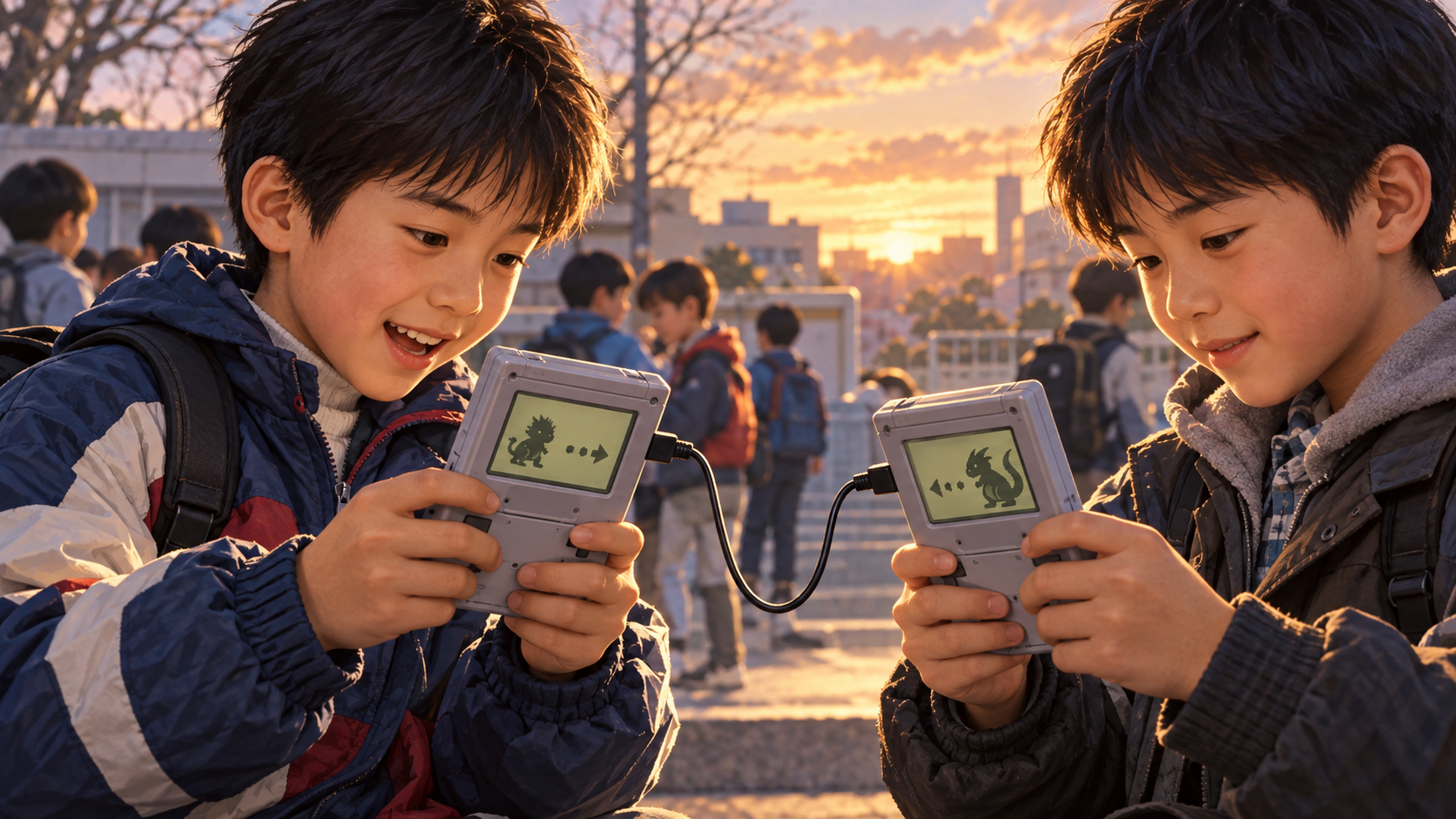
On February 27, 1996, in Japan, Nintendo and developer Game Freak released Pokémon Red and Pokémon Green for the Game Boy. the first Pokémon games went on sale and introduced players to catching, training, trading, and battling a collection of creatures. Designer Satoshi Tajiri’s concept made the handheld link cable central by encouraging players to exchange monsters that were not all available in one version. The event emerged from a specific set of technical goals rather than from a single flash of invention. Engineers, operators, and institutions had spent years translating laboratory ideas into equipment that could work under real conditions. What happened that day gave the public a clear, observable milestone, while the larger project still depended on testing, funding, training, and careful coordination.
The Game Boy was an established but aging portable platform, and Game Freak had spent years refining a technically ambitious role-playing game within tight memory limits. The team needed to make a large world, many creatures, strategic battles, and social exchange understandable on simple monochrome hardware. Cartridge saves preserved a player’s collection, while the link cable turned two separate consoles into a local trading and competition network. That background matters because the milestone joined hardware, software, standards, and human judgment into one working system. The design had to perform reliably enough for practical use, not merely demonstrate an isolated principle. Earlier experiments had established pieces of the solution, but the February event showed how those pieces could be combined at a scale or level of confidence that changed what planners believed was possible.
Japanese customers began exploring the Kanto region, building teams, and discovering that cooperation was necessary to complete the collection. Sales grew gradually and then rapidly through word of mouth, manga, cards, animation, and organized promotion. The release showed how connectivity could give a single-player portable game a strong social life. The outcome was important on its own terms, yet it should not be mistaken for the final form of the technology. Performance limits, cost, safety, access, and competing approaches still shaped what came next. Even so, the date provided evidence that specialists, policymakers, businesses, or consumers could evaluate, and it moved the idea from proposal toward an operational path.
Game Freak and Nintendo gained a new franchise whose characters and mechanics encouraged repeat play and collaboration. The original games had modest graphics, local-only communication, and technical quirks, and the worldwide phenomenon developed over time rather than on launch day alone. Pokémon became one of entertainment’s largest cross-media properties and established collection, trading, and version-linked design as enduring game conventions. Later improvements often looked very different from the equipment used on the anniversary itself, but they built on the same underlying breakthrough in capability, organization, or public acceptance. The legacy also includes lessons about how technology spreads: success depends on institutions, standards, and users as much as on a machine. Remembering the event precisely helps separate the verified achievement of that day from developments that followed months or years later.
The key setting was Japan. The people and institutions most directly involved were Nintendo and developer Game Freak released Pokémon Red and Pokémon Green for the Game Boy, connecting research with practical operations.
Before the anniversary, The Game Boy was an established but aging portable platform, and Game Freak had spent years refining a technically ambitious role-playing game within tight memory limits. The unresolved challenge was clear: The team needed to make a large world, many creatures, strategic battles, and social exchange understandable on simple monochrome hardware.
The technology at the center of the story can be summarized this way: Cartridge saves preserved a player’s collection, while the link cable turned two separate consoles into a local trading and competition network. It supplied the practical foundation for the milestone.
The immediate result was documented in concrete terms: Sales grew gradually and then rapidly through word of mouth, manga, cards, animation, and organized promotion. Still, The original games had modest graphics, local-only communication, and technical quirks, and the worldwide phenomenon developed over time rather than on launch day alone.
The longer significance rests on more than novelty. Pokémon became one of entertainment’s largest cross-media properties and established collection, trading, and version-linked design as enduring game conventions.
The event connects to a broader pattern in technology history: reliable systems mature through testing, standards, investment, and use. Later versions changed, but the verified accomplishment on February 27, 1996 remained the reference point.
Explore more of "On This Day ..."
Discover more events from the same date across news, politics, technology, sports, and other fields. Each link highlights significant moments that shaped history on different fronts.