

On This Day in Tech: February 28, 1959
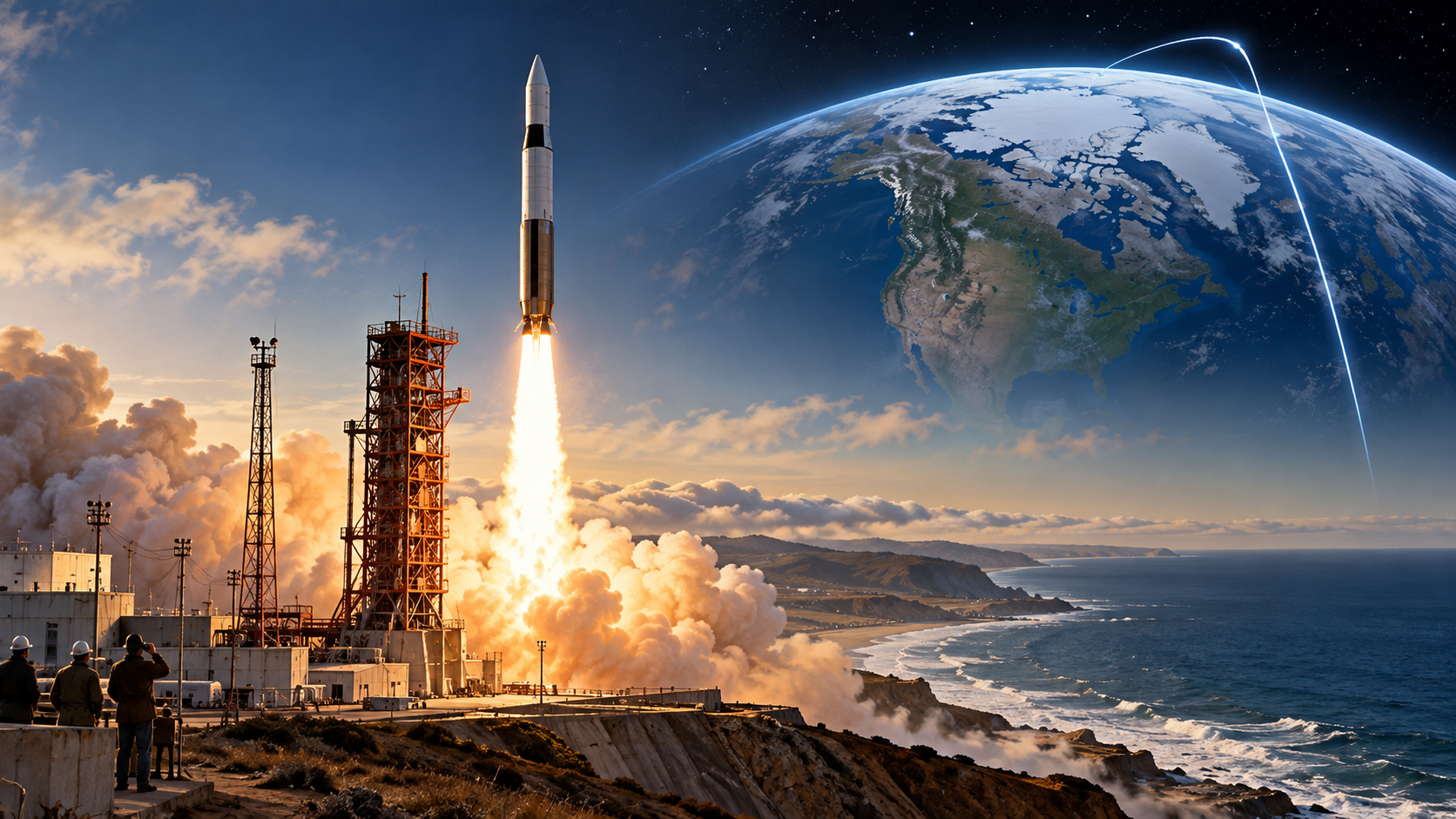
On February 28, 1959, in Vandenberg Air Force Base in California and a near-polar Earth orbit, the U.S. Air Force launched Discoverer 1 on a Thor-Agena rocket. the spacecraft became the first object placed into a near-polar orbit by the United States. The public Discoverer program served as the cover and test framework for the classified Corona reconnaissance-satellite effort. The event emerged from a specific set of technical goals rather than from a single flash of invention. Engineers, operators, and institutions had spent years translating laboratory ideas into equipment that could work under real conditions. What happened that day gave the public a clear, observable milestone, while the larger project still depended on testing, funding, training, and careful coordination.
During the Cold War, the United States sought reliable information about distant military facilities without depending only on aircraft overflights. Engineers had to master new launch vehicles, polar trajectories, spacecraft stabilization, cameras, film handling, and recovery from orbit. The Thor booster and Agena upper stage formed a system intended to place payloads over much of Earth as the planet rotated beneath a polar path. That background matters because the milestone joined hardware, software, standards, and human judgment into one working system. The design had to perform reliably enough for practical use, not merely demonstrate an isolated principle. Earlier experiments had established pieces of the solution, but the February event showed how those pieces could be combined at a scale or level of confidence that changed what planners believed was possible.
The rocket lifted from the West Coast range and injected Discoverer 1 into orbit, testing key elements before later photographic missions. Tracking confirmed the orbital achievement, although the early spacecraft carried no recoverable camera capsule. The mission’s true strategic purpose remained secret while the public saw it as a scientific and engineering test. The outcome was important on its own terms, yet it should not be mistaken for the final form of the technology. Performance limits, cost, safety, access, and competing approaches still shaped what came next. Even so, the date provided evidence that specialists, policymakers, businesses, or consumers could evaluate, and it moved the idea from proposal toward an operational path.
The flight gave teams experience with the booster, Agena vehicle, ground tracking, and polar launch operations. Discoverer 1 did not return reconnaissance images, and the Corona program required repeated failures and improvements before successful film recovery. Later Corona satellites delivered vital intelligence and pioneered technologies for Earth observation, orbital photography, and recovery of material from space. Later improvements often looked very different from the equipment used on the anniversary itself, but they built on the same underlying breakthrough in capability, organization, or public acceptance. The legacy also includes lessons about how technology spreads: success depends on institutions, standards, and users as much as on a machine. Remembering the event precisely helps separate the verified achievement of that day from developments that followed months or years later.
The key setting was Vandenberg Air Force Base in California and a near-polar Earth orbit. The people and institutions most directly involved were the U.S. Air Force launched Discoverer 1 on a Thor-Agena rocket, connecting research with practical operations.
Before the anniversary, During the Cold War, the United States sought reliable information about distant military facilities without depending only on aircraft overflights. The unresolved challenge was clear: Engineers had to master new launch vehicles, polar trajectories, spacecraft stabilization, cameras, film handling, and recovery from orbit.
The technology at the center of the story can be summarized this way: The Thor booster and Agena upper stage formed a system intended to place payloads over much of Earth as the planet rotated beneath a polar path. It supplied the practical foundation for the milestone.
The immediate result was documented in concrete terms: Tracking confirmed the orbital achievement, although the early spacecraft carried no recoverable camera capsule. Still, Discoverer 1 did not return reconnaissance images, and the Corona program required repeated failures and improvements before successful film recovery.
The longer significance rests on more than novelty. Later Corona satellites delivered vital intelligence and pioneered technologies for Earth observation, orbital photography, and recovery of material from space.
The event connects to a broader pattern in technology history: reliable systems mature through testing, standards, investment, and use. Later versions changed, but the verified accomplishment on February 28, 1959 remained the reference point.
Explore more of "On This Day ..."
Discover more events from the same date across news, politics, technology, sports, and other fields. Each link highlights significant moments that shaped history on different fronts.