

On This Day in Tech: October 13, 1983
On October 13, 1983, Ameritech Mobile Communications opened commercial cellular telephone service in Chicago, Illinois, bringing a major American communications experiment into public operation. The system used the Advanced Mobile Phone System, or AMPS, developed through years of work on cellular networking and mobile radio equipment. It was the first commercial cellular service in the United States, although cellular networks had already opened in other countries. Customers could make telephone calls while traveling through the coverage area, using equipment that communicated with nearby radio sites and connected through a switching network to the ordinary telephone system.
Mobile telephones had existed before cellular service, but earlier systems relied on comparatively few radio channels and large coverage areas. That arrangement sharply limited how many people could place calls simultaneously. Cellular architecture divided a service region into smaller areas and reused frequencies sufficiently far apart to avoid harmful interference. As a vehicle moved, the network could transfer its call from one radio site to another. Delivering that experience required coordinated antennas, switching equipment, frequency planning, control signaling, and subscriber devices. The handset was only the most visible part of a much larger engineering and operating system.
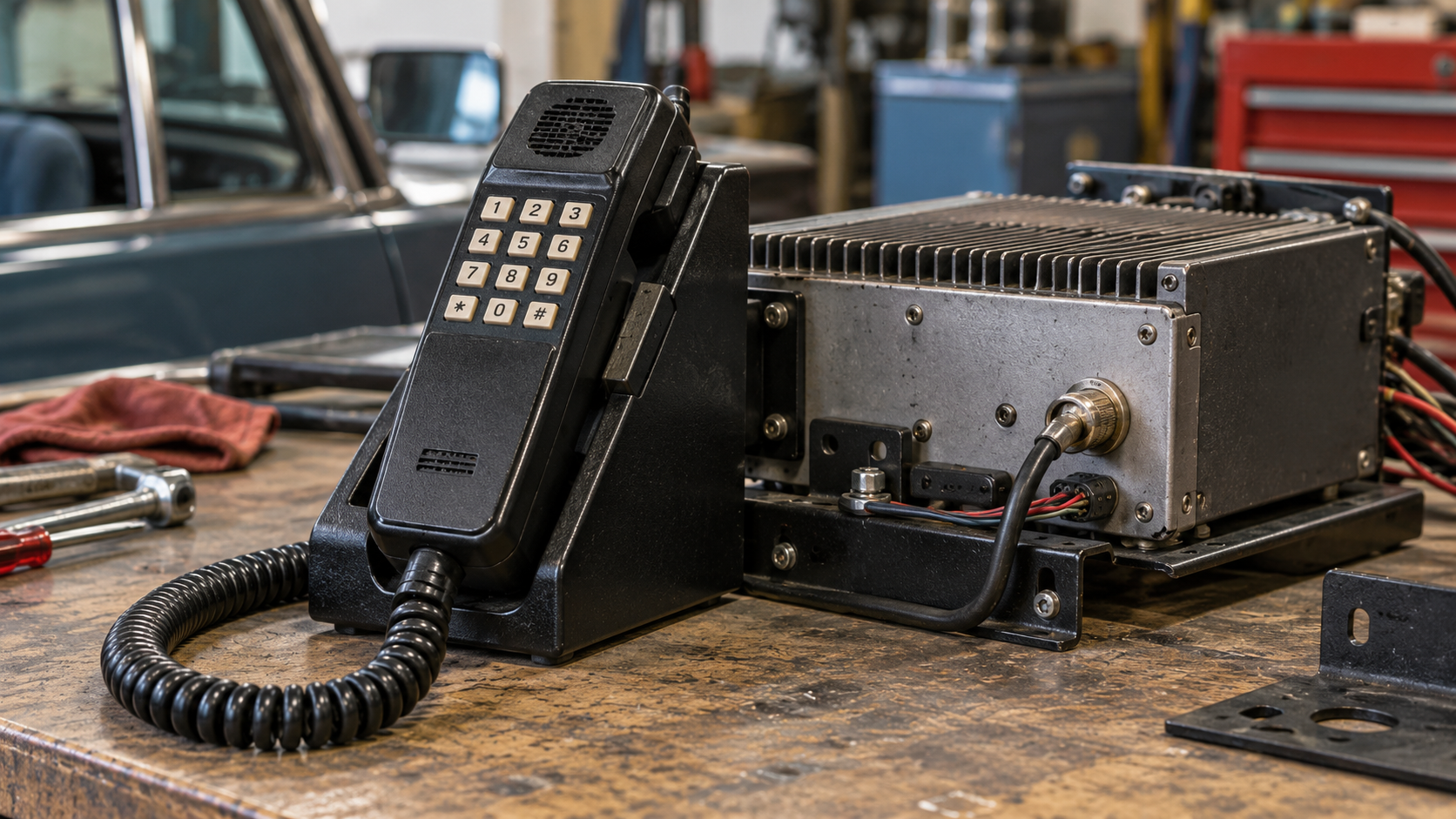
The Chicago launch followed years of development, regulatory decisions, and service trials. Early customers often used car-installed telephones with a corded handset and a separate radio transceiver powered by the vehicle. These should be distinguished from the portable Motorola DynaTAC, which received U.S. approval in September 1983 and became available to consumers in 1984. AMPS carried calls using analog radio channels, without the digital data services associated with later generations. Equipment and airtime were expensive, and coverage was geographically limited. The opening therefore established a working commercial model rather than immediately placing affordable mobile communications in everyone’s pocket.
Expansion over the following decades brought smaller handsets, additional operators, wider coverage, and successive digital standards. Engineers had to manage demand, interference, roaming, billing, and the transition between generations while users increasingly expected calls to work wherever they traveled. Later networks added messaging and internet access, eventually making the smartphone a primary computing device. Those developments depended on many further inventions, but the cell-based organization of radio service remained fundamental. October 13 marks the American commercial opening of that architecture. Its significance lies in proving that a network could serve moving subscribers across many radio areas, connecting personal mobility with the established reach of the telephone system. Commercial service still required extensive investment in fixed infrastructure.
Earlier mobile radio systems had limited channel capacity. Cellular architecture increased reuse by dividing a coverage region into smaller service areas.
Ameritech's Chicago system entered commercial operation on October 13, 1983. It was a U.S. milestone, not the world's first cellular network.
AMPS joined radio sites, switching equipment, control channels, and the public telephone network. Calls could be transferred between sites as subscribers moved.
Early service was analog, costly, and often based on vehicle-installed equipment. The portable DynaTAC's approval and consumer availability were separate milestones.
Cellular service expanded through improvements in coverage, capacity, handsets, and standards. Digital generations later added messaging and internet access.
The architecture established that mobility could be a normal part of telephone service. Coordinated infrastructure mattered as much as the device customers held.
Explore more of "On This Day ..."
Discover more events from the same date across news, politics, technology, sports, and other fields. Each link highlights significant moments that shaped history on different fronts.