

On This Day in Tech: October 16, 1959
On October 16, 1959, Control Data Corporation introduced the CDC 1604, a transistor-based computer associated with designer Seymour Cray. The machine helped establish the young company in the scientific computing market at a time when many large installations still depended on vacuum tubes. It was a commercial system for organizations with substantial numerical workloads, not a personal computer. Its introduction belongs to the transition from early electronic machines toward more compact and practical solid-state systems. Computer museums identify the date as a product milestone, while delivery, installation, programming, and productive use followed through separate arrangements with customers.
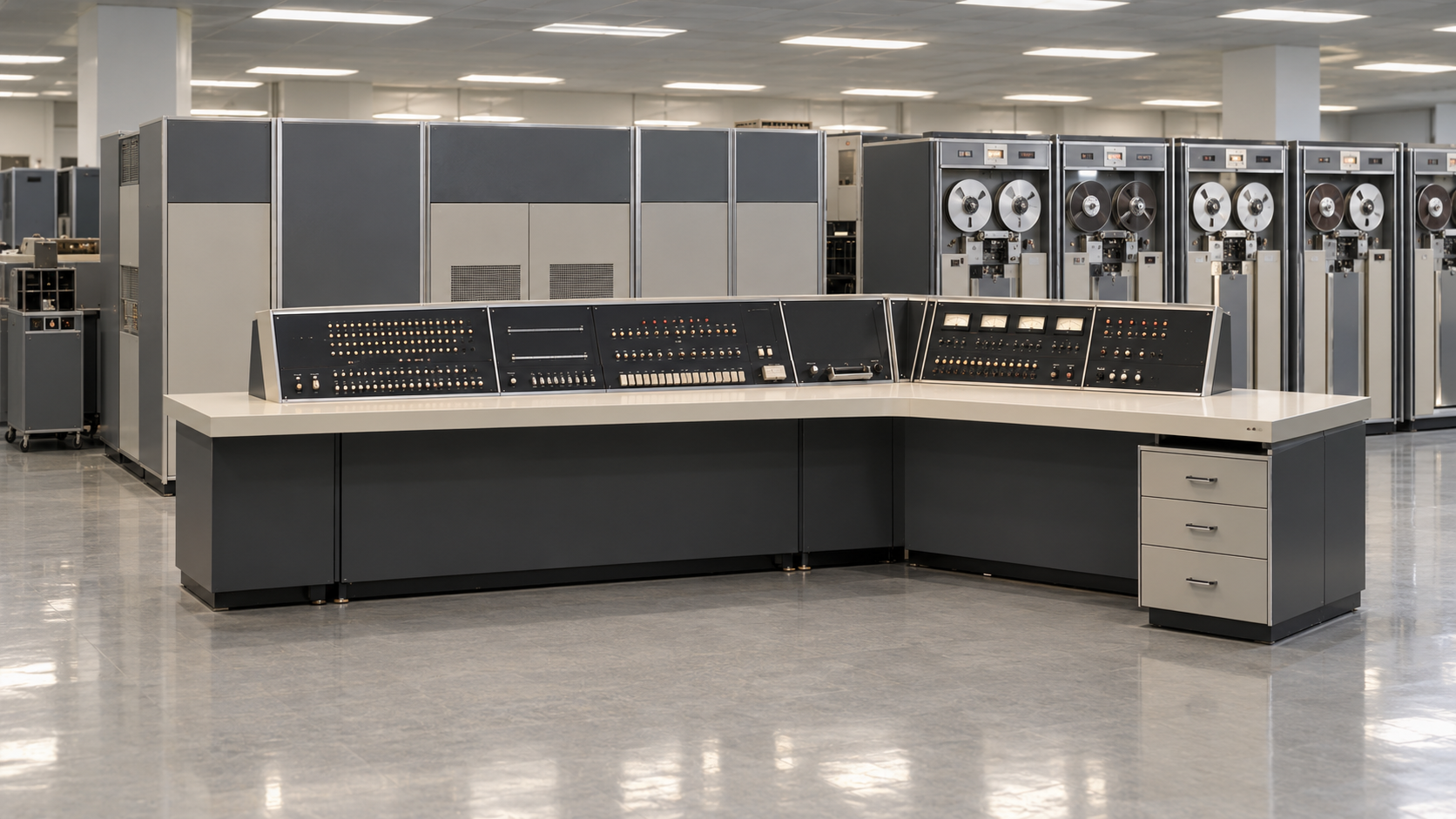
Transistors could perform electronic switching without the heated cathodes required by vacuum tubes. In a large computer, that change offered advantages in power consumption, physical size, and maintenance. It did not make the complete installation small or effortless to operate. The 1604 still required cabinets, peripheral equipment, electrical power, and people trained to prepare jobs and interpret results. Its operator console and tape equipment reveal how different the working environment was from a modern laptop. The computer was a shared institutional resource, with access mediated by procedures, schedules, and the practical constraints of moving information into and out of the system.
The 1604 used a forty-eight-bit word and magnetic-core main memory. Such design choices mattered for scientific calculations, where representing numbers and processing large sequences of arithmetic operations were central concerns. Tape units and other peripherals handled programs and data outside main memory. Control Data’s early work included systems for demanding government and research applications, including weather-related computing for the U.S. Navy. Numerical weather prediction required observations to be transformed into mathematical calculations quickly enough for the results to remain useful. A faster processor helped, but useful forecasts also depended on models, reliable inputs, software, and an organized operating workflow.
The model strengthened Control Data’s reputation and contributed to the company’s subsequent development of powerful scientific computers. Cray later became closely associated with supercomputing, but that later history should not turn every early machine into a modern supercomputer by definition. The 1604’s importance was its combination of transistor engineering, commercial delivery, and practical numerical capability in its own period. October 16 marks an introduction rather than the invention of the transistor or the first use of electronics for calculation. It illustrates how a component technology changes computing only when designers integrate it into a usable system, and when institutions develop the software and operating practices needed to obtain dependable results.
Control Data entered a market shaped by large institutional computers. The 1604 helped establish the company as a supplier of scientific computing equipment.
Its October 16, 1959 introduction was a product announcement. Customer deliveries and operational installations were separate stages.
Transistors reduced dependence on vacuum tubes, while core memory and peripheral equipment supported numerical work. The complete installation still required substantial space and skilled operators.
Scientific applications depended on models, programs, and data as well as processor speed. Weather prediction illustrates that wider operating system.
The 1604 contributed to Control Data's reputation and later high-performance computer development. It was an important stage in Cray's early design career.
The milestone shows how solid-state components became practical institutional tools. Integration and dependable operation mattered alongside switching speed.
Explore more of "On This Day ..."
Discover more events from the same date across news, politics, technology, sports, and other fields. Each link highlights significant moments that shaped history on different fronts.