

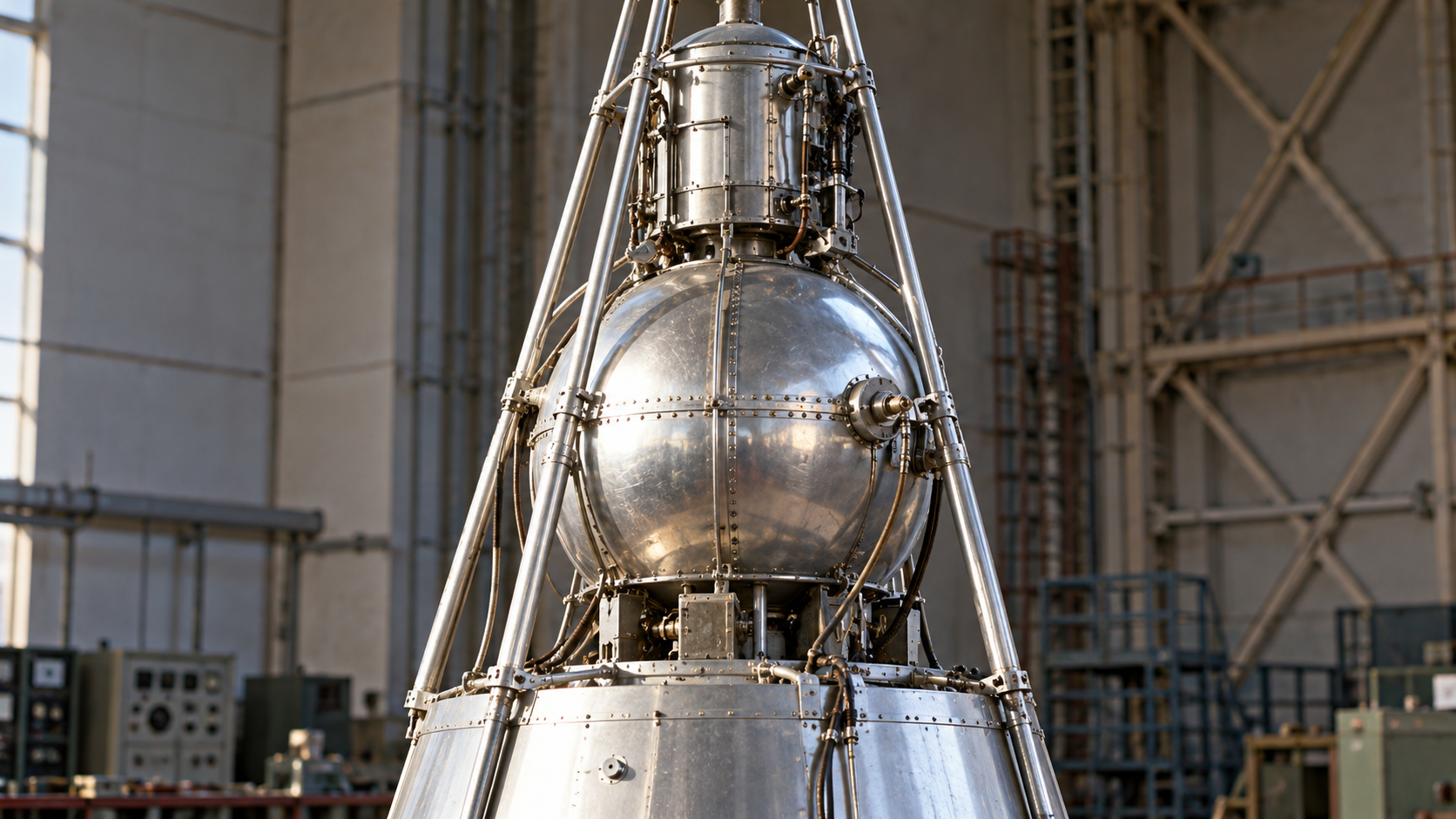
On This Day in Tech: November 3, 1957
On November 3, 1957, the Soviet Union launched Sputnik 2 from the Baikonur test range, carrying the dog Laika into Earth orbit. The mission followed the first Sputnik by less than a month and demonstrated that a substantially heavier payload could reach orbit. Its engineering objectives included obtaining information about a living organism during launch and orbital flight. The spacecraft, however, had no provision to return Laika safely. That limitation is essential to the history, not a detail to hide behind the achievement. The launch combined rapid technical progress with decisions about risk and animal welfare that remain troubling.
Sputnik 2 was much more elaborate than the small transmitting sphere launched in October. Its structure held scientific equipment, radio systems, a power supply, and an animal habitat with arrangements for air, food, restraint, and monitoring. The payload weighed about five hundred kilograms and remained attached to its booster after reaching orbit. Designers had to consider acceleration, vibration, pressure, temperature, electrical supply, and the transmission of measurements to ground stations. Putting a living passenger into orbit required more than making enough room inside a container. The spacecraft had to maintain a suitable environment while operating far from any possibility of direct human intervention.
The mission was prepared hurriedly, and its environmental-control system was not designed for a lengthy flight. Laika is believed to have survived only a few hours after reaching orbit, rather than the extended survival sometimes suggested in earlier accounts. The spacecraft continued around Earth after that, and its batteries and scientific transmissions lasted beyond the animal’s survival. These were different measures of mission performance and should not be conflated. Radio contact could show that equipment still functioned without establishing that the habitat had remained safe. The satellite eventually reentered the atmosphere in April 1958, months after the November launch.
Sputnik 2 intensified international awareness that orbital rockets could carry increasingly complex payloads. Human spaceflight would require much more dependable environmental control, monitoring, flight operations, and a workable return system. Later Soviet animal missions did bring their passengers back, but those subsequent capabilities were not present in Sputnik 2. November 3 marks an important step in orbital payload and life-support engineering while also exposing its inadequacies. A responsible account can recognize the technical significance without describing a fatal experiment as an uncomplicated success. The mission remains a reminder that launch, communication, survival, and safe recovery are separate requirements, and that impressive progress in one part of a system cannot compensate for the absence of another essential protection.
Sputnik 2 followed the first satellite by less than a month. Its heavier payload included an animal habitat and additional equipment.
Laika reached orbit on November 3, 1957. The spacecraft had no system for bringing her back safely.
Air supply, temperature control, power, restraint, and biological measurements had to work together. A larger rocket payload alone could not provide a safe environment.
Laika likely survived only a few hours in orbit. Continued radio or scientific operation must not be mistaken for continued survival.
Later missions developed recovery capabilities that Sputnik 2 lacked. Their results should be kept separate from what happened in November 1957.
The mission has both technical importance and an ethical burden. Safe transport requires environmental reliability and return arrangements, not merely successful orbital insertion.
Explore more of "On This Day ..."
Discover more events from the same date across news, politics, technology, sports, and other fields. Each link highlights significant moments that shaped history on different fronts.