

On This Day in Tech: November 6, 1935
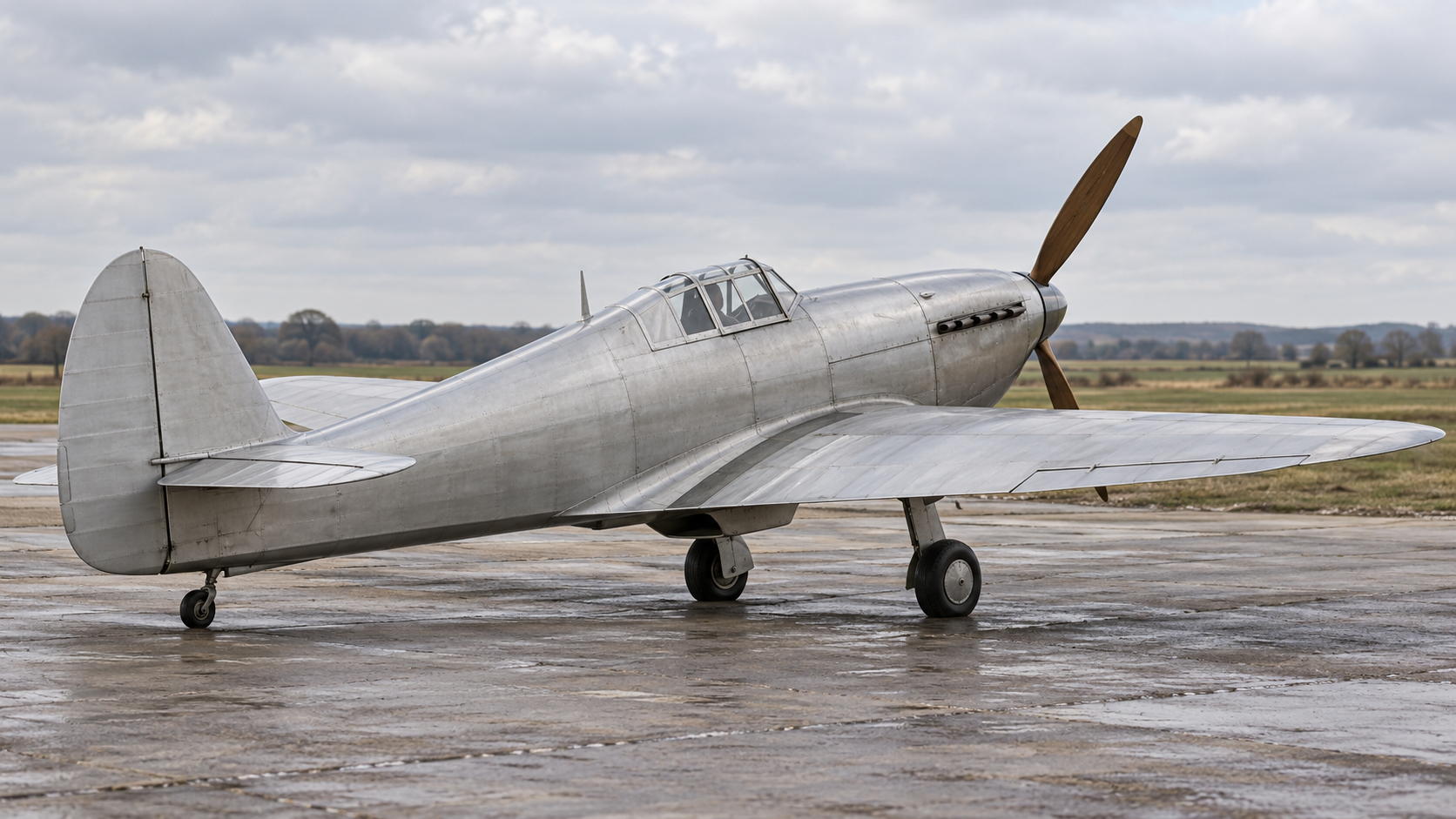
On November 6, 1935, Hawker’s prototype Hurricane fighter made its first flight at Brooklands in Surrey, England, with chief test pilot P. W. S. ‘George’ Bulman at the controls. The aircraft, carrying the serial K5083, embodied a design led by Sydney Camm. It brought a low monoplane wing, an enclosed cockpit, retractable main landing gear, and a powerful liquid-cooled engine into a new British fighter configuration. This was a development flight rather than the delivery of an operational squadron aircraft. Ground tests and taxi trials had preceded it, while further flight evaluation and alterations would follow before production and military service.
Hawker had considerable experience building successful biplanes. Camm’s design moved toward the lower drag and higher speeds available from a monoplane without discarding every established manufacturing method. The Hurricane retained a strong tubular-metal framework and extensive fabric covering, alongside metal parts around the engine and other areas. Its early wing covering and two-bladed propeller differed from equipment fitted to later versions. These choices reflected the engineering and industrial circumstances of the mid-1930s. A promising design needed to perform well, but it also had to be built consistently, inspected, repaired, and supported using materials and skills available to the manufacturer and its customers.
The prototype’s Rolls-Royce engine belonged to the development line that became known as the Merlin. Bringing the engine and airframe together required attention to cooling, vibration, balance, controls, and the effect of landing-gear retraction on the aircraft. Flight testing supplied evidence that drawings and ground calculations could not provide alone. Handling across different speeds and conditions mattered as much as a single maximum-speed figure. Subsequent official trials took place in 1936, and an initial order for six hundred aircraft followed that year. Those decisions were later milestones; neither an order nor wartime operational success should be represented as something completed during the first flight.
The Hurricane entered RAF service in 1937 and became a major aircraft in the Battle of Britain in 1940. Production expanded across several factories and countries, while later marks received different engines, propellers, wings, and armament. Photographs of those mature aircraft can therefore be misleading illustrations of the 1935 prototype unless their differences are explained. November 6 marks the first airborne test of the design, not the debut of every feature associated with the Hurricane name. Its wider technological story is one of transition: a manufacturer combined newer aerodynamic arrangements with familiar structural techniques, then used testing and production experience to refine the result. That mixture helped turn a prototype into a practical aircraft built in substantial numbers.
Sydney Camm led the design at Hawker, drawing on the firm's biplane experience while moving toward a monoplane fighter.
K5083 first flew at Brooklands on November 6, 1935, with test pilot George Bulman at the controls.
An enclosed cockpit and retractable landing gear reduced some of the compromises of earlier fighter layouts. Established framework and fabric techniques remained important.
The first flight began an evaluation process. The initial production order and operational service came later.
Later Hurricane versions changed engines, propellers, covering, and equipment. A wartime photograph is not automatically evidence of the prototype's appearance.
The design's history connects aerodynamic performance with manufacturing and repairability. Successful service required an industrial system as well as a promising aircraft.
Explore more of "On This Day ..."
Discover more events from the same date across news, politics, technology, sports, and other fields. Each link highlights significant moments that shaped history on different fronts.