

On This Day in Tech: November 7, 1996
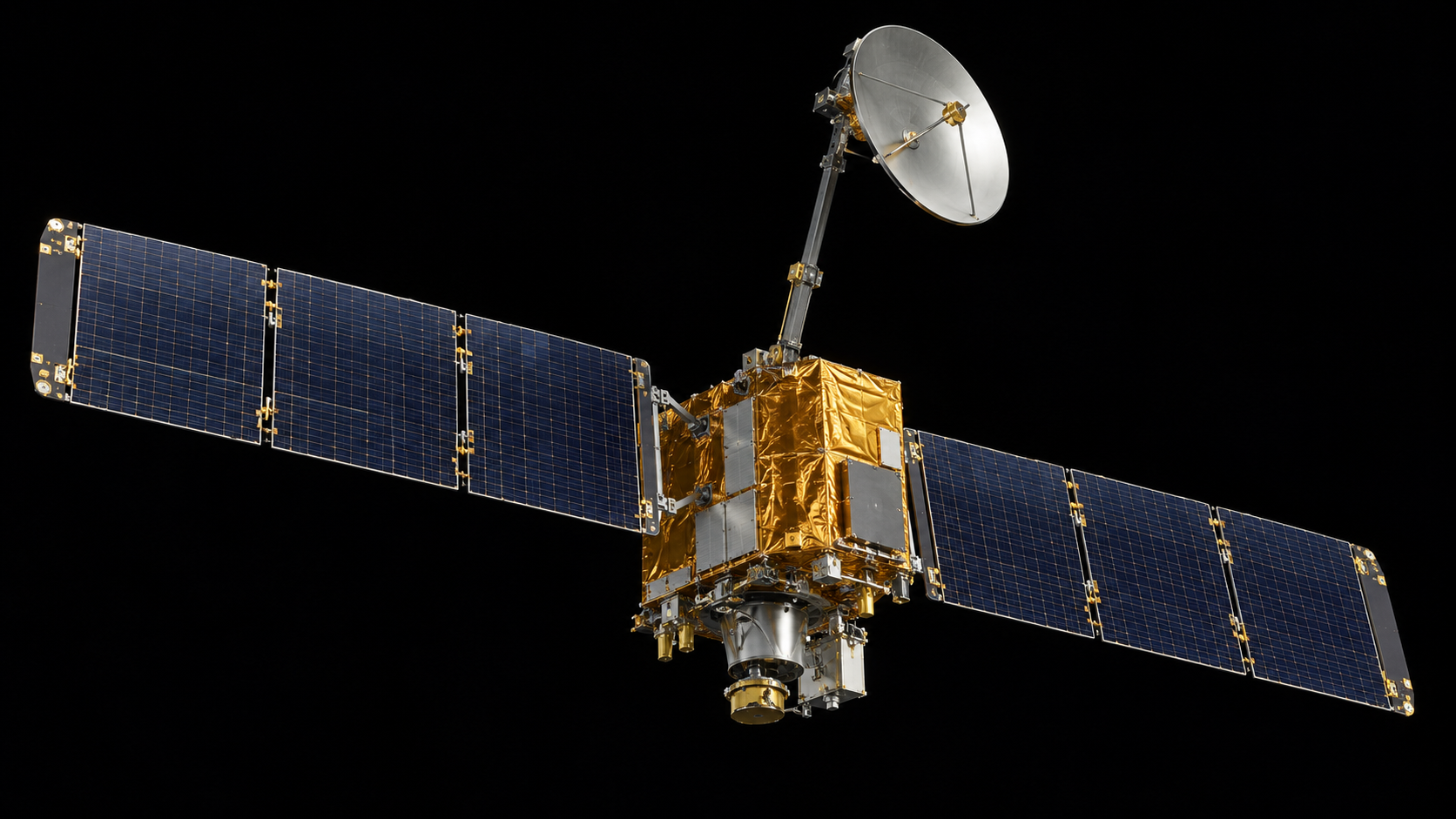
On November 7, 1996, NASA launched Mars Global Surveyor aboard a Delta II rocket from Launch Complex 17A at Cape Canaveral, Florida. The spacecraft was managed by the Jet Propulsion Laboratory and built by Lockheed Martin. Its purpose was to study the Martian surface, atmosphere, and interior from orbit, rebuilding an observing program interrupted by the loss of Mars Observer in 1993. Launch placed the new spacecraft on its journey; it did not begin mapping Mars that day. The mission still faced an interplanetary cruise, navigation corrections, orbital insertion, and a lengthy process of reaching the right orbit for systematic observations.
Mars Global Surveyor carried a camera, laser altimeter, thermal-emission spectrometer, magnetic-field instruments, and equipment for radio science and communications. These instruments answered different questions. Images recorded surface patterns, while laser measurements established elevations and spectroscopic observations investigated minerals and atmospheric properties. Repeated coverage could reveal changes that a few isolated photographs would miss. The spacecraft also needed electricity, thermal control, orientation, propulsion, and reliable contact with Earth. Its two solar-array wings were particularly important because they supplied power and would later play a role in changing the orbit. Scientific performance depended on the successful operation of this supporting hardware.
After launch, one solar array failed to reach its fully deployed position. The spacecraft retained sufficient power, but the problem mattered to the planned use of aerobraking at Mars. That technique lowers an orbit by repeatedly passing through the thin upper atmosphere and allowing drag to reduce orbital energy, saving propellant. Mars Global Surveyor arrived in 1997, and engineers adjusted the aerobraking process to limit stress on the compromised array. Reaching the final mapping orbit took much longer than originally planned. Routine mapping began in March 1999, more than two years after launch. This delay illustrates why launch dates, arrival dates, and the beginning of a mission’s principal observations need to be distinguished.
The eventual results justified the patient engineering work. The mission produced extensive high-resolution imagery, a global elevation dataset, and evidence that helped researchers reconstruct the planet’s geological and climatic history. It also supported later exploration by imaging landing areas and relaying information from other spacecraft. Communications ceased in 2006, after years of operations beyond the primary mission. November 7 marks the departure of a spacecraft whose value emerged through sustained observations, not a single dramatic photograph. Its history demonstrates both the advantages and demands of economical mission design: using the atmosphere to reshape an orbit can reduce fuel requirements, but hardware limitations and uncertain conditions still require careful monitoring, revised plans, and cooperation between engineering teams and scientists.
Mars Global Surveyor followed the loss of Mars Observer. It carried several types of instrument to rebuild a comprehensive observing program.
The spacecraft launched from Cape Canaveral on November 7, 1996. It reached Mars the following year.
One solar array did not deploy fully. That limitation affected plans for atmospheric drag even though power remained adequate.
Aerobraking saved propellant but required a revised, extended sequence. Systematic mapping began in March 1999 rather than at launch.
Images, elevation measurements, and other data supported studies of Mars over many years. The spacecraft also assisted subsequent missions.
A successful launch was only one stage in the project. Long-term scientific returns depended on flexible operations and careful management of the spacecraft's condition.
Explore more of "On This Day ..."
Discover more events from the same date across news, politics, technology, sports, and other fields. Each link highlights significant moments that shaped history on different fronts.