

On This Day in Tech: November 18, 1963
On November 18, 1963, the Bell System introduced commercial Touch-Tone telephone service in Carnegie and Greensburg, Pennsylvania. Customers who subscribed received Western Electric telephones with a ten-button keypad in place of a rotary dial. Earlier marketing trials had tested the idea, so the date marks a commercial introduction rather than the first experiment with push-button calling. The change made entering a number quicker and altered how a telephone communicated dialing instructions to the network. It did not create the first automatic telephone exchange or the first long-distance call; both had substantial histories before the new service appeared.
A rotary dial sent a sequence of interruptions, or pulses, as it returned after the user’s finger released it. Touch-Tone instead represented a pressed key with a pair of audio-frequency tones. Equipment in the network could recognize the combination and identify the intended digit. Using two tones helped distinguish a valid key signal from other sounds. The system joined a new user interface with electronics in the telephone and suitable receiving equipment beyond it. Simply replacing a circular dial with square buttons would not have provided the same service unless the network could interpret the electrical signals the buttons generated.
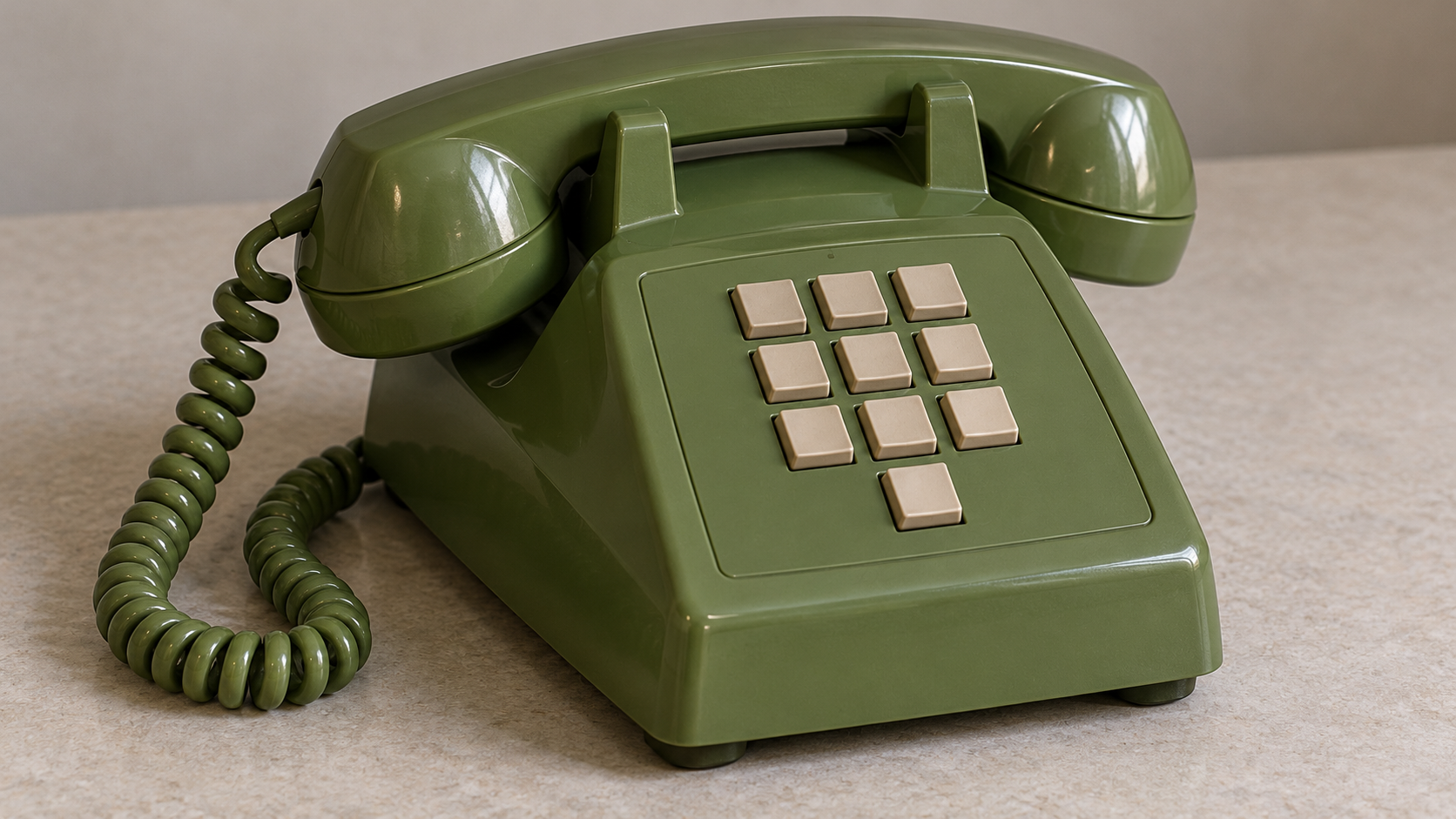
The initial keypad contained the digits zero through nine, arranged with three rows of three keys and a single zero key beneath. The star and number-sign keys familiar from later telephones were not part of that original ten-button layout. The service also began in selected communities and carried an additional charge; it did not instantly replace every rotary instrument in the country. People continued using a mixture of telephone types while exchanges and services evolved. Those limits help distinguish the actual 1963 introduction from a retrospective picture in which modern twelve-key phones and nationwide compatibility appear all at once on launch day.
As tone dialing spread, the ability to send recognizable key signals over a voice connection became useful beyond setting up an ordinary call. Later systems used keypad entries to interact with automated services and other equipment. Such applications required their own design and deployment and were not all available to the first Pennsylvania subscribers. November 18 marks a significant shift in the relationship between a familiar household object and the communications network behind it. The handset still carried speech, but its number-entry mechanism increasingly behaved as an electronic signaling device. The transition illustrates how changing a small everyday interaction can depend on coordinated changes in manufacturing, network equipment, customer instruction, and service arrangements, even when the finished product looks only modestly different from the one it replaces.
Commercial Touch-Tone service began in Carnegie and Greensburg on November 18, 1963. Earlier trials had preceded the introduction.
Subscribers received ten-button Western Electric telephones. The first layout did not include star or number-sign keys.
Each key generated a pair of tones that network equipment could recognize. Rotary instruments instead communicated dialing information through pulses.
A keypad alone was insufficient without compatible receiving equipment. Additional charges and limited initial coverage constrained adoption.
Later services used keypad tones for interaction after a connection was established. These applications developed beyond the first commercial launch.
The change involved both a household interface and the network behind it. Successful adoption required compatible equipment, operations, and customer understanding.
Explore more of "On This Day ..."
Discover more events from the same date across news, politics, technology, sports, and other fields. Each link highlights significant moments that shaped history on different fronts.