

On This Day in Tech: November 21, 1990
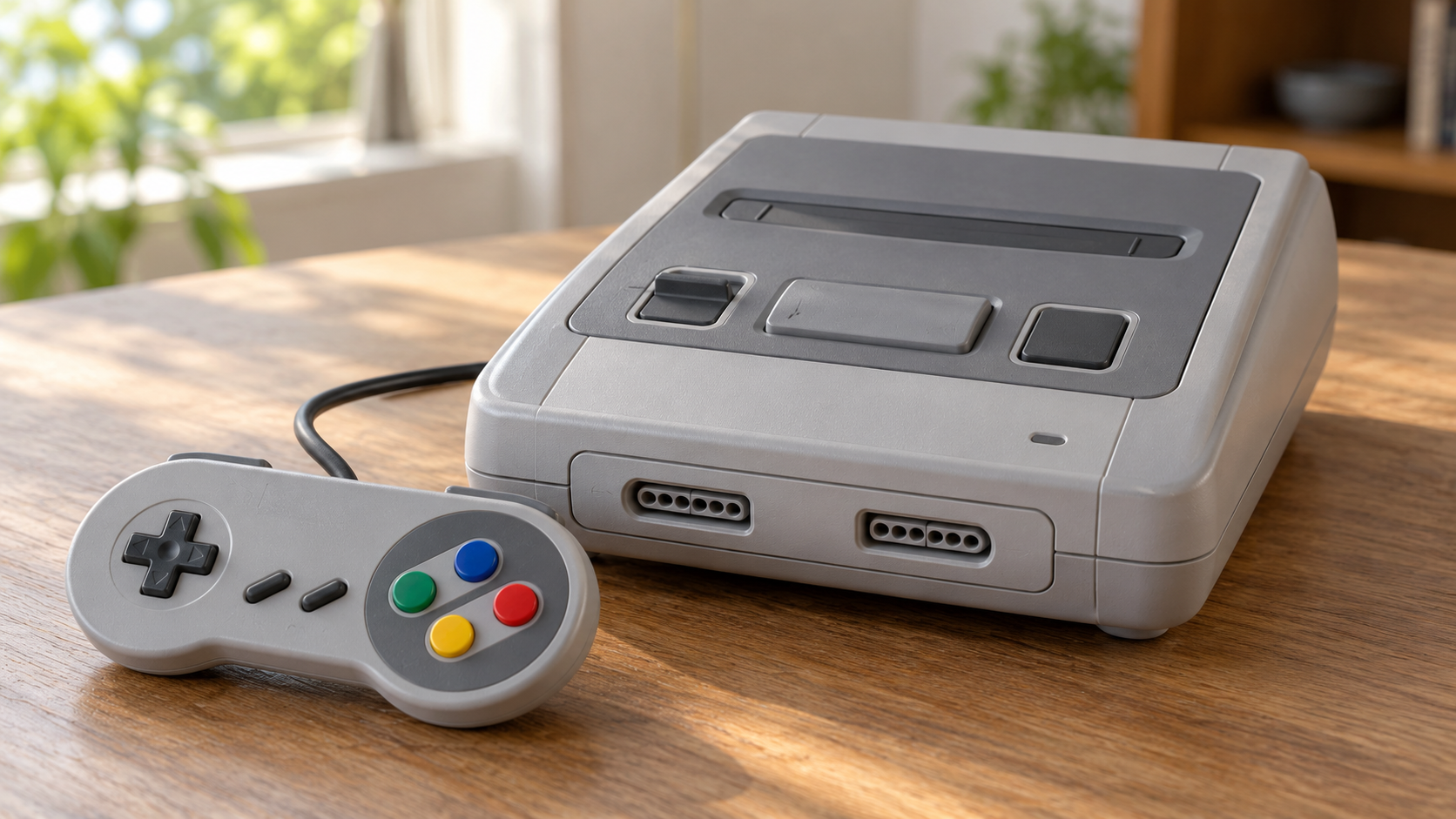
On November 21, 1990, Nintendo released the Super Famicom home video-game console in Japan. It succeeded the Famicom and entered a market in which competing systems were already offering more capable graphics and sound. The launch paired new hardware with games including Super Mario World and F-Zero, giving buyers immediate demonstrations of what the platform could do. This was the Japanese introduction, not the North American or European release of the Super Nintendo Entertainment System. Those regional launches came later and used their own distribution arrangements, game catalogues, and, in North America, a noticeably different case design.
The console belonged to the generation commonly described as sixteen-bit, but that label alone did not explain its capabilities. Graphics and sound depended on specialized circuitry working alongside the main processor and cartridge software. More colors, graphical layers, and improved audio gave developers additional ways to present action and atmosphere. F-Zero’s moving track perspective became an especially recognizable demonstration of the system’s image-manipulation abilities. The effect should not be confused with a modern game drawing an unrestricted three-dimensional world from polygon models. Designers used the particular strengths and limits of the available hardware to create a convincing impression from carefully prepared artwork and programming.
The controller also changed the platform. Its four main face buttons and two shoulder buttons gave developers more inputs while retaining a directional pad and familiar start and select controls. More buttons were only useful when their arrangement supported understandable actions, so software design remained essential. Games still arrived on cartridges rather than downloaded through a built-in broadband connection. Capacity, manufacturing cost, compatibility, and decisions about additional cartridge components shaped what developers could deliver. Later games and accessories expanded the system’s possibilities, but their capabilities should not be assumed to have been present in every launch-day title or in the console alone.
The Super Famicom and its regional Super NES relatives developed extensive libraries across platform, racing, role-playing, fighting, and other genres. Their reputation grew through years of software work, not simply through the specifications announced with the machine. Later miniature rereleases reproduced the appearance and selected games in different hardware, and they are not the original 1990 console. November 21 marks a major platform transition for Nintendo and its developers. The technological lesson is that a successful generation combines processing, audiovisual design, input, and a durable software catalogue. Particular hardware effects may attract attention at launch, but lasting usefulness depends on how creators turn a constrained machine into a range of experiences people can understand and enjoy.
The Super Famicom went on sale in Japan on November 21, 1990. The regional Super NES launches followed later.
Super Mario World and F-Zero were among the launch games. They demonstrated different uses of the new platform.
Specialized graphics and sound circuitry mattered alongside the main processor. A generation's bit-count label did not describe the whole system.
Four face buttons and two shoulder controls expanded the input layout. Cartridges and hardware limits still constrained development.
Later software, cartridge enhancements, and accessories extended the platform's range. Miniature rereleases used different hardware and should not be mistaken for original consoles.
The system's legacy reflects its library as well as its electronics. Developers turned particular capabilities into memorable, varied uses over time.
Explore more of "On This Day ..."
Discover more events from the same date across news, politics, technology, sports, and other fields. Each link highlights significant moments that shaped history on different fronts.