

On This Day in Tech: December 29, 1939
On December 29, 1939, Consolidated Aircraft Corporation’s XB-24 prototype made its first flight from Lindbergh Field in San Diego, California. The experimental aircraft began the flight-test history of the design that would become the B-24 Liberator. Conceived for the United States Army Air Corps, it was a four-engine aircraft intended to offer substantial range and carrying capacity. The first flight did not mean that the later wartime production models were already complete. It put an initial design into the air so engineers could compare its actual performance and handling with the requirements that had shaped the project.
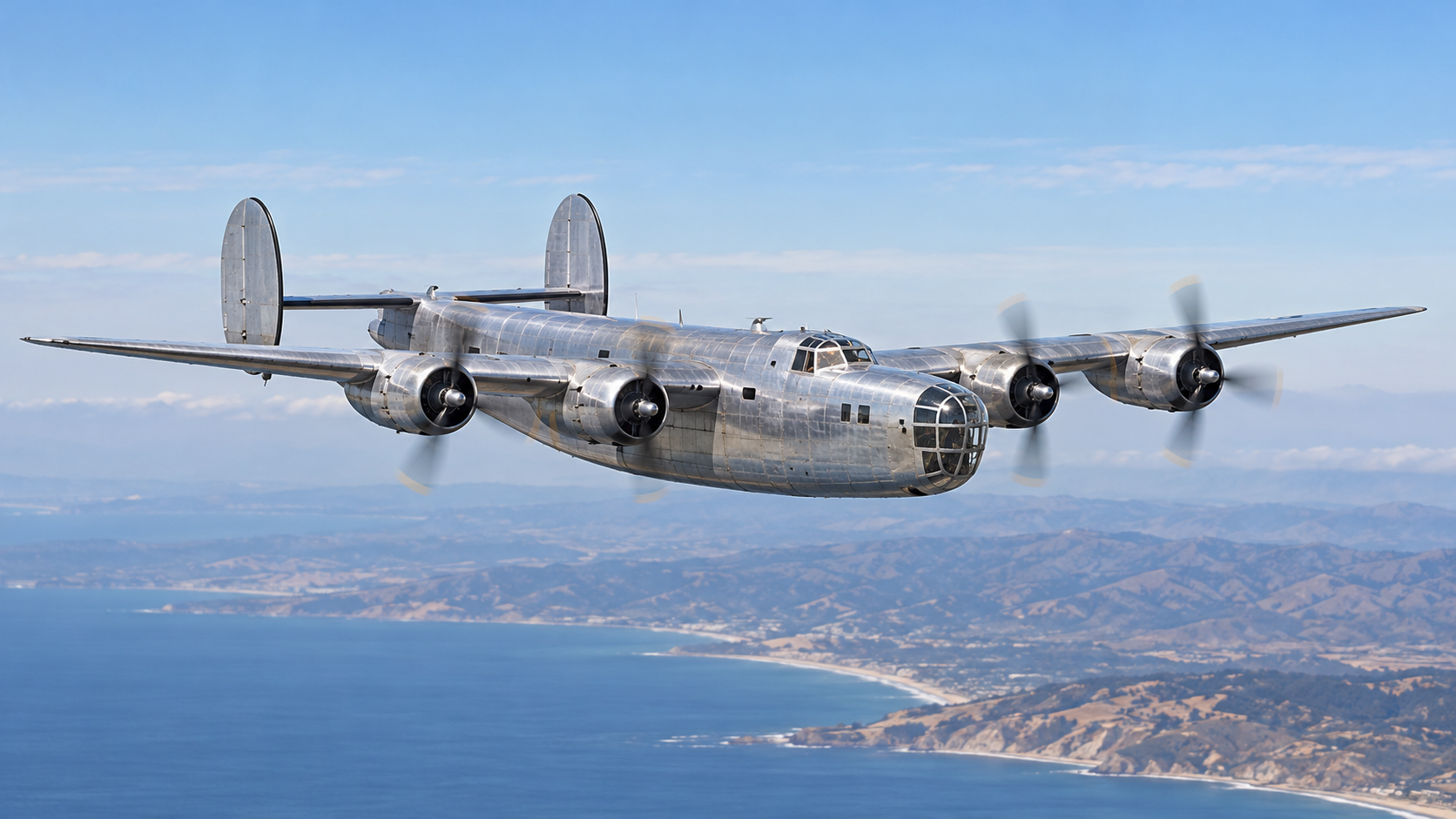
The XB-24 had a distinctive combination of features. A high-mounted, long-span wing sat above a deep fuselage, four radial engines provided power, and two vertical fins stood at the ends of the horizontal tail. Tricycle landing gear placed a wheel under the nose instead of relying on a small tailwheel. Each choice influenced the rest of the aircraft. The wing had to provide lift efficiently while supporting engines and fuel, the fuselage had to accommodate its intended load, and the landing gear had to support the machine on the ground without creating unacceptable weight or drag in flight.
The prototype represented work by Consolidated’s engineering team under Isaac Laddon. Its development drew on experience with the company’s other aircraft, but adapting existing ideas to a new role still required extensive design and testing. A first flight could reveal information that drawings, calculations, and ground checks could not fully establish. Engineers needed evidence about stability, control, propulsion, and the way structural and aerodynamic decisions interacted. Later variants would change equipment and details as the aircraft moved toward production and operational use. Photographs of heavily armed later Liberators therefore should not automatically be treated as accurate pictures of the original December 1939 prototype.
The B-24 family subsequently became a major part of Allied aviation in World War II. Aircraft served in bombing, maritime patrol, and transport roles, and production involved several manufacturers rather than one factory alone. That later scale is a separate achievement from getting the prototype airborne. December 29 marks the earlier transition, when a proposed long-range aircraft became a flying machine that could be measured and improved. The anniversary highlights the experimental stage behind a familiar historical type: before fleets and manufacturing totals came the practical task of proving that an integrated arrangement of wings, engines, structure, controls, and landing gear could work together in flight.
The XB-24 first flew from San Diego on December 29, 1939. It was the prototype, not a completed wartime fleet.
The design combined a high wing, four radial engines, and twin vertical fins. These features distinguish its basic silhouette.
Tricycle landing gear used a nosewheel. This was a significant design choice rather than a feature shared by every contemporary bomber.
Isaac Laddon led Consolidated's engineering team. Existing company experience helped, but a new aircraft still needed flight testing.
Later production variants changed equipment and appearance. A later nose turret should not be added automatically to a reconstruction of the prototype.
Liberators eventually served in several roles and were built by multiple manufacturers. That industrial story followed the initial flight-test milestone.
Explore more of "On This Day ..."
Discover more events from the same date across news, politics, technology, sports, and other fields. Each link highlights significant moments that shaped history on different fronts.