

Biomechanics Explainer
Biomechanics is the scientific study of human movement through the lens of physics, engineering, and anatomy. It examines how muscles generate force, how joints support motion, and how the body interacts with its environment during everyday activities like walking and lifting, as well as in high-performance athletic feats. By analyzing motion and the stresses placed on tissues, biomechanics helps determine what makes movement efficient, balanced, and safe.
In healthcare, biomechanics plays a critical role in understanding injury mechanisms and designing solutions for prevention and rehabilitation. Physical therapists use biomechanical insights to correct gait abnormalities or reduce strain on vulnerable joints. Orthopedic surgeons rely on this science to develop implants, prosthetics, and surgical strategies that restore natural function. Even footwear and workplace ergonomics are shaped by biomechanical research to reduce fatigue and limit long-term harm.
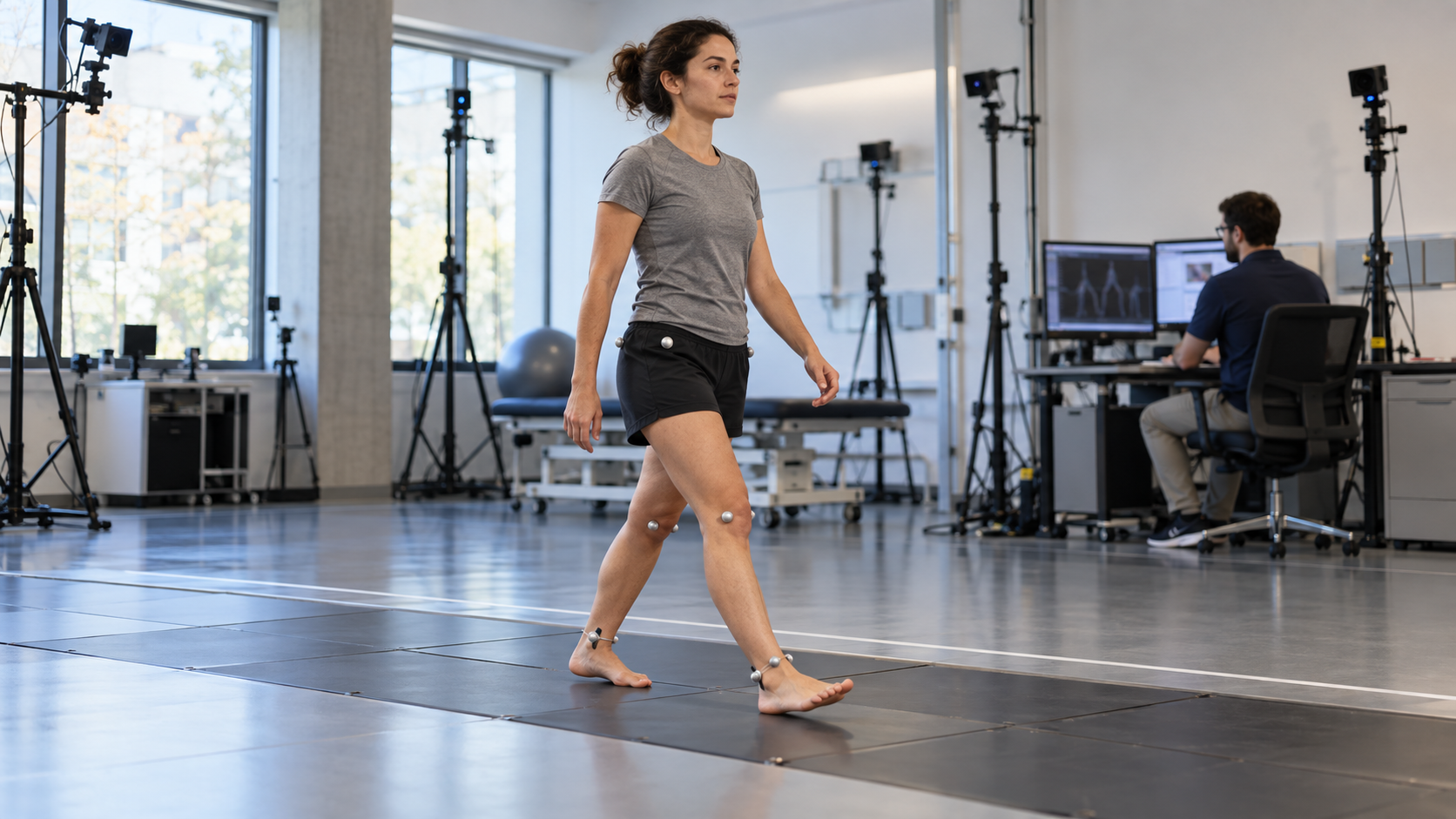
Sports science uses biomechanics to enhance performance by refining technique and optimizing energy use. Motion-capture systems and force-plate technology allow coaches and trainers to detect inefficiencies or risky movement patterns in real time. These findings guide personalized training plans that improve speed, strength, or accuracy while minimizing injury risk. As wearable sensors and health-tech advances continue, biomechanics increasingly merges with data analytics to provide athletes and everyday movers with deeper insights into how their bodies perform.
The field is also expanding into robotics and assistive technologies. Biomechanical research enables the creation of powered exoskeletons, advanced prosthetic limbs, and mobility tools that closely mimic natural movement. Whether helping a patient regain the ability to walk or fine-tuning a professional athlete’s stride, biomechanics offers a foundation for better health, better performance, and a better understanding of what the human body can achieve.
Biomechanics is the scientific study of human movement, combining principles from physics, engineering, and biology to understand how the body produces and controls motion. The field began emerging in the 19th and 20th centuries as scientists analyzed mechanical forces in muscles, bones, and joints.
Today, biomechanics is foundational in sports science, physical therapy, orthopedics, ergonomics, and assistive technology. By analyzing movement patterns and mechanical loads, experts can identify what improves performance and what may contribute to pain or injury.
In practical settings, biomechanical assessments use tools such as motion-capture cameras, pressure sensors, and wearable devices to measure movement efficiency and stress on muscles and joints. This information helps clinicians tailor rehabilitation plans and prevent repeat injuries.
Athletes benefit from biomechanical analysis by refining techniques—like jumping, sprinting, or throwing—to reduce wasteful energy and lower injury risks. Even everyday tasks such as lifting at work or improving posture are guided by biomechanics-based ergonomic design.
One ongoing challenge is capturing complex real-world movement outside controlled lab environments. Wearable sensors and AI-driven analysis are advancing the field toward more accurate daily-life monitoring—to guide training, recovery, and personalized health recommendations.
Biomechanics also supports innovation in prosthetics, exoskeletons, and surgical planning, aiming to restore natural movement for people with injuries or mobility conditions. As technology progresses, biomechanics is poised to play an even more central role in human performance, safety, and rehabilitation.
Explore more "Explainers"
Discover additional explainers across politics, science, business, technology, and other fields. Each explainer breaks down a complex idea into clear, everyday language—helping you better understand how major concepts, systems, and debates shape the world around us.