

Bread Proofing Explainer
Proofing makes bread dough rise by giving yeast time to ferment available sugars and release carbon dioxide. The gas does not inflate the dough as one empty balloon. It enters thousands of small pockets already created by mixing, kneading, and folding. In wheat dough, hydrated gluten-forming proteins connect into an elastic network that stretches around those pockets and slows the gas from escaping. As fermentation continues, the pockets expand, the dough becomes lighter, and flavor compounds accumulate. “Proofing” can refer broadly to this rising process or specifically to the final rise after the loaf has been shaped.
Yeast activity depends on food, water, and temperature. Flour enzymes help convert starch into sugars that yeast can use, while recipes may add a modest amount of sugar directly. Warmth speeds metabolism within a useful range, but excessive heat can weaken or kill yeast and encourage the dough to race ahead of its developing structure. Cool fermentation proceeds more slowly and can build different flavors. Salt moderates yeast, strengthens dough, and seasons bread. Removing it or adding large amounts of sugar or fat changes both fermentation and gluten behavior, so rising time cannot be transferred blindly from one formula to another.
The first rise, often called bulk fermentation, develops the dough as a whole. Bakers may stretch and fold it during this period to organize gluten, redistribute temperature and nutrients, and divide large gas pockets. The dough is then gently shaped, creating surface tension that helps it expand upward rather than spread. Final proofing allows the shaped loaf to regain volume before baking. Degassing does not mean squeezing out every bubble; it means redistributing gas while preserving enough internal structure for an even crumb.
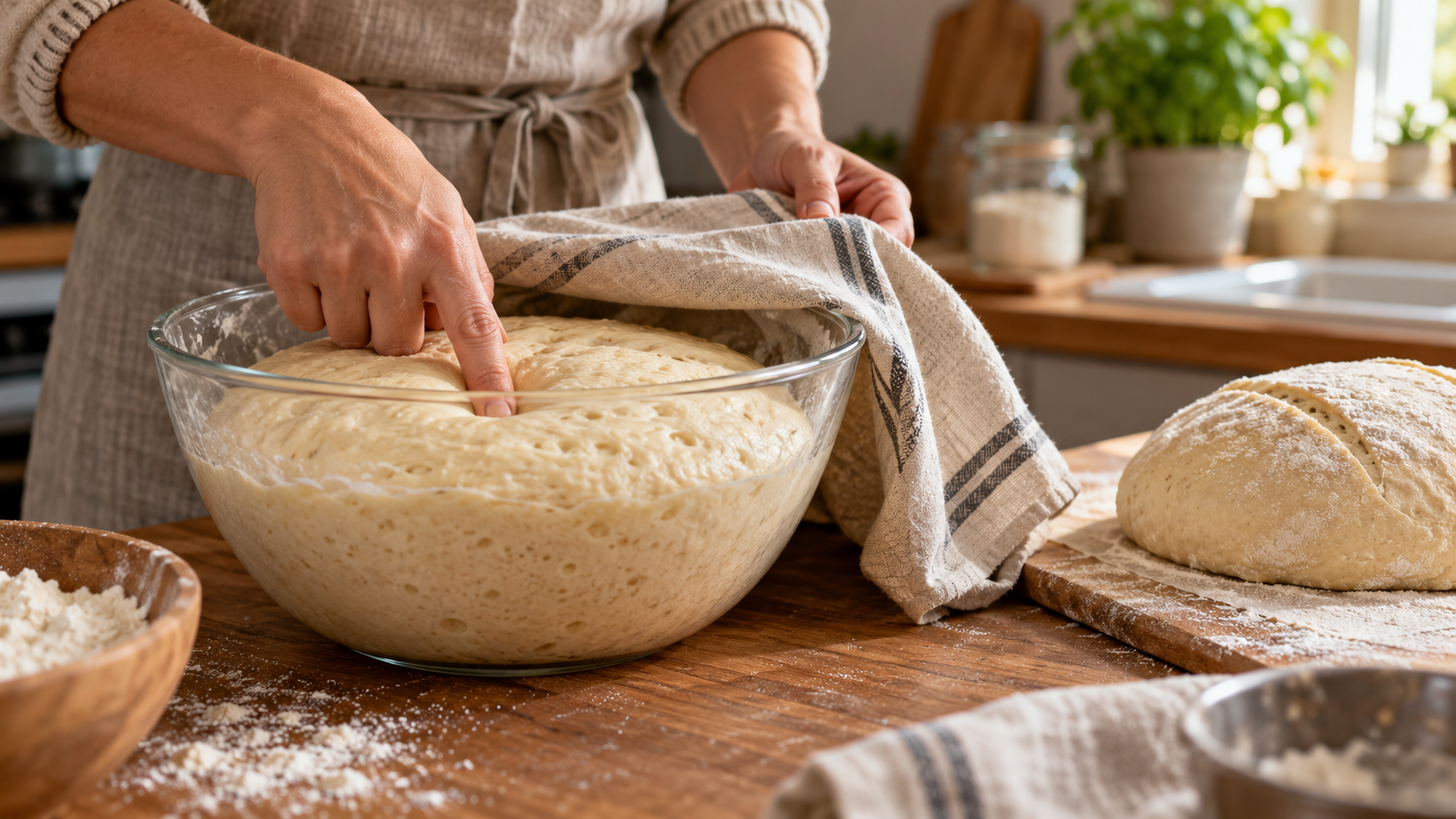
The clock is only a guide because dough temperature, yeast quantity, flour, hydration, and room conditions vary. A properly proofed loaf usually looks expanded and feels aerated. A gentle fingertip press can supply one clue: dough that springs back immediately may need more time, while a slow partial return often indicates readiness. Dough that does not return and feels fragile may be overproofed. The poke test behaves differently with very wet doughs, enriched breads, cold loaves, and shaped products, so volume, feel, recipe experience, and surface tension should be considered together.
Underproofed bread may burst unpredictably, feel dense, and show a tight crumb because the yeast and gas cells did not develop enough before the crust set. Overproofed dough can spread, collapse when scored, or rise poorly in the oven because the gluten network has stretched beyond its useful strength and available sugars have declined. A mildly overproofed loaf can sometimes be reshaped and proofed again, but repeated handling costs gas and structure. Sourdough adds a mixed community of yeasts and bacteria, making acidity and starter condition additional variables.
Baking changes the system rapidly. Gas expands, water becomes vapor, and yeast remains active briefly as the loaf warms, producing oven spring. Then proteins set, starches gelatinize, yeast activity stops, and the crust becomes rigid. Scoring gives expansion a planned weak line. Proofing therefore does not finish the bread; it prepares a stable population of gas cells for heat to enlarge and fix in place. The practical method is to control dough temperature, use a suitable covered container, watch the dough rather than only the timer, and bake when fermentation and structure are balanced.
Proofing lets yeast produce carbon dioxide while gluten stretches around gas pockets and dough expands. Key terms include fermentation, yeast, gluten, bulk fermentation, shaping, final proof, gas cell, oven spring, underproofed, and overproofed.
A gentle press can indicate dough response: rapid spring-back may mean more time is needed, while slow partial recovery often signals readiness. Use it with volume, feel, recipe, and dough type.
Yes. Extended fermentation can exhaust sugars and weaken the gas-holding structure, causing spreading or collapse. Time varies with temperature, formula, starter strength, and loaf shape.
Explore more "Explainers"
Discover additional explainers across politics, science, business, technology, and other fields. Each explainer breaks down a complex idea into clear, everyday language—helping you better understand how major concepts, systems, and debates shape the world around us.