

Boarding Pass Explainer
A boarding pass is an airline document that associates a named traveler with a particular flight segment and presents the operational details needed to reach and board it. It typically shows the passenger name, airline, flight number, departure airport, destination, date, boarding group, seat when assigned, and gate information available at issuance. A machine-readable two-dimensional barcode encodes standardized data that systems can scan. The pass is not the ticket itself: a ticket records the purchased air transportation, while the boarding pass is produced after check-in for a specific departure.
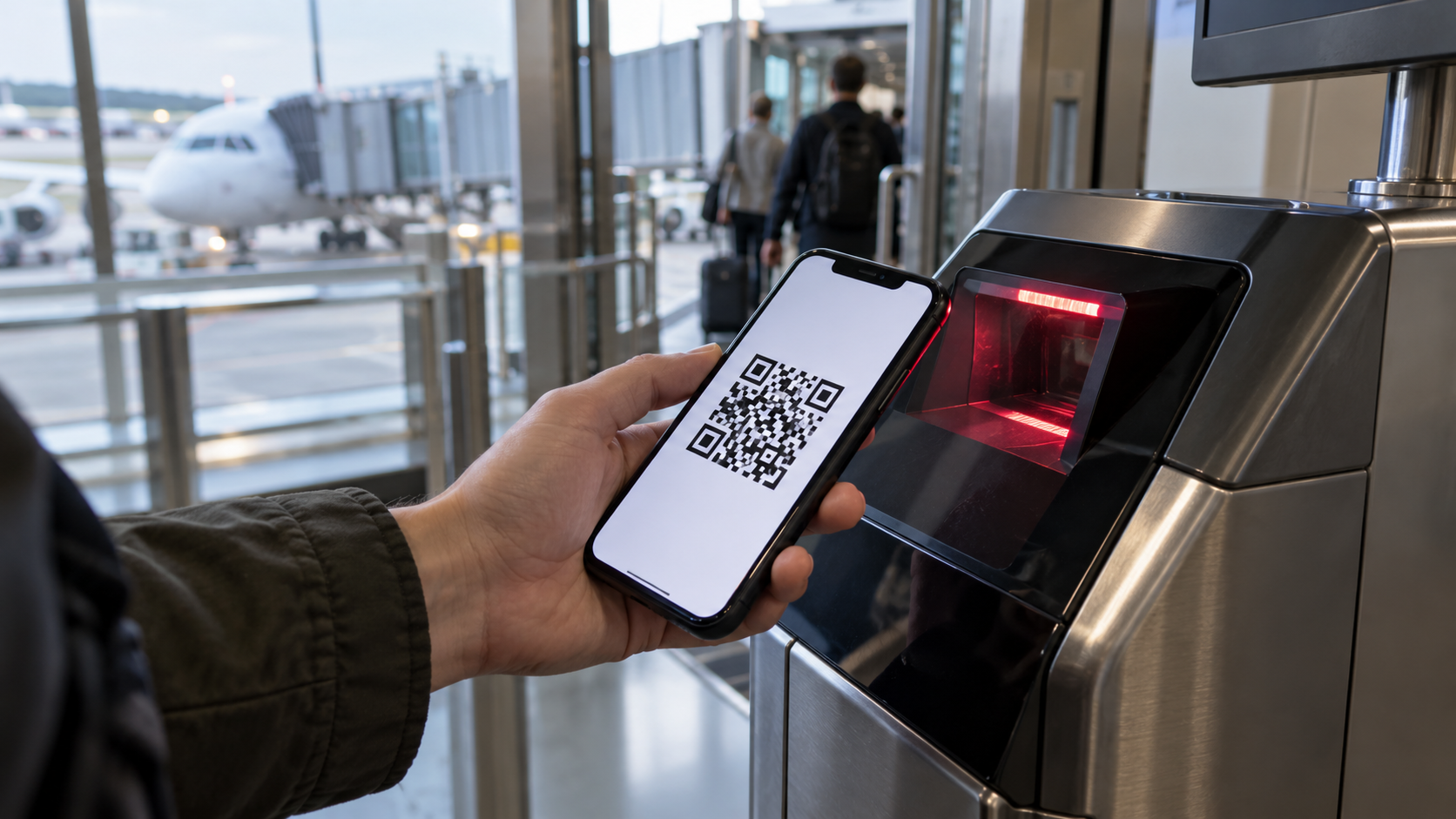
At an airport, different systems use the document for different decisions. Security staff may compare the traveler’s identity and itinerary with current flight data, while an airport’s controlled entrances can use the barcode to confirm a same-day departure. At the gate, the airline scans the pass against its departure-control system, marks the passenger as boarded, checks group or priority, and may display a seat change or other alert. The scan does not simply open a gate from information printed on paper; it queries or updates live operational records.
The barcode can be printed or displayed on a phone. A mobile pass needs enough screen brightness, an undamaged code, and access even when cellular service is weak. Saving it in an airline or wallet app can be more reliable than depending on an email link. Screenshots may work for a static code, but some airlines or security systems use updated or dynamically protected credentials. A paper copy can be useful when batteries, screens, or app sessions are uncertain, provided the latest details are used.
Gate, departure time, aircraft, and seat can change after the pass is issued. Airport displays and airline notifications are therefore more current than a printout made hours earlier. Boarding time is earlier than scheduled departure because the door must close and passenger counts must be reconciled. A pass may show “seat assigned at gate” or require document verification for international travel. Travelers should treat a missing barcode, a changed name, or a special message as a reason to see the airline rather than editing the image or assuming the gate can fix it during final boarding.
Boarding passes contain personal and itinerary information. Photos posted online can expose the traveler’s name, frequent-flyer number, booking clues, and barcode data. Used paper passes should be stored or destroyed with the same care as other travel records, and mobile passes should remain behind the device lock screen. The barcode should not be folded through, marked over, or enlarged in a way that changes its proportions. If it will not scan, staff can verify the trip and reissue the pass from the airline’s system.
The pass guides a journey because it provides a common reference across check-in, security, airport navigation, and boarding, but it cannot replace identity documents or destination requirements. International travel still requires the applicable passport, visa, and entry checks. A boarding pass can also be withdrawn or replaced if a flight is disrupted. The practical routine is to check in, verify the name and route, monitor live gate information, arrive before the stated boarding deadline, keep the code accessible, and protect the document after use.
A boarding pass ties a traveler to one flight segment and carries a barcode used by airport and airline systems. Key terms include ticket, check-in, flight segment, 2D barcode, departure-control system, gate, boarding group, seat assignment, and boarding deadline.
The system reads standardized data and checks live records. At the gate it can mark the traveler boarded, reveal a seat or document issue, and prevent reuse of the same pass.
Gates and operations can change after issuance. Treat airport displays and current airline notifications as authoritative, and allow time to reach a reassigned gate before boarding closes.
Explore more "Explainers"
Discover additional explainers across politics, science, business, technology, and other fields. Each explainer breaks down a complex idea into clear, everyday language—helping you better understand how major concepts, systems, and debates shape the world around us.