

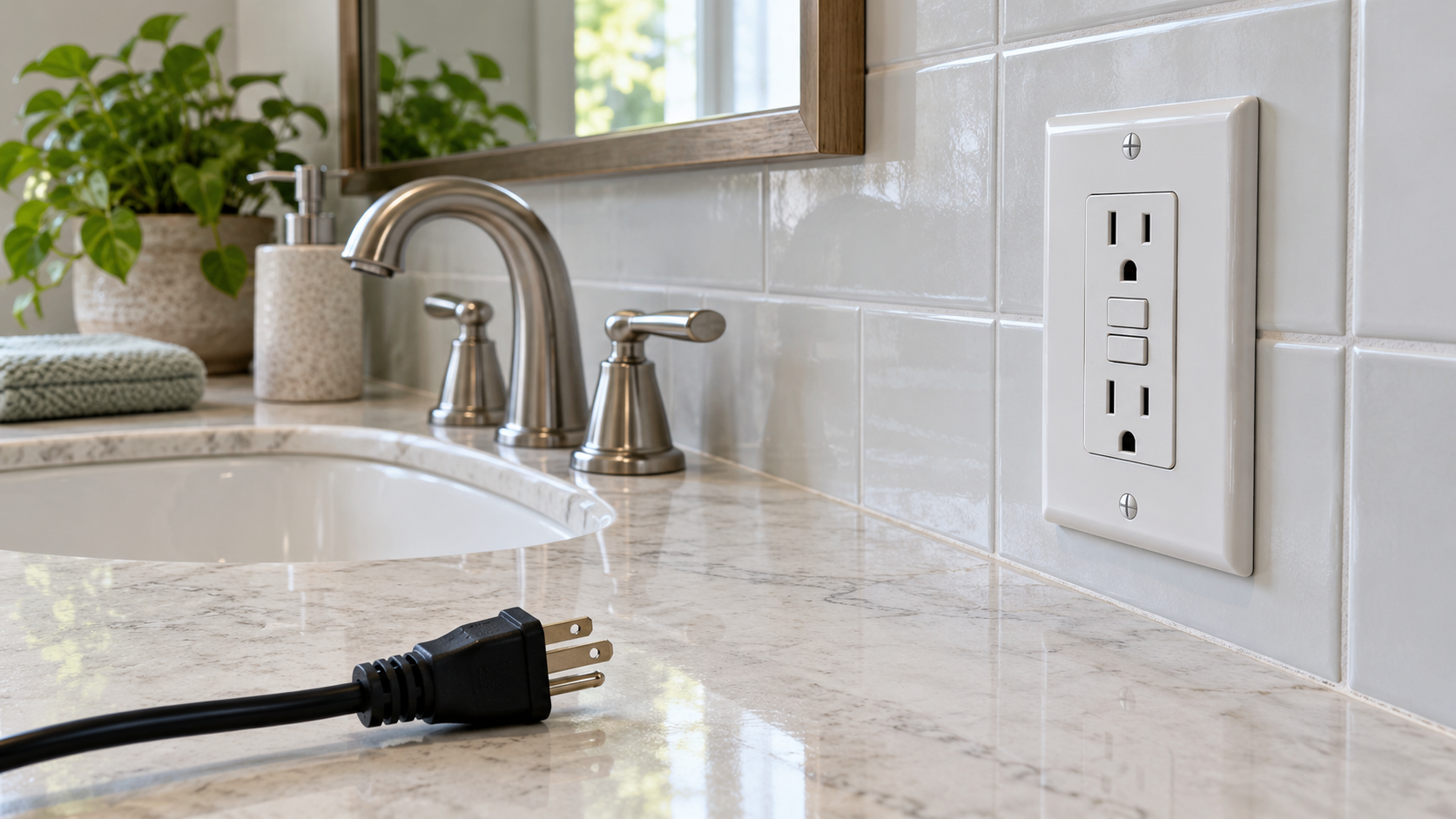
GFCI Electrical Protection Explainer
A ground-fault circuit interrupter, or GFCI, is designed to reduce the risk of severe electric shock. In normal operation, current leaving a receptacle on the hot conductor returns on the neutral conductor. Both wires pass through a sensing transformer inside the device. Their magnetic effects cancel when the currents are equal. If some current instead leaks through water, damaged insulation, a tool case, or a person toward ground, the returning current is smaller. The resulting imbalance creates a signal that tells the GFCI to open its contacts.
The device can respond to an imbalance of only a few milliamperes and disconnect the circuit in a fraction of a second. A solenoid or similar trip mechanism releases spring-loaded contacts, interrupting the hot conductor and usually the neutral connection within the receptacle. The GFCI does not need the leakage current to travel through the equipment grounding wire; it is comparing what leaves with what returns. That is why it can add shock protection even in some older installations that lack a grounding conductor, when installed and labeled correctly.
A standard circuit breaker and a GFCI watch for different problems. The breaker protects wiring from overloads and short circuits involving much larger current. A GFCI looks for a small difference that may be dangerous to a person but far below the breaker rating. A combination device may provide several functions, yet none makes contact with electricity safe. GFCIs are commonly required in locations such as bathrooms, kitchens, garages, outdoors, basements, and other areas where moisture or grounded surfaces increase risk.
Receptacle-type GFCIs have line terminals for incoming power and load terminals that can protect correctly wired downstream receptacles. Reversing or misusing those connections can defeat expected operation, so installation and replacement should follow code and manufacturer instructions. A tripped unit removes power from its own face and possibly several ordinary-looking outlets farther along the circuit. That is why an apparently dead bathroom or outdoor receptacle may be controlled by a GFCI in another nearby location.
The test button creates a controlled imbalance inside the device. A working unit should trip, cutting power; the reset button then re-latches it. The test checks more than the buttons’ movement, and manufacturers specify how often to use it. A unit that will not test or reset, trips repeatedly, feels hot, is damaged, or has been exposed to flooding should not be bypassed. Loss of power may indicate an active fault, a failed appliance, moisture, miswiring, or an aging device that needs qualified evaluation.
A GFCI reduces harm by watching conservation of current in real time. It does not identify exactly where the leakage occurs, prevent every shock, protect against touching hot and neutral simultaneously, or substitute for grounding, bonding, overcurrent protection, and safe habits. Its strength is speed: when electricity starts taking an unintended path, the small mismatch becomes an immediate reason to open the circuit. Proper placement, correct wiring, routine testing, and prompt investigation of trips keep that protective chain intact.
A GFCI compares current on hot and neutral. A difference means current may be escaping, so spring-loaded contacts open quickly. Key terms include ground fault, imbalance, sensing transformer, milliamperes, trip, line, load, test, and reset.
No. A breaker responds mainly to overloads and short circuits that threaten wiring. A GFCI detects much smaller current leakage that can threaten a person.
One GFCI can protect ordinary receptacles connected to its load terminals. When it trips, every correctly wired downstream outlet also loses power.
Explore more "Explainers"
Discover additional explainers across politics, science, business, technology, and other fields. Each explainer breaks down a complex idea into clear, everyday language—helping you better understand how major concepts, systems, and debates shape the world around us.